Bony fish · Perciformes · Sphyraenidae
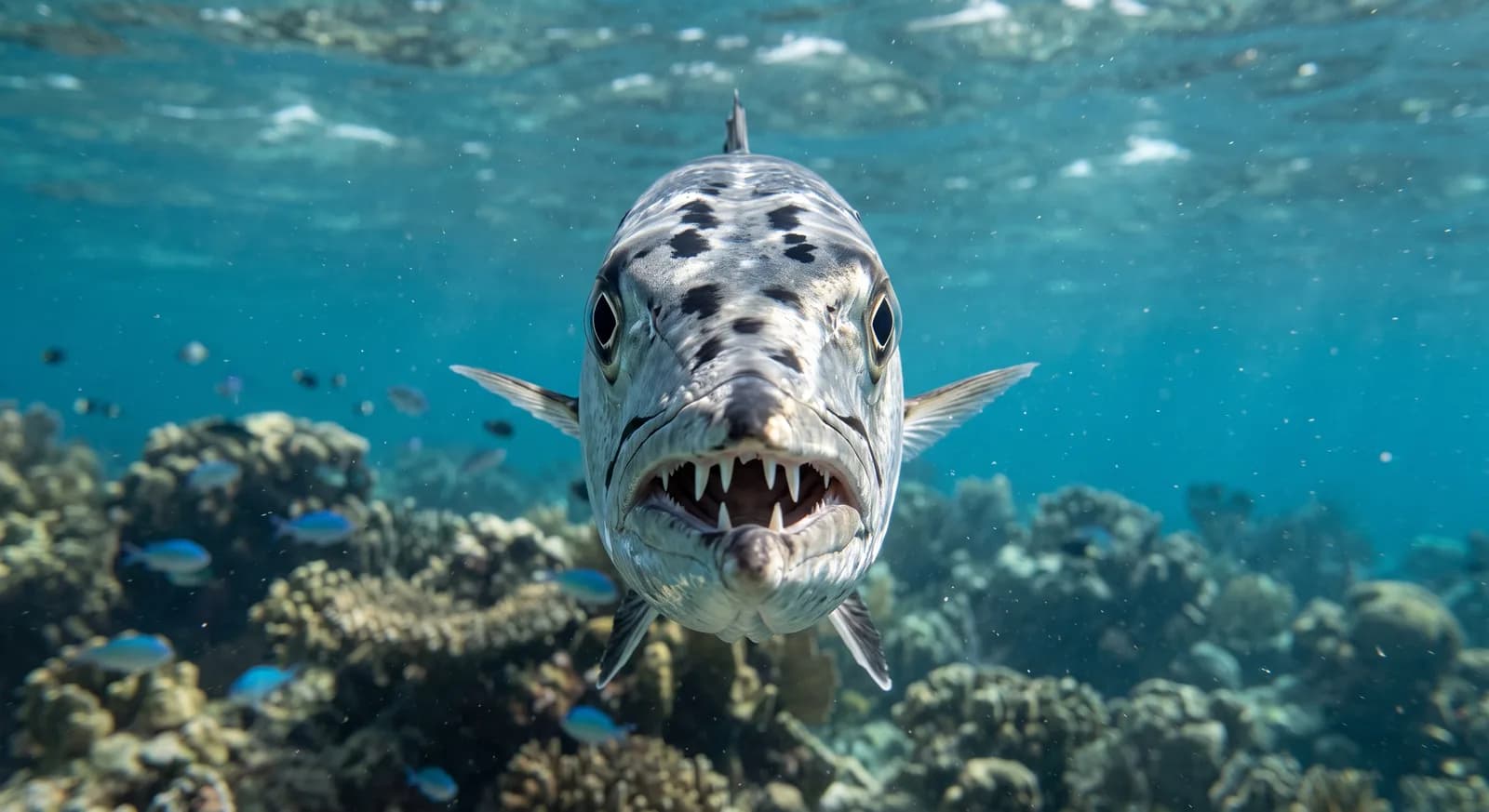
Great Barracuda
Sphyraena barracuda
The species is abundant and widely distributed; it faces no significant short-term risk. See full glossary
An ambush predator with an elongated, torpedo-shaped body, a jutting lower jaw and uneven conical teeth set in sockets. It combines a very narrow frontal profile with silvery colouring that reduces its visibility to prey.
Weight
2.5 kg – 46.7 kg
Size
60 cm – 2 m
Lifespan
14 years
Diet
Carnivore
Feeds mainly on other animals.
Activity
Diurnal
Active mainly during the day.
Social structure
Solitary
Lives and hunts alone, joining others only to breed.
Sighting difficulty
Easy
Fun facts
- Some of its teeth point backwards, so that slippery prey cannot wriggle free once caught.
- It has been seen herding shoals of fish into shallow water and standing guard over them until it is hungry again.
- Its flesh can accumulate ciguatoxin, so over much of its range it is not eaten.
Life cycle & biology
- Skeleton type
- Vertebrate - internal bony skeleton (bony fish)
- Habitat & environment
- Tropical and warm temperate waters of the Atlantic, Indian and Pacific oceans, between 0 and 100 m deep. The juveniles occupy mangroves, estuaries and seagrass beds; the adults, deep reefs and open water
- Size at birth
- The juveniles measure roughly 1 cm when they settle in the estuaries
- Sexual maturity
- Males: around 3 years | Females: around 4 years
- Gestation / incubation
- Oviparous with external fertilisation; spawning takes place in deep water on the open sea
- Litter / clutch size
- Between 5,000 and 30,000 eggs per female; a spawning season from April to October
Sources consulted: FishBase; MarineBio; Animal Diversity Web; Universidad de las Indias Occidentales (ficha Sphyraena barracuda); Virginia Aquarium & Marine Science Center; IUCN Red List (e.T190399A115319634)
Where to find it
See its range on the interactive mapBest time: All year round in tropical waters; it feeds most intensively in the two hours after dawn and the two before dusk
Where to watch it
Parques y spots de buceo donde se ha documentado esta especie — se muestran 20 de 300 documentados.
Related species
Other species in the catalogue with the most in common with Great Barracuda — same habitat, park, country, tags or family.
White-spotted Puffer
Arothron hispidus
Clown Triggerfish
Balistoides conspicillum
Dorab Wolf Herring
Chirocentrus dorab
Man-of-war Fish
Nomeus gronovii
Blacktip Reef Shark
Carcharhinus melanopterus
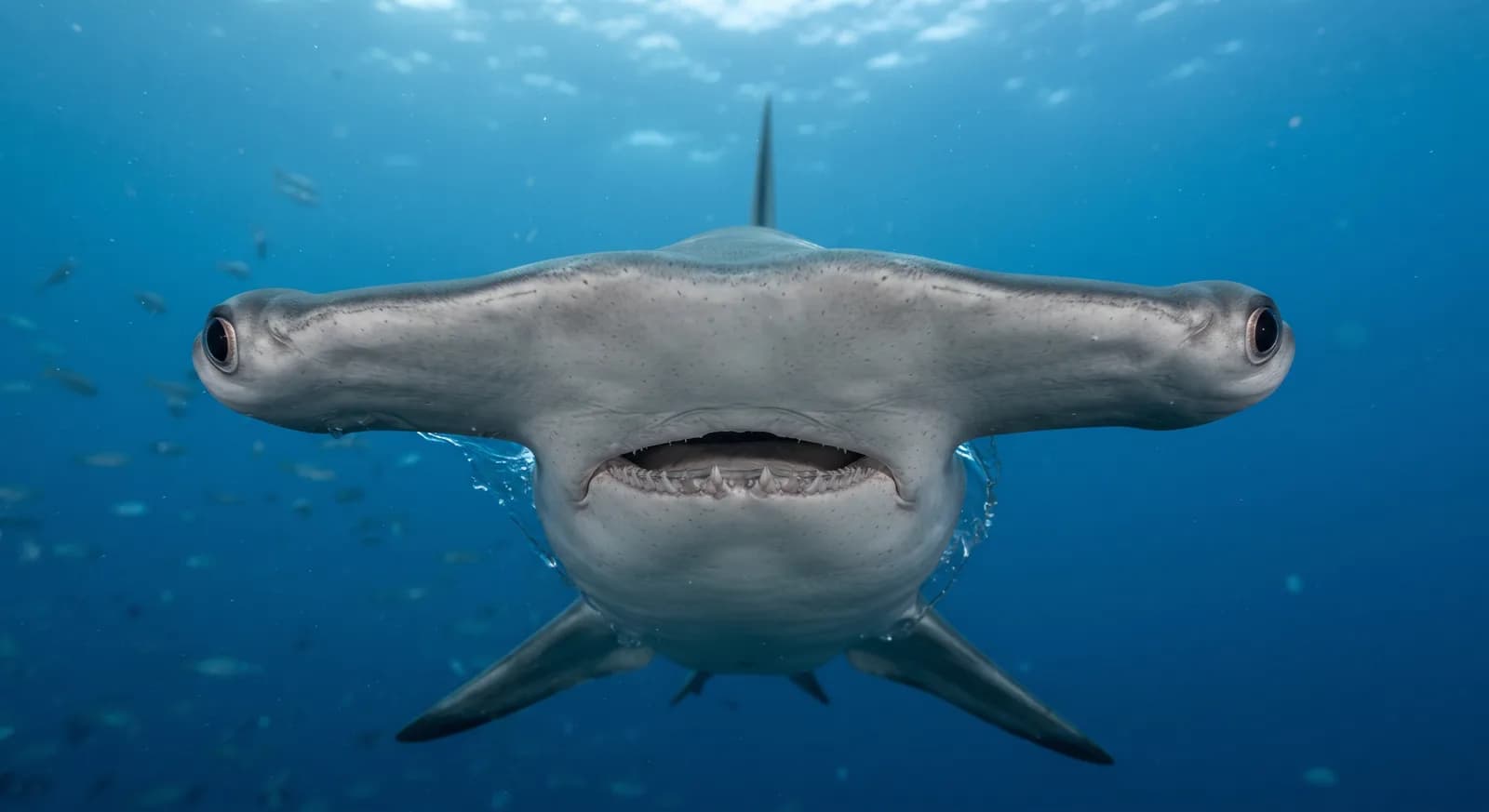 Critically Endangered
Great Hammerhead
Sphyrna mokarran
Keep exploring
Based on what we already know about great barracuda.
Comments
Share an experience, a fun fact or a tip for seeing the great barracuda.
Be the first to comment.