One of the 6 flamingos on WAnimals
Birds · Phoenicopteriformes · Phoenicopteridae
James's Flamingo
Phoenicoparrus jamesi
It could become endangered in the near future if current threats go unchecked. See full glossary
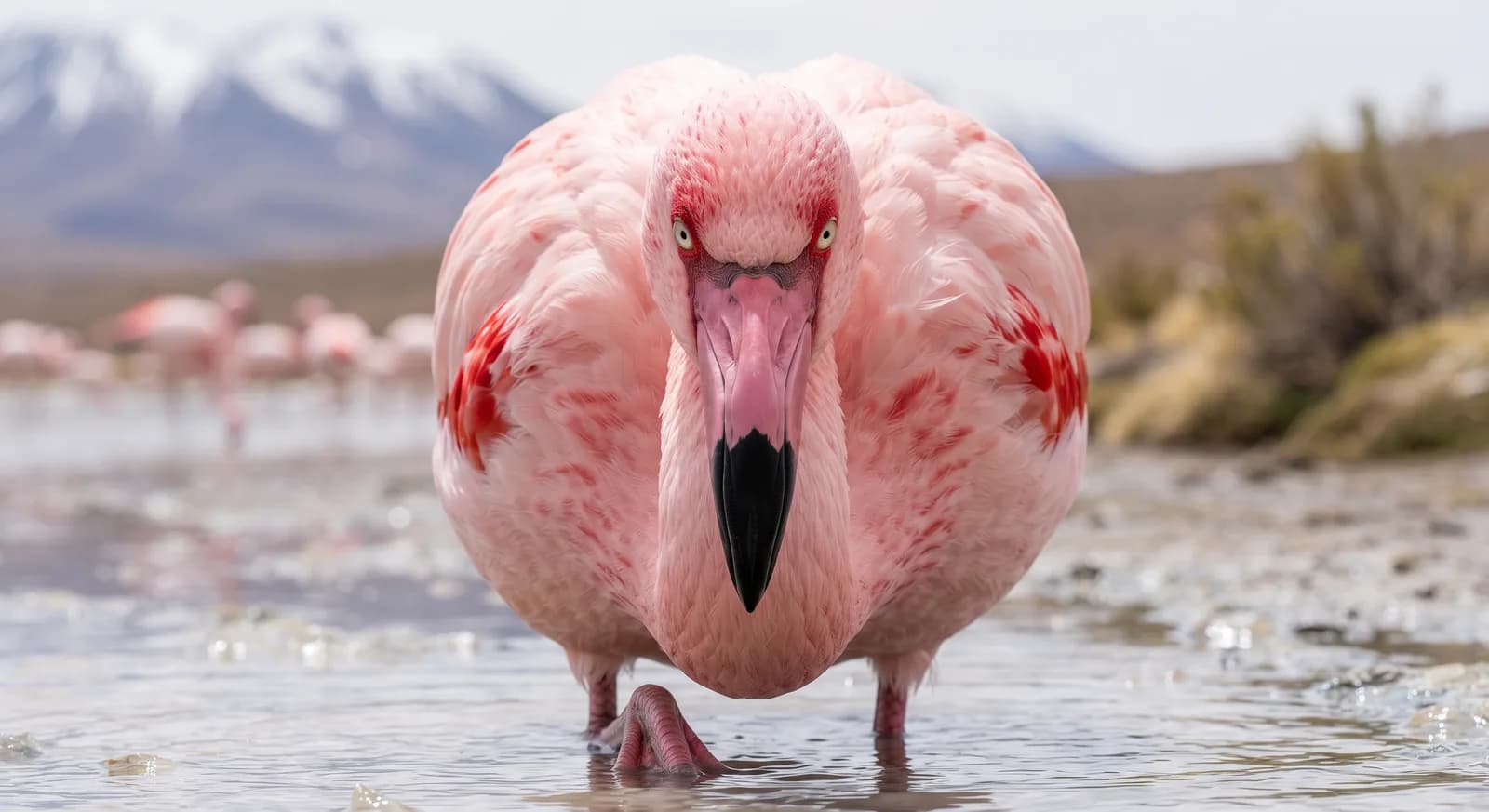
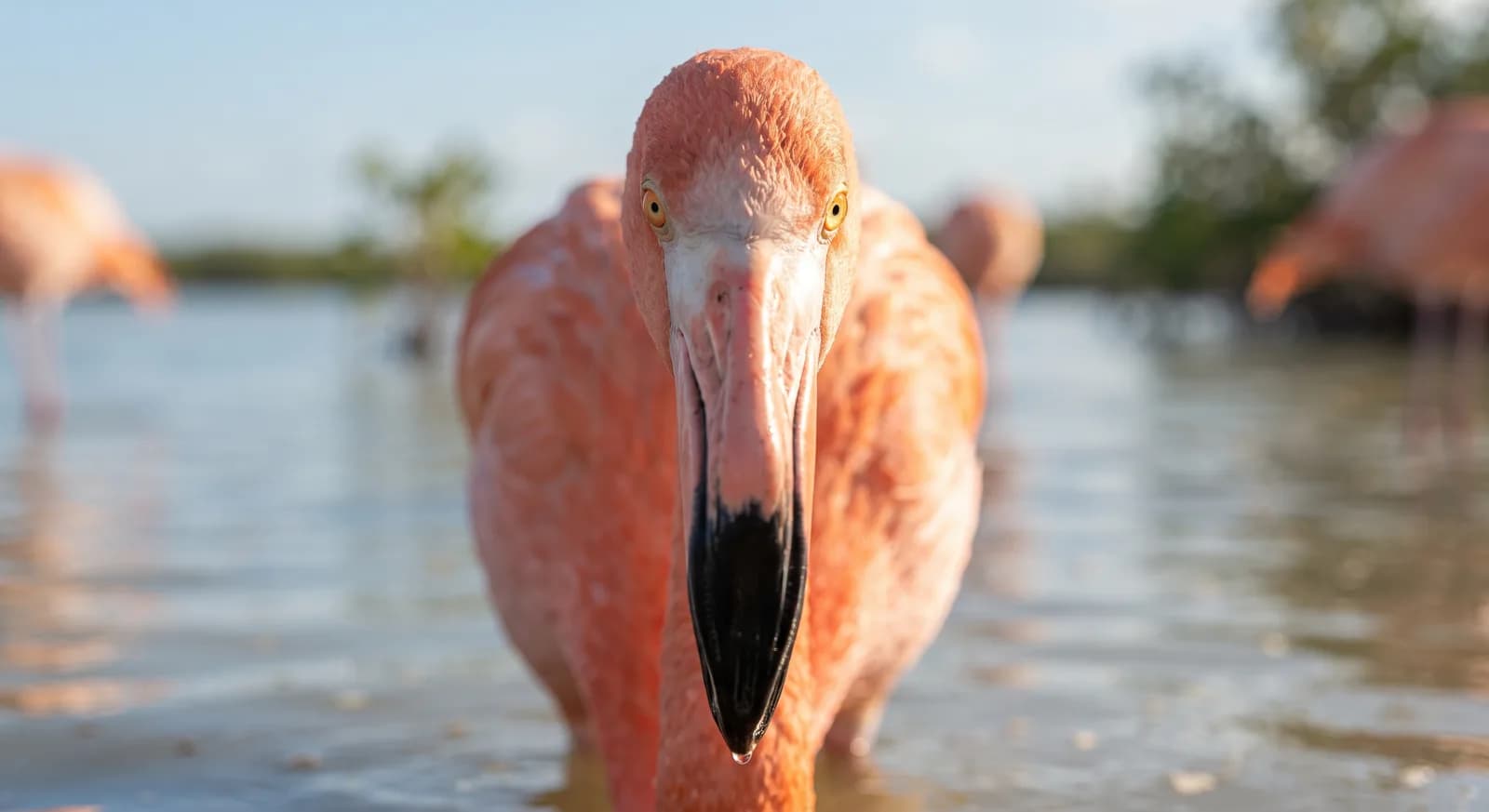
The smallest of the South American flamingos. It is told from the other two Andean species by its red legs and by the scarlet colouring at the base of the neck and on the back. The rear third of the body is black, less marked than in the Andean flamingo. Its bill is short, thick and only slightly curved, orange-yellow with a very sharp black tip.
Weight
2 kg – 2.5 kg
Diet
Herbivore
Feeds mainly on plants.
Activity
Diurnal
Active mainly during the day.
Social structure
Colony
Lives in large concentrations, often for breeding reasons.
Sighting difficulty
Moderate
Estimated population
154,000 birds according to the 2021 surveys
Fun facts
- It was thought extinct until a population was found in a remote part of the Andes in 1956.
- The first known specimen was collected in 1886 near the Isluga volcano in Chile, and was described twice in the same year, under the same name, by different authors in Chile and in England.
- Its name honours Harry Berkeley James, an Englishman who ran a nitrate mine in Chile and funded the expedition that collected it.
Life cycle & biology
- Skeleton type
- Vertebrate - internal bony skeleton (bird)
- Habitat & environment
- The Puna ecoregion: salt flats, wet meadows, high-Andean bogs, watercourses and shallow brackish lagoons on desert plateaus above 3,500 m, in endorheic basins such as the Salar de Atacama. It prefers shallower water and higher altitudes than the other flamingos
- Litter / clutch size
- It breeds mainly in Bolivia. Seven stages are recognised in its breeding cycle
Sources consulted: IUCN Red List; Birds of the World (Rivas et al. 2024, versión 2.0); Ministerio del Medio Ambiente de Chile (RCE, 15.º proceso); Martínez y González 2017; eBird; Sclater 1886
Where to find it
See its range on the interactive mapBest time: All year round on the salt flats of the Puna, above 4,000 m
Where to watch it
Parks and dive sites where this species has been documented.
Related species
Other species in the catalogue with the most in common with James's Flamingo — same habitat, park, country, tags or family.
 Near Threatened
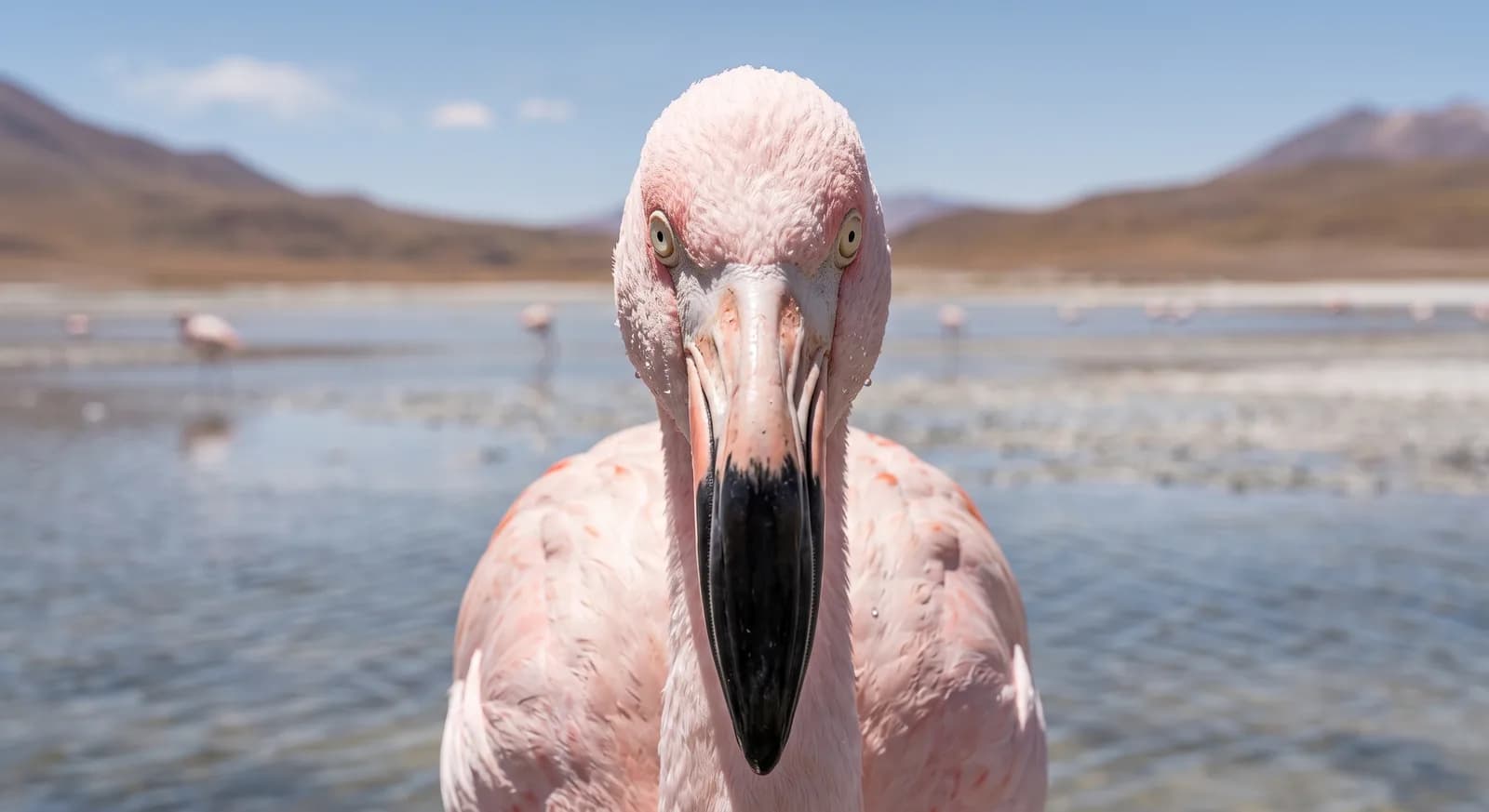
Chilean Flamingo
Phoenicopterus chilensis
 Vulnerable
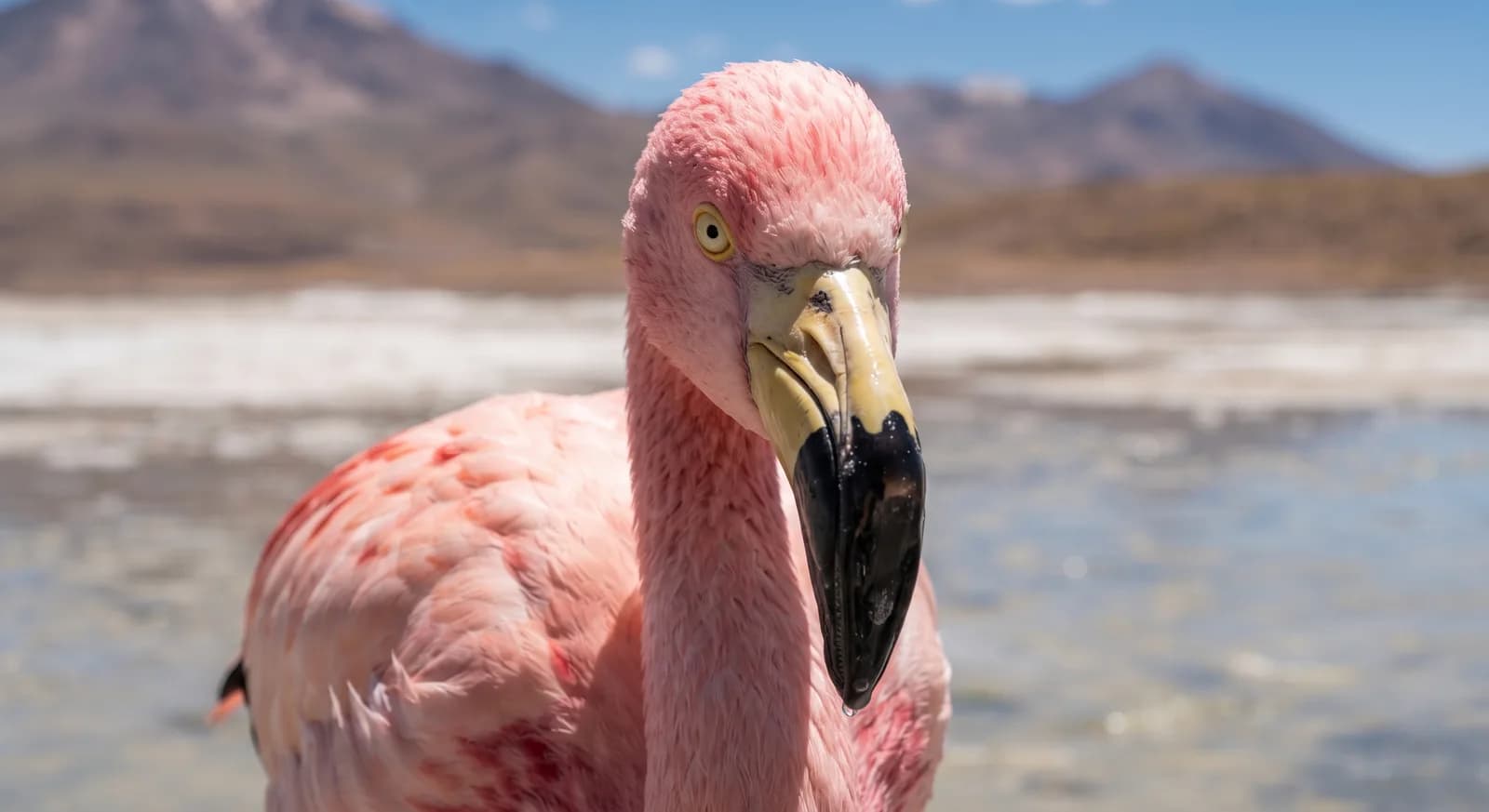
Andean Flamingo
Phoenicoparrus andinus
Lesser Rhea
Rhea pennata
Burrowing Parrot
Cyanoliseus patagonus
 Near Threatened
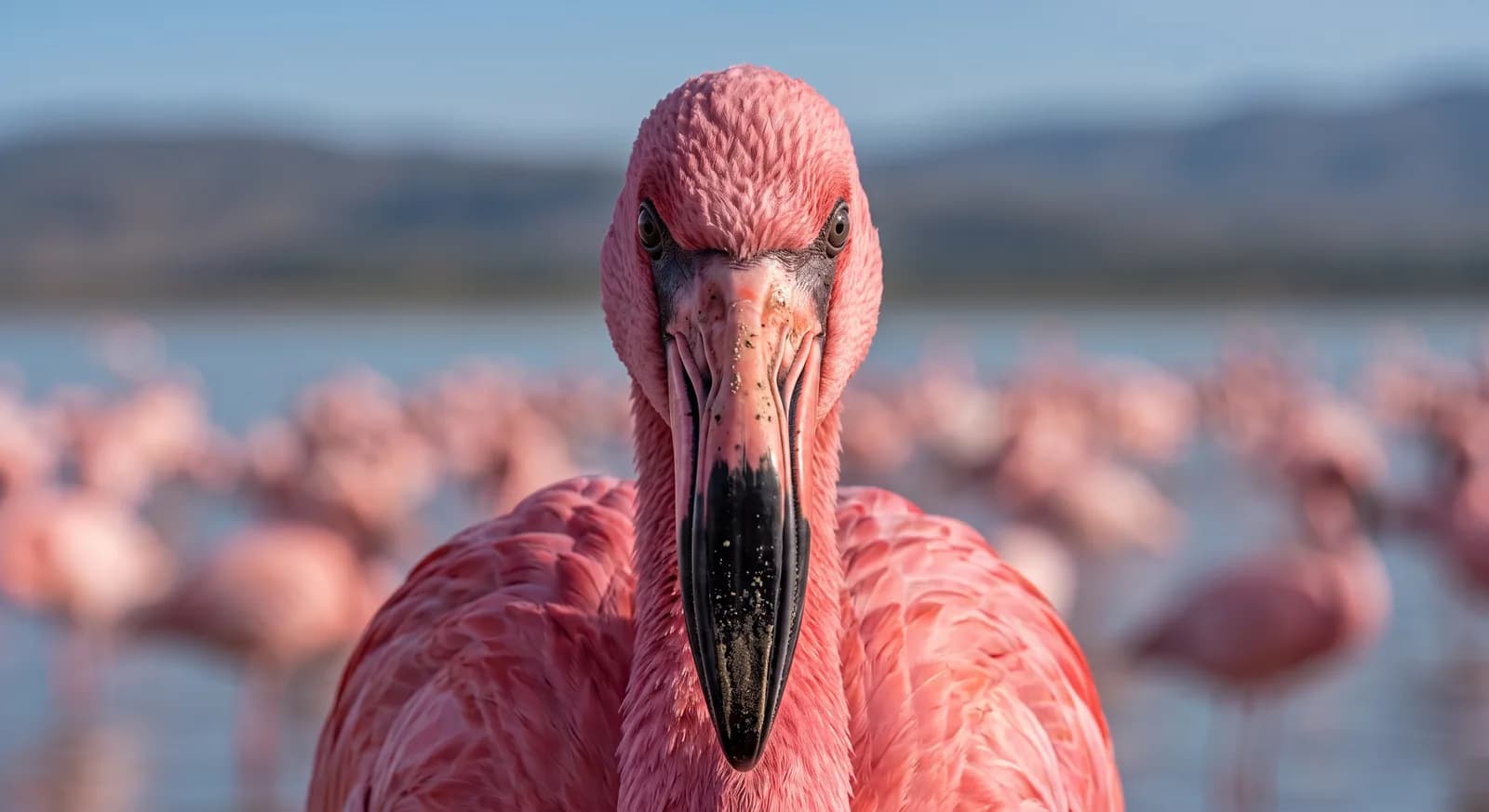
Lesser Flamingo
Phoeniconaias minor
 Least Concern
American Flamingo
Phoenicopterus ruber
Keep exploring
Based on what we already know about james's flamingo.
Comments
Share an experience, a fun fact or a tip for seeing the james's flamingo.
Be the first to comment.