Bony fish · Pleuronectiformes · Pleuronectidae
Atlantic Halibut
Hippoglossus hippoglossus
It could become endangered in the near future if current threats go unchecked. See full glossary
The halibut, or Atlantic halibut, is a large flatfish of the family Pleuronectidae, usually measuring up to 1.2 m long and reaching 200 kg in weight, although individuals of up to 3 m and 320 kg are not rare. It is found mainly in the Atlantic Ocean, and is often confused with the sole or regarded as a subspecies of it, but although it belongs to the same order it is not of the same family.
Weight
176 kg on average
Size
up to 4.7 m
Lifespan
50 years
Diet
Carnivore
Feeds mainly on other animals.
Sighting difficulty
Moderate
Fun facts
- It is the largest flatfish in the world: there are records of 470 cm and 320 kg.
- The males rarely exceed 25-30 kg; the giants are always females.
Life cycle & biology
- Skeleton type
- Vertebrate - internal bony skeleton (bony fish)
- Habitat & environment
- Sand, gravel and clay bottoms of the North Atlantic and the adjacent Arctic, between 50 and 2,000 m
- Sexual maturity
- 9.9 years
- Litter / clutch size
- From a few thousand to four million eggs per spawning
Sources consulted: https://es.wikipedia.org/wiki/Hippoglossus_hippoglossus
Where to find it
See its range on the interactive mapWhere to watch it
Parques y spots de buceo donde se ha documentado esta especie — se muestran 10 de 17 documentados.
Related species
Other species in the catalogue with the most in common with Atlantic Halibut — same habitat, park, country, tags or family.
Plaice
Pleuronectes platessa
 Near Threatened
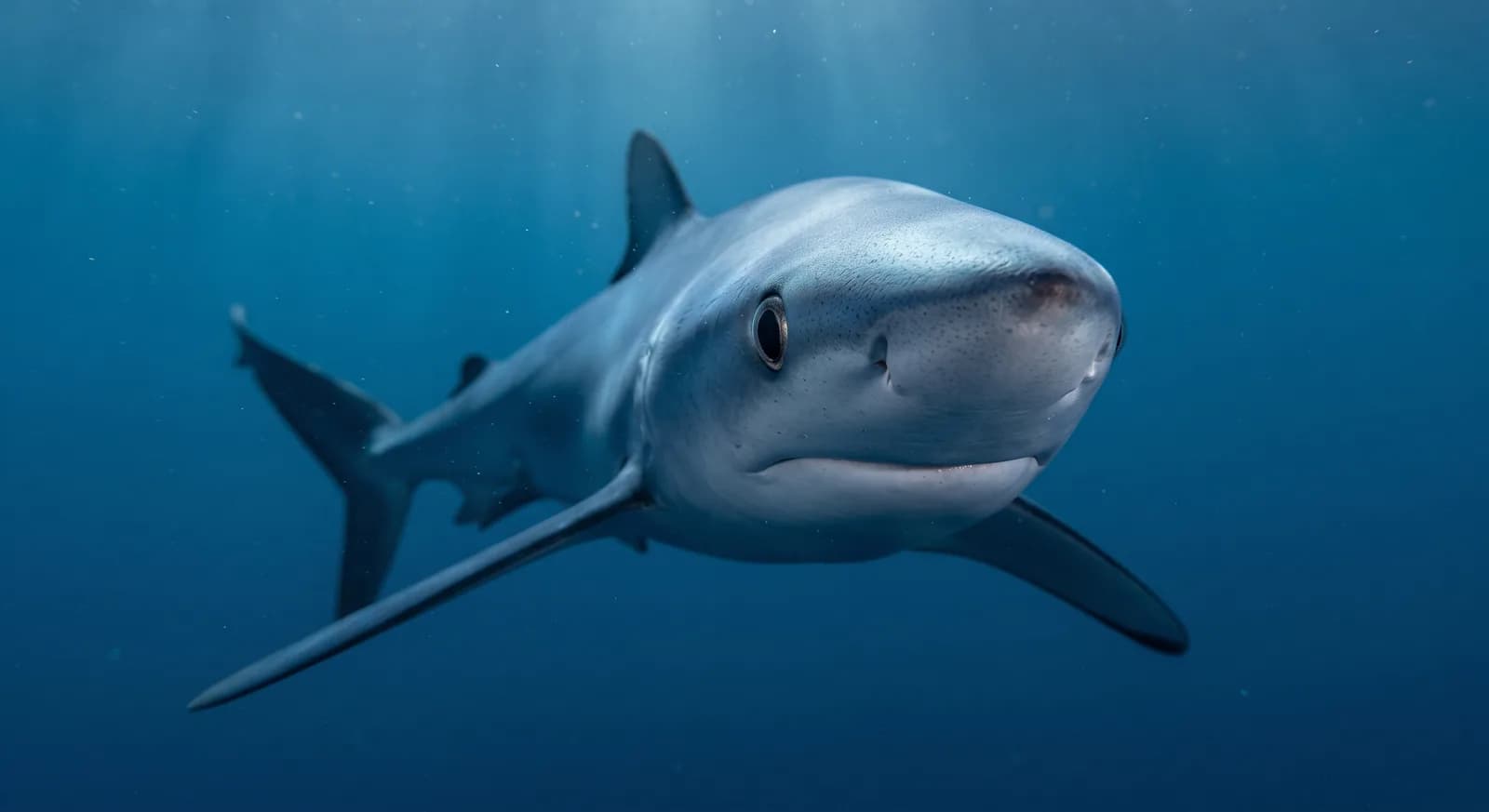
Blue Shark
Prionace glauca
Bluntnose Sixgill Shark
Hexanchus griseus
Thornback Ray
Raja clavata
Common Stingray
Dasyatis pastinaca
Rabbitfish
Chimaera monstrosa
Keep exploring
Based on what we already know about atlantic halibut.
Comments
Share an experience, a fun fact or a tip for seeing the atlantic halibut.
Be the first to comment.