Species group · Birds
Shrikes
WAnimals has 3 species of shrike, all in the family Laniidae.
- 3 species
- 1 family
- 58 countries
- 249 parks
- Weight
- 25 g – 80 g
- Length
- 16 cm – 26 cm
- Lifespan
- 9 – 12 years
Ranges calculated from the entries that record the figure, not from all 3.
All 3 species of shrikes on WAnimals
Each one has its own full entry. This group does not replace them: it brings them together.
Conservation status
No species documented in this group is genuinely at risk according to the IUCN, with the data available today.
See the global conservation statusWhere they live
Recorded in 58 countries. The ones with the most species in the group:
Where to see them
Did you know…
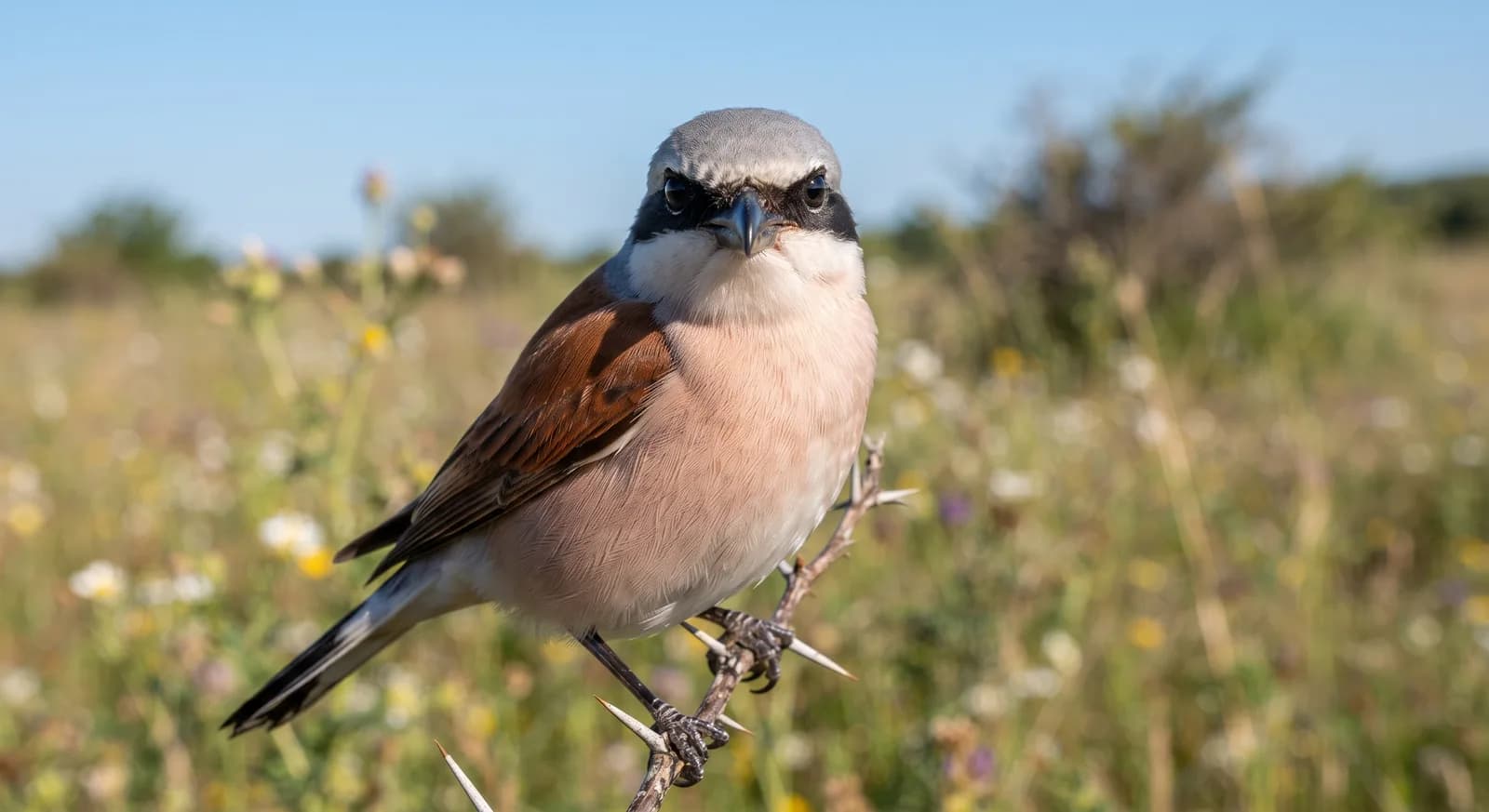
It impales its prey on thorns to store it, like a larder.
From Red-backed Shrike
It impales its prey on hawthorn and blackthorn spines or on barbed wire, creating larders that it often never eats.
From Red-backed Shrike
This has earned it the nickname 'butcher bird', and its genus, Lanius, means precisely butcher in Latin.
From Red-backed Shrike
Its chestnut crown sets it apart; it watches from wires and bare branches.
From Woodchat Shrike
It impales grasshoppers, beetles and lizards on thorn bushes and barbed wire, forming visible larders that also work as a shop window: the males with the best larder attract more females.
From Woodchat Shrike
It depends on large insects, and its European decline goes hand in hand with the general fall in insect biomass documented over recent decades.
From Woodchat Shrike
It impales its prey on thorn bushes and barbed wire, forming visible larders: it has no raptor's talons for holding prey while it tears at it, so it pins the prey down and pulls with its bill.
From Great Grey Shrike
Males with larger larders attract more females: the store of impaled prey works as a display of the quality of both the territory and the hunter.
From Great Grey Shrike