Species group · Bony fish
Perch
WAnimals has 5 species of perch, spread across 5 families (Anabantidae, Centrarchidae, Embiotocidae, Percidae, Terapontidae).
- 5 species
- 5 families
- 112 countries
- 163 parks
- Weight
- 3 kg – 10 kg
- Length
- 10 cm – 97 cm
- Lifespan
- 8 – 15 years
Ranges calculated from the entries that record the figure, not from all 5.
All 5 species of perch on WAnimals
Each one has its own full entry. This group does not replace them: it brings them together.
 Least Concern
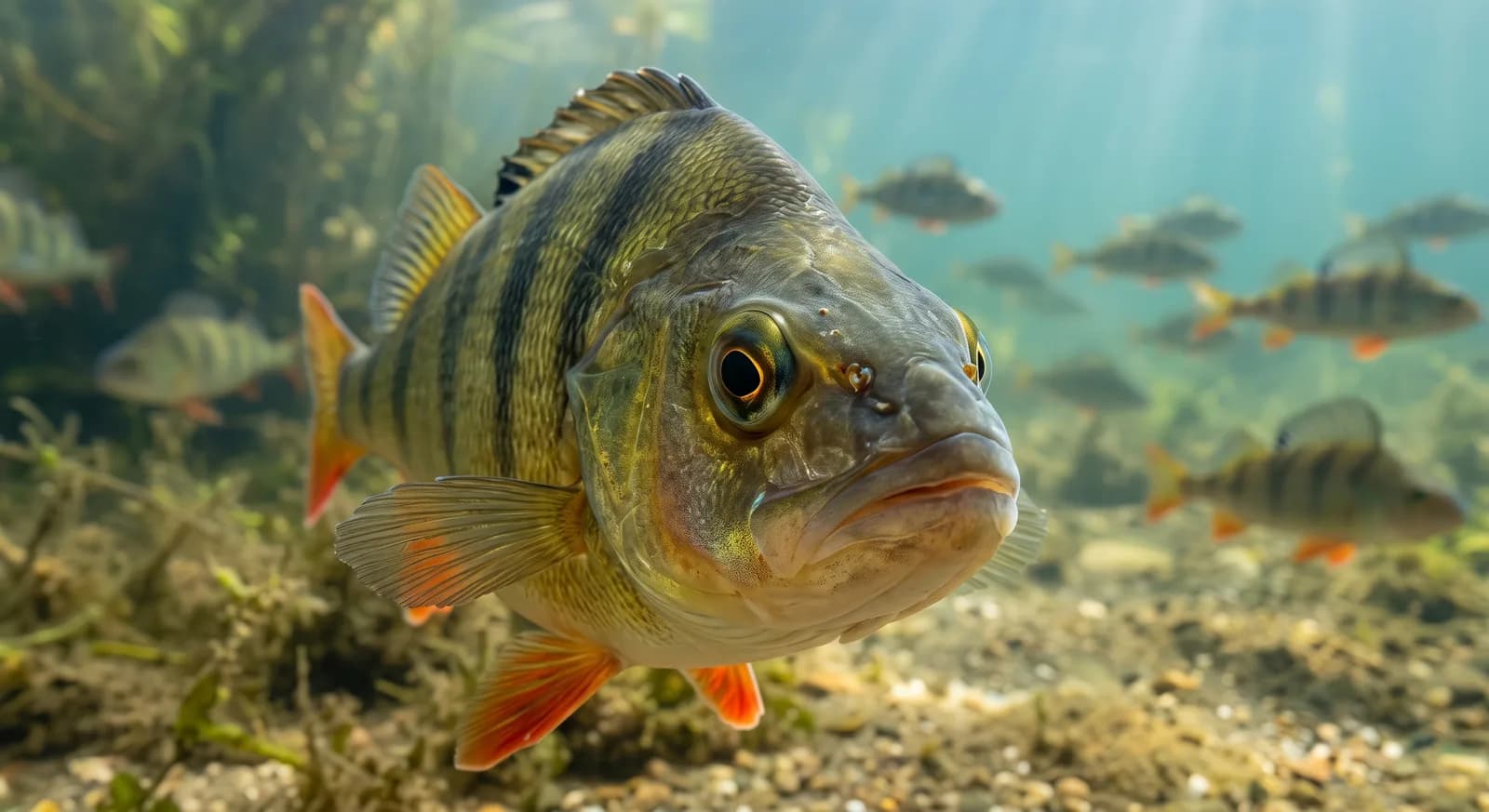
Perch
Perca fluviatilis
Largemouth Bass
Micropterus salmoides
Climbing Perch
Anabas testudineus
Tiger Perch
Terapon jarbua
Shiner Perch
Cymatogaster aggregata
Conservation status
No species documented in this group is genuinely at risk according to the IUCN, with the data available today.
See the global conservation statusWhere they live
Recorded in 112 countries. The ones with the most species in the group:
Where to see them
- Abisko1 species
- Acadia1 species
- Alaungdaw Kathapa1 species
- Albufera de Valencia1 species
- Alta Costa / Archipiélago de Kvarken1 species
- Alto Veluwe (Hoge Veluwe)1 species
- Anticosti1 species
- Archipiélago (Saaristomeri)1 species
- Assateague Island1 species
- Balaton-felvidék1 species
- Bhitarkanika1 species
- Białowieża1 species
- Archipiélago de Turkudiving
- Crystal River (manatíes)diving
- Devil's Dendiving
- Fathom Five National Marine Park (Tobermory)diving
- Gdansk (pecios bálticos)diving
- Ginnie Springsdiving
Did you know…
It eats planktonic invertebrates as a juvenile and small fish as an adult.
From Perch
It lives in lakes, slow-flowing rivers and estuaries across Eurasia.
From Perch
It is considered invasive in Australia and other regions where it has been introduced.
From Perch
The male builds the nest, fertilises the eggs and guards them aggressively for weeks, going without food for much of that time.
From Largemouth Bass
It eats small fish, crayfish, frogs and aquatic insects.
From Largemouth Bass
It lives in lakes, ponds, swamps and slow-flowing rivers of North America.
From Largemouth Bass
It can cover several hundred metres over land using its pectoral fins and gill covers, which is where its name comes from.
From Climbing Perch
It has the most developed labyrinth organ in its whole family relative to body size, which lets it breathe air and live in water almost devoid of oxygen.
From Climbing Perch