Species group · Bony fish
Salmon
WAnimals has 5 species of salmon, spread across 2 families (Carangidae, Salmonidae).
- 5 species
- 2 families
- 34 countries
- 37 parks
- Weight
- 3.6 kg – 46.2 kg
- Length
- 45 cm – 1.8 m
- Lifespan
- 5 – 10 years
Ranges calculated from the entries that record the figure, not from all 5.
All 5 species of salmon on WAnimals
Each one has its own full entry. This group does not replace them: it brings them together.
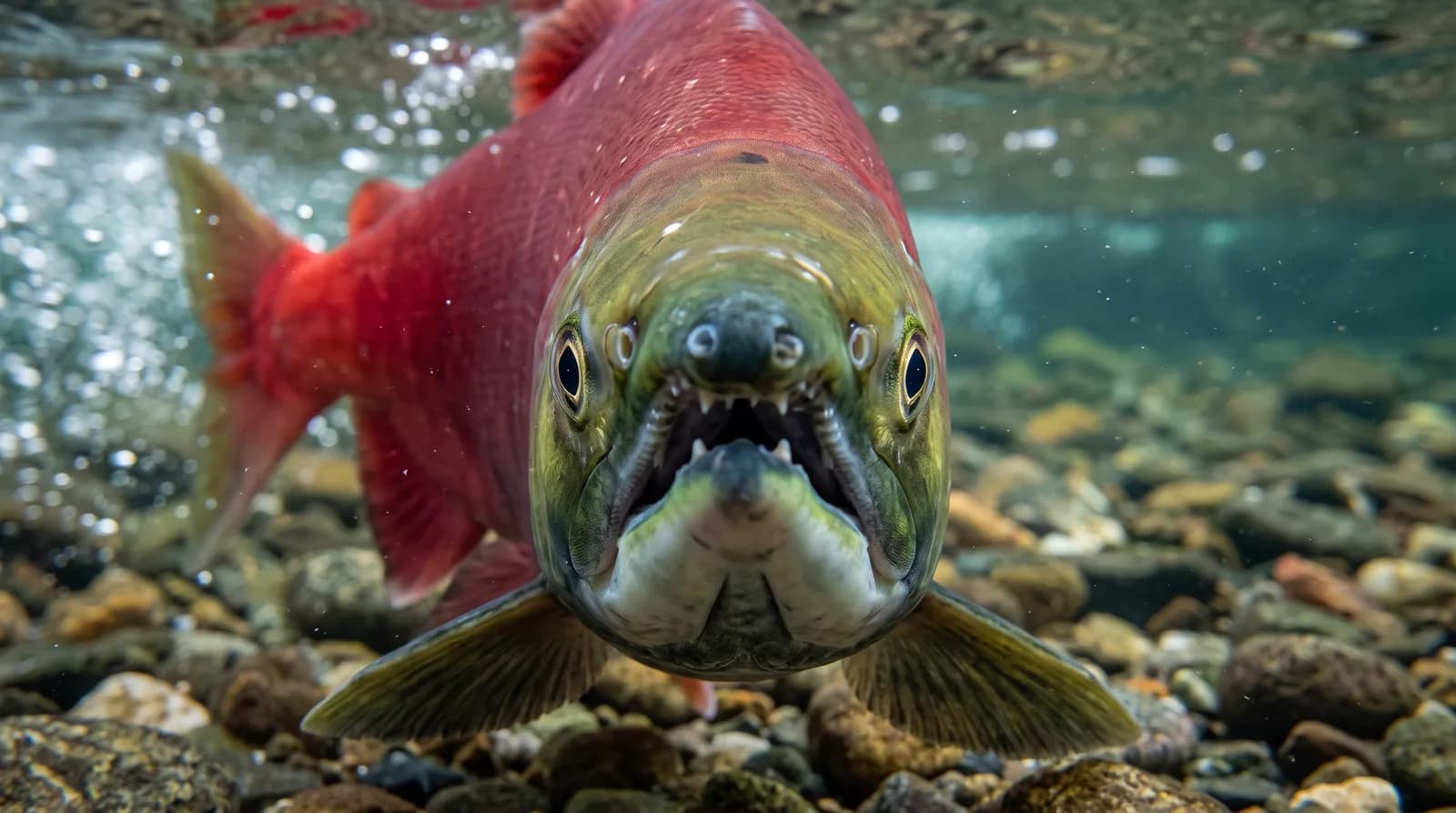 Least Concern
Sockeye Salmon
Oncorhynchus nerka
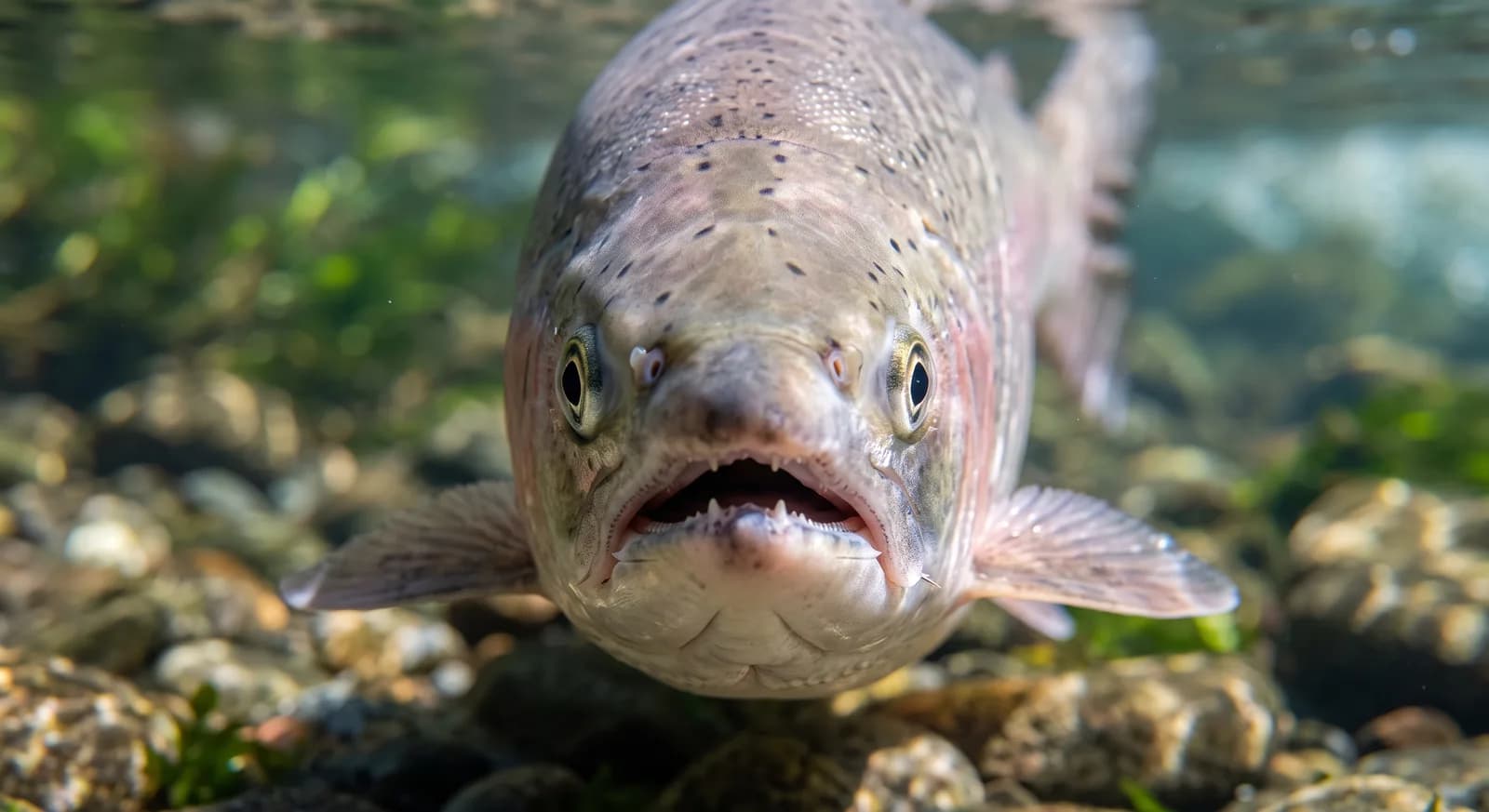 Least Concern
Salmon
Salmo salar
Coho Salmon
Oncorhynchus kisutch
Chinook Salmon
Oncorhynchus tshawytscha
Rainbow Runner
Elagatis bipinnulata
Conservation status
1 especies in this group están en alguna categoría de riesgo real según la UICN.
See the global conservation statusWhere they live
Recorded in 34 countries. The ones with the most species in the group:
Where to see them
- Gwaii Haanas3 species
- Katmai3 species
- Lake Clark3 species
- Olympic3 species
- Pacific Rim3 species
- Wrangell-St. Elias3 species
- Crater Lake2 species
- Denali2 species
- Glacier Bay2 species
- Gulf Islands2 species
- Kenai Fjords2 species
- Mount Rainier2 species
- Browning Pass (Isla de Vancouver)diving
- Great Bear Rainforestdiving
- HMCS Nanaimo Wreckdiving
- Neah Baydiving
- Puget Sound (Pulpo gigante)diving
- Bahía de Fundydiving
Did you know…
It changes colour dramatically, from silver to deep red, as it nears the end of its life on the spawning migration, after which it dies.
From Sockeye Salmon
It returns to spawn in the very stretch of river where it hatched, navigating first by the Earth's magnetic field in the open sea and then by smell, which lets it recognise the chemical signature of its natal stream.
From Sockeye Salmon
It is semelparous: it breeds once and dies. The carcasses bring the river nutrients of marine origin that feed bears, birds and the riverside forest itself.
From Sockeye Salmon
It can leap waterfalls up to 4.5 metres high on its migration upriver.
From Salmon
A female can lay between 1,300 and 2,000 eggs per kilo of body weight.
From Salmon
It migrates between fresh-water rivers, where it hatches and breeds, and the North Atlantic, where it feeds.
From Salmon
It returns to the exact stream where it hatched by smell: as a fry it memorises the chemical signature of its river and recognises it years later after thousands of kilometres in the open sea.
From Coho Salmon
It is semelparous: it spawns once and then dies, and its carcasses bring riverside forests an enormous quantity of nitrogen and phosphorus of oceanic origin.
From Coho Salmon