One of the 4 insects on WAnimals
Insects · Phasmatodea · Phasmatidae
Macleay's Spectre
Extatosoma tiaratum
It has not yet been assessed against the IUCN criteria. See full glossary
The spiny leaf insect of Australia, its body covered in spines and lobes that give it the look of a dry twig or a withered leaf. The female, huge and all but unable to fly, reaches twenty centimetres; the male is slender, winged and far smaller.
Size
10 cm – 15 cm
Diet
Herbivore
Feeds mainly on plants.
Activity
Nocturnal
Active mainly at night.
Social structure
Solitary
Lives and hunts alone, joining others only to breed.
Sighting difficulty
Unknown
Fun facts
- reproducciónIts eggs carry a nutrient-rich outer structure (a capitulum) that attracts ants, which carry them off to their underground nest, where they hatch safe from predators.
- The newly hatched nymphs are black and reddish and move in jerks, mimicking the ants of the nest they emerge from, until they get away and take on their cryptic colouring.
- It can reproduce by parthenogenesis, though in that case all the offspring are female.
- Its eggs fool ants. They bear a fleshy, lipid-rich appendage called a capitulum, which the ants identify as food and which leads them to carry the eggs into their underground nest. There the egg is protected from desiccation and from predators.
- And the nymph emerges disguised as an ant. On hatching inside the ant nest, it mimics ants of the genus Leptomyrmex: orange head, white collar and black body, and it also moves fast, jerking its body as they do, something extraordinary in a stick insect. That is how it leaves the nest without being attacked.
- That disguise is short-lived: it loses the ant colouring within three to five days, as it climbs from the ground to the tree canopy, and over the following moults it takes on the spiny, slow-moving look of the adult.
- The female fires her eggs: she flings them several metres away with a flick of the abdomen, scattering them across the forest floor.
- It can reproduce without males. If there are none, it resorts to parthenogenesis; those eggs take up to nine months to hatch, compared with four for fertilised ones, and produce only females.
- When threatened, the female curls her abdomen over her back, imitating the posture of a scorpion, although she is completely harmless.
Life cycle & biology
- Skeleton type
- Invertebrate - chitin exoskeleton (insect)
- Habitat & environment
- Rainforest and sclerophyll forest of eastern Australia; it feeds mainly on eucalyptus and spends the day motionless among the foliage
Sources consulted: Lista Roja de la UICN; Hughes y Westoby (1992), Functional Ecology; Zeng et al. (2020), sobre dispersión de ninfas; Museo Australiano
Where to watch it
Parks and dive sites where this species has been documented.
Related species
Other species in the catalogue with the most in common with Macleay's Spectre — same habitat, park, country, tags or family.
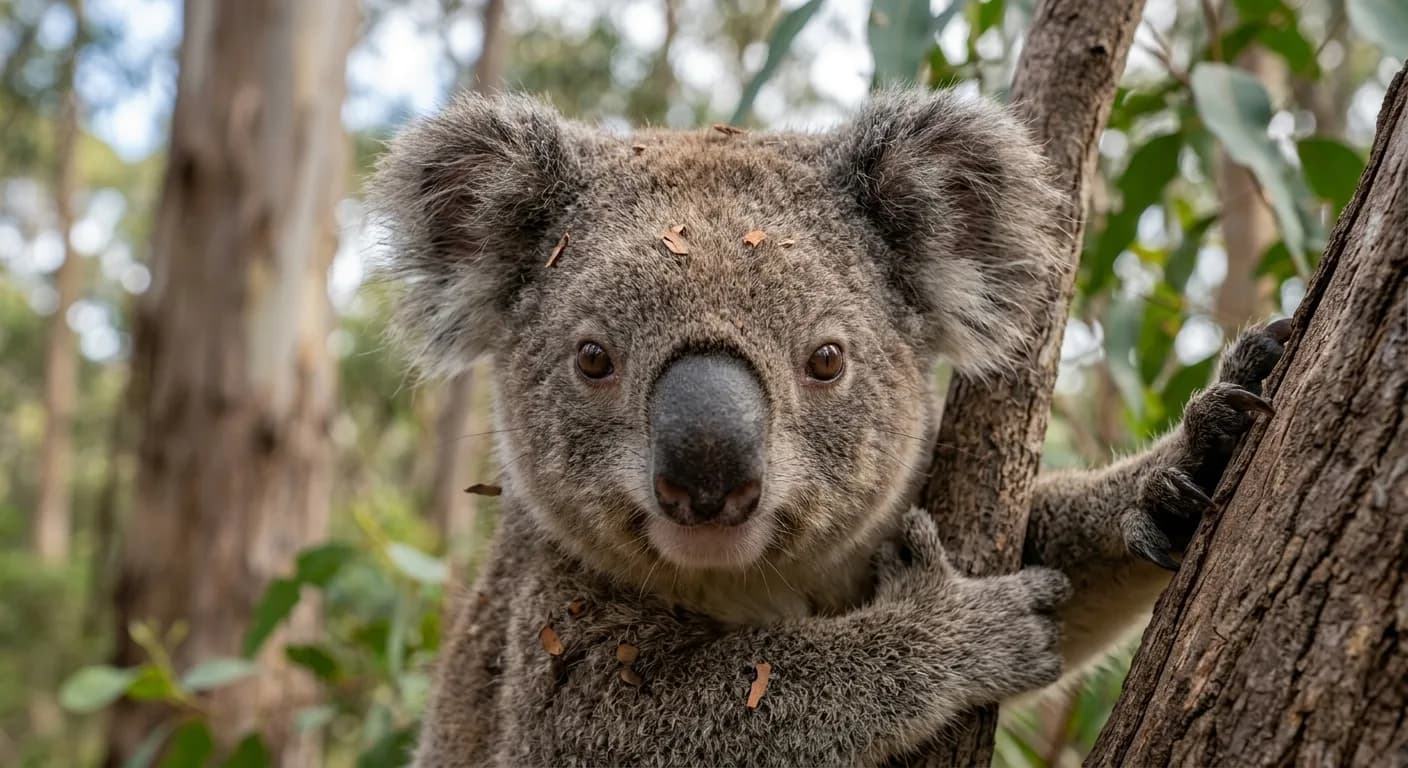 Vulnerable
Koala
Phascolarctos cinereus
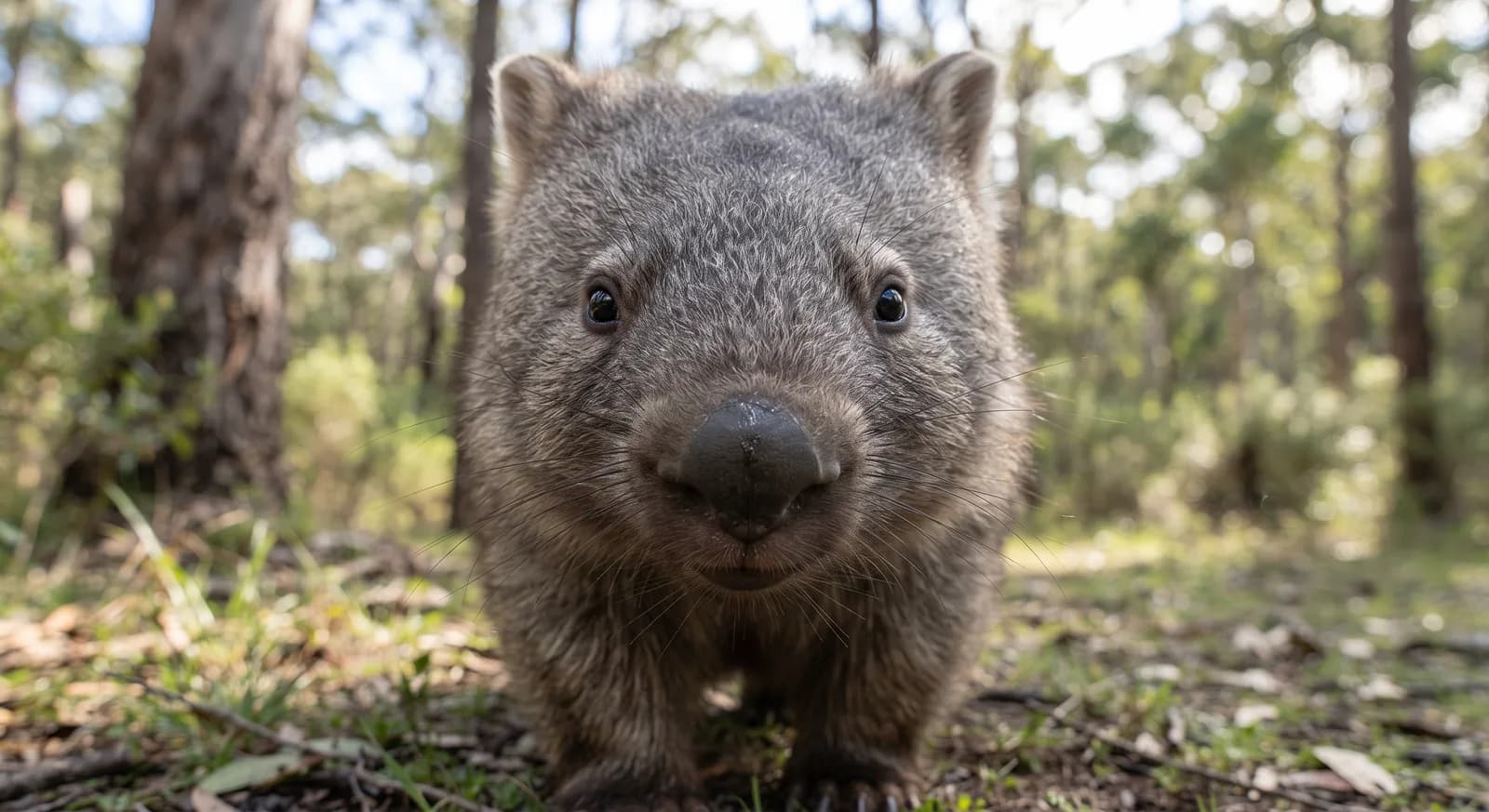 Least Concern
Bare-nosed Wombat
Vombatus ursinus
Red-necked Wallaby
Notamacropus rufogriseus
Greater Glider
Petauroides volans
Red-legged Pademelon
Thylogale stigmatica
Giant Leaf Insect
Phyllium giganteum
Keep exploring
Based on what we already know about macleay's spectre.
Comments
Share an experience, a fun fact or a tip for seeing the macleay's spectre.
Be the first to comment.