One of the 3 isopods on WAnimals
Malacostracans · Isopoda · Cirolanidae
Giant Isopod
Bathynomus giganteus
It has not yet been assessed against the IUCN criteria. See full glossary
Bathynomus giganteus is an isopod crustacean. It is a member of the giant isopods (Bathynomus) and, as such, is related, if distantly, to shrimps and crabs. It was the first Bathynomus species ever documented and was described in 1879 by the French zoologist Alphonse Milne-Edwards after the isopod was found in fishermen's nets off the coast of Dry Tortugas National Park in the Gulf of Mexico.
Size
19 cm – 50 cm
Lifespan
5 years
Diet
Carnivore
Feeds mainly on other animals.
Social structure
Solitary
Lives and hunts alone, joining others only to breed.
Sighting difficulty
Unknown
Fun facts
- GeneralA scavenger up to 40 cm long; in captivity it can go years without eating.
- fisiologíaIt can go several years without eating, on an extremely slow metabolism suited to how little food there is in deep water.
- One individual at the Toba Aquarium in Japan refused all food for more than five years before it died.
- Its outsized body is an example of abyssal gigantism, the tendency of some invertebrates to reach enormous sizes in cold, deep water.
- Its compound eyes have some 4,000 facets and are extremely sensitive to the little light that exists at that depth.
- It is the largest isopod known, a relative of the woodlouse scaled up to the size of a small cat: ordinary specimens measure between 19 and 36 cm and the largest confirmed was around 50.
- One individual at the Toba Aquarium in Japan refused all food for five years and 43 days before dying, in February 2014. It is the documented fasting record.
- That capacity comes from its way of life: on the abyssal floor food arrives all at once and without warning, so when it eats it does so until visibly swollen and then holds out for months or years.
- Like its land-dwelling cousin, it rolls into a ball to protect its soft underside.
- Stomach analysis in the Gulf of Mexico has found significant quantities of plastic: microplastics now reach the abyssal floor.
Life cycle & biology
- Habitat & environment
- Abyssal bottoms (300-2,000 m)
Sources consulted: https://es.wikipedia.org/wiki/Bathynomus_giganteus
Where to find it
See its range on the interactive mapRelated species
Other species in the catalogue with the most in common with Giant Isopod — same habitat, park, country, tags or family.
Speckled Sea Louse
Eurydice pulchra
American Lobster
Homarus americanus
Florida Stone Crab
Menippe mercenaria
Atlantic Ghost Crab
Ocypode quadrata
Pram Bug
Phronima sedentaria
 Vulnerable
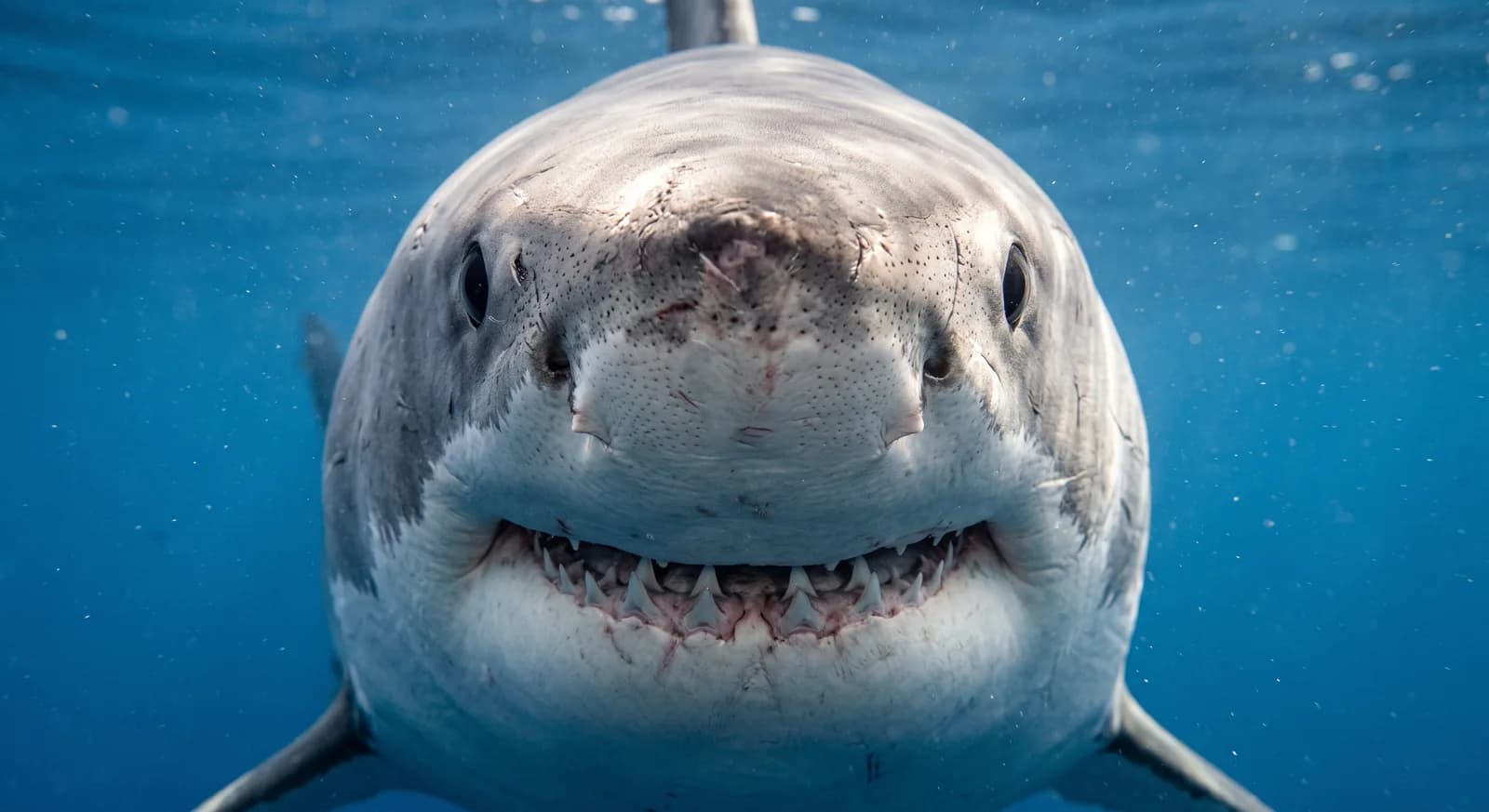
Great White Shark
Carcharodon carcharias
Keep exploring
Based on what we already know about giant isopod.
Comments
Share an experience, a fun fact or a tip for seeing the giant isopod.
Be the first to comment.