Cartilaginous fish · Lamniformes · Lamnidae
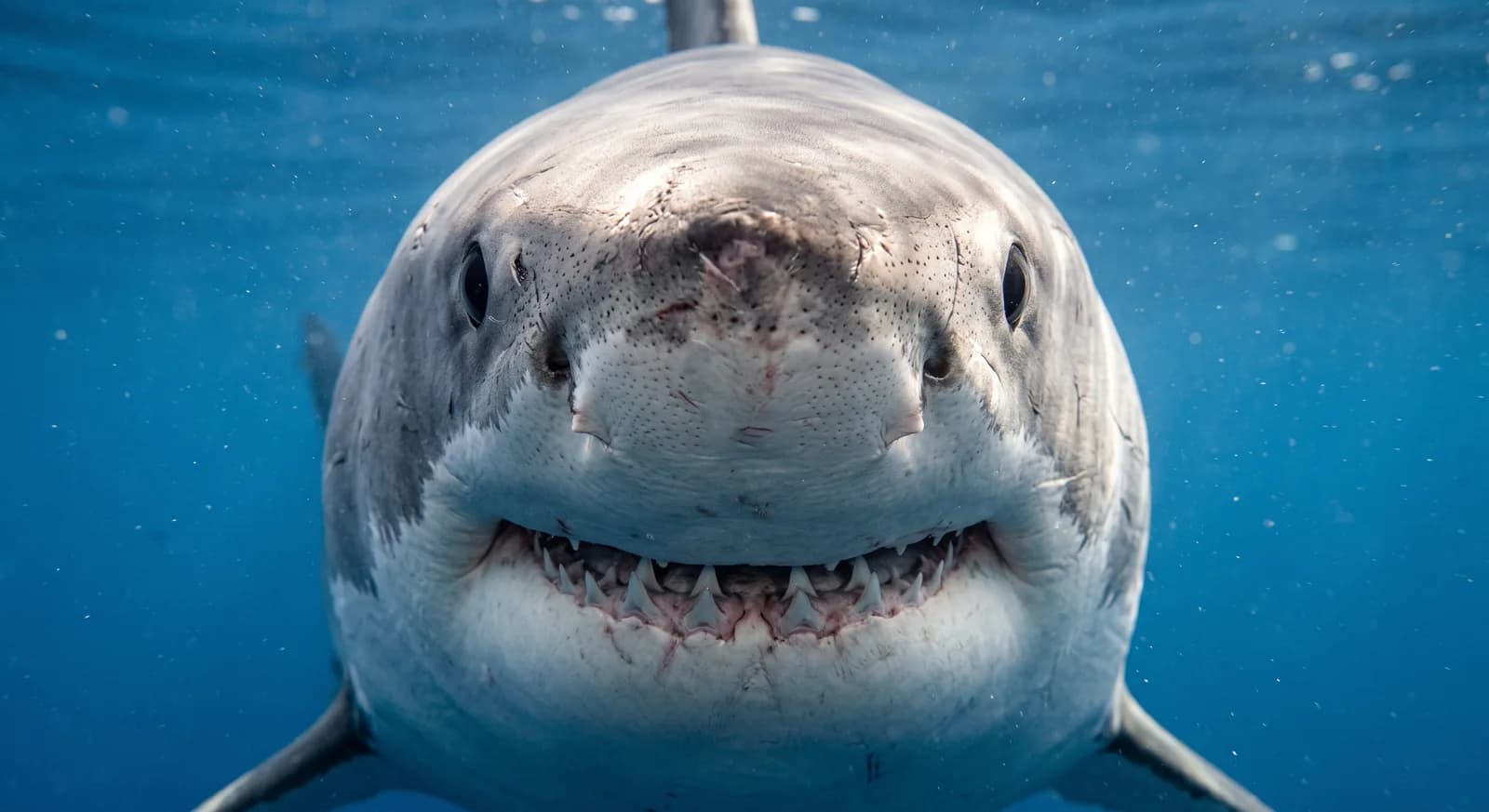
Great White Shark
Carcharodon carcharias
It faces a high risk of extinction in the wild over the medium term. See full glossary
The largest predatory fish in the ocean, with an extraordinary sense of smell able to detect a drop of blood in 100 litres of water.
Weight
680 kg – 1.1 t
Size
4 m – 6 m
Lifespan
40 years
Diet
Carnivore
Feeds mainly on other animals.
Activity
Irregular activity
Active at irregular times, by day or night depending on circumstances.
Social structure
Solitary
Lives and hunts alone, joining others only to breed.
Sighting difficulty
Moderate
Fun facts
- It can pick up the faintest electrical signals from its prey.
- It can launch itself clear of the water when hunting.
- It is more fragile than it looks: it is classed as a vulnerable species.
Life cycle & biology
- Skeleton type
- Vertebrate - cartilaginous, not bony, skeleton (chondrichthyan fish)
- Habitat & environment
- Temperate and subtropical coastal and open waters worldwide
- Size at birth
- 1.0 - 1.5 metres long at birth
- Sexual maturity
- Estimates vary widely: classic studies put maturity at ~9-10 years for males and ~14-16 for females; a 2014 radiocarbon study suggests far greater ages (~26 for males, ~33 for females)
- Gestation / incubation
- Estimated at 11 to 18 months (possibly as long as 2 years); never directly observed
- Litter / clutch size
- 2 to 10 pups per litter (up to 14-17 documented in exceptional cases)
Sources consulted: MarineBio; A-Z Animals; Animal Diversity Web; AnAge (genomics.senescence.info); Animalia.bio; Hamady et al. 2014 (PubMed, estudio de radiocarbono)
Where to find it
See its range on the interactive mapBest time: April to September in South Africa
Where to watch it
Parques y spots de buceo donde se ha documentado esta especie — se muestran 20 de 47 documentados.
Related species
Other species in the catalogue with the most in common with Great White Shark — same habitat, park, country, tags or family.
Porbeagle
Lamna nasus
Shortfin Mako
Isurus oxyrinchus
 Vulnerable
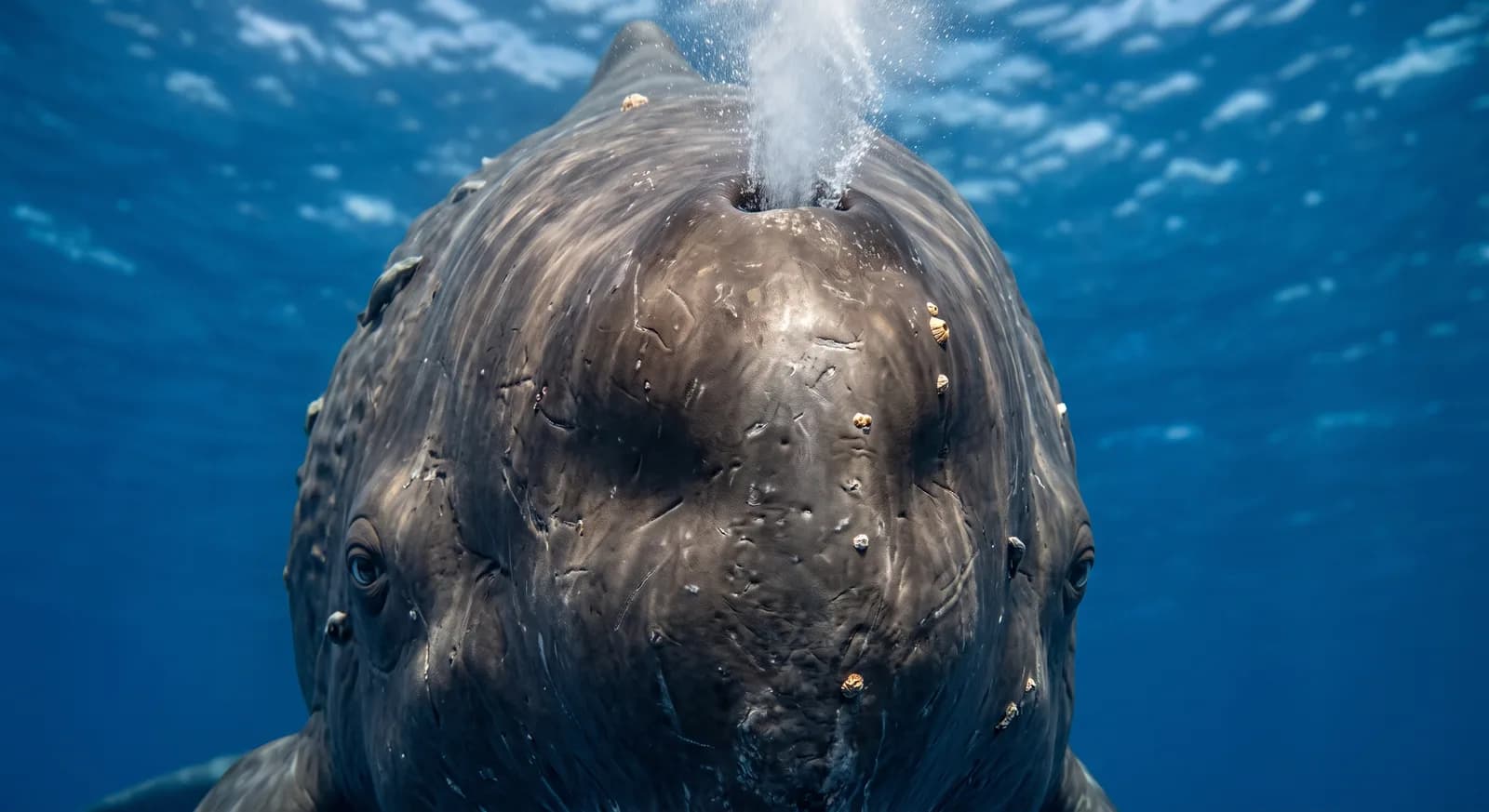
Sperm Whale
Physeter macrocephalus
 Vulnerable
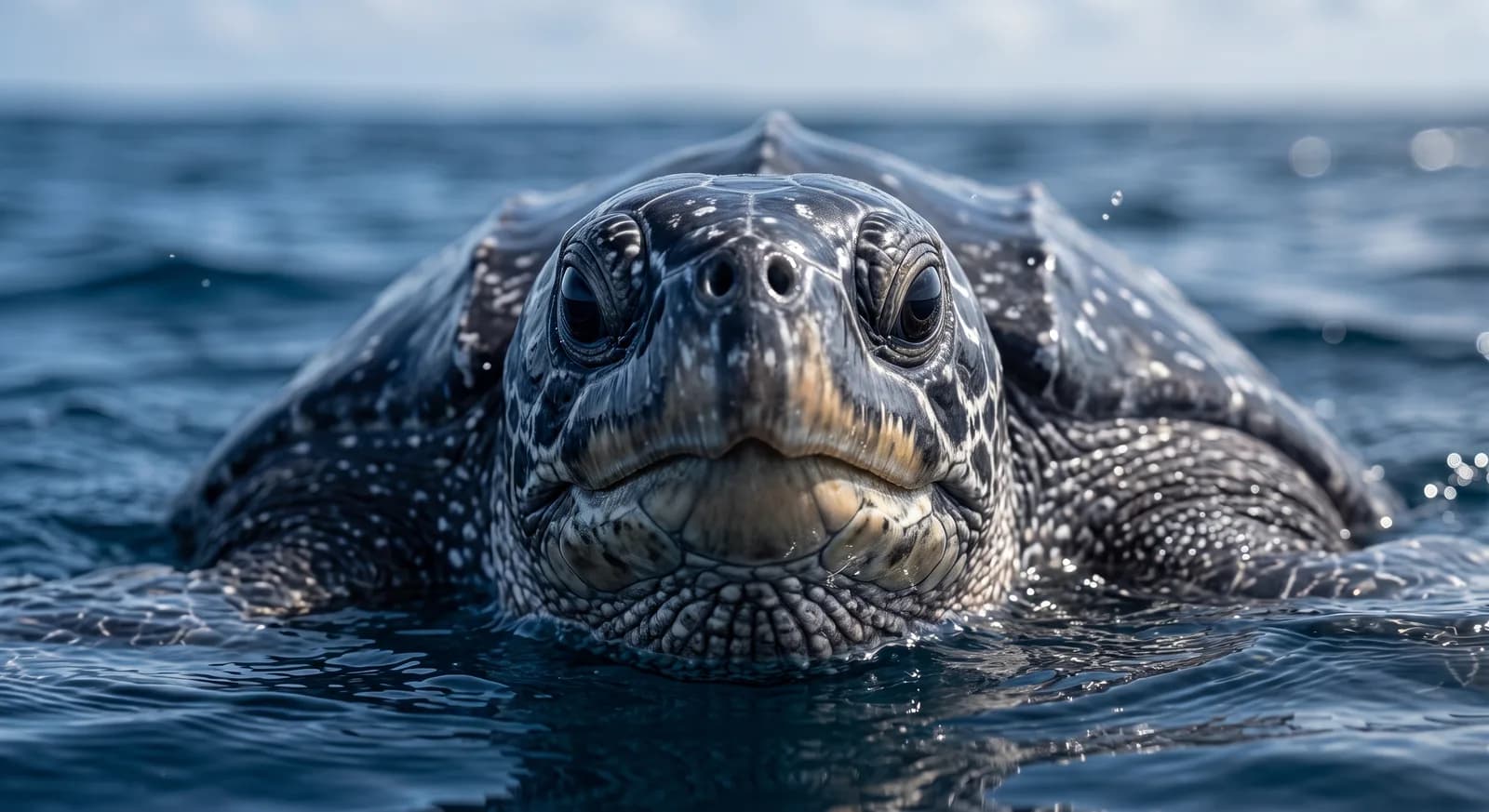
Leatherback Sea Turtle
Dermochelys coriacea
 Vulnerable
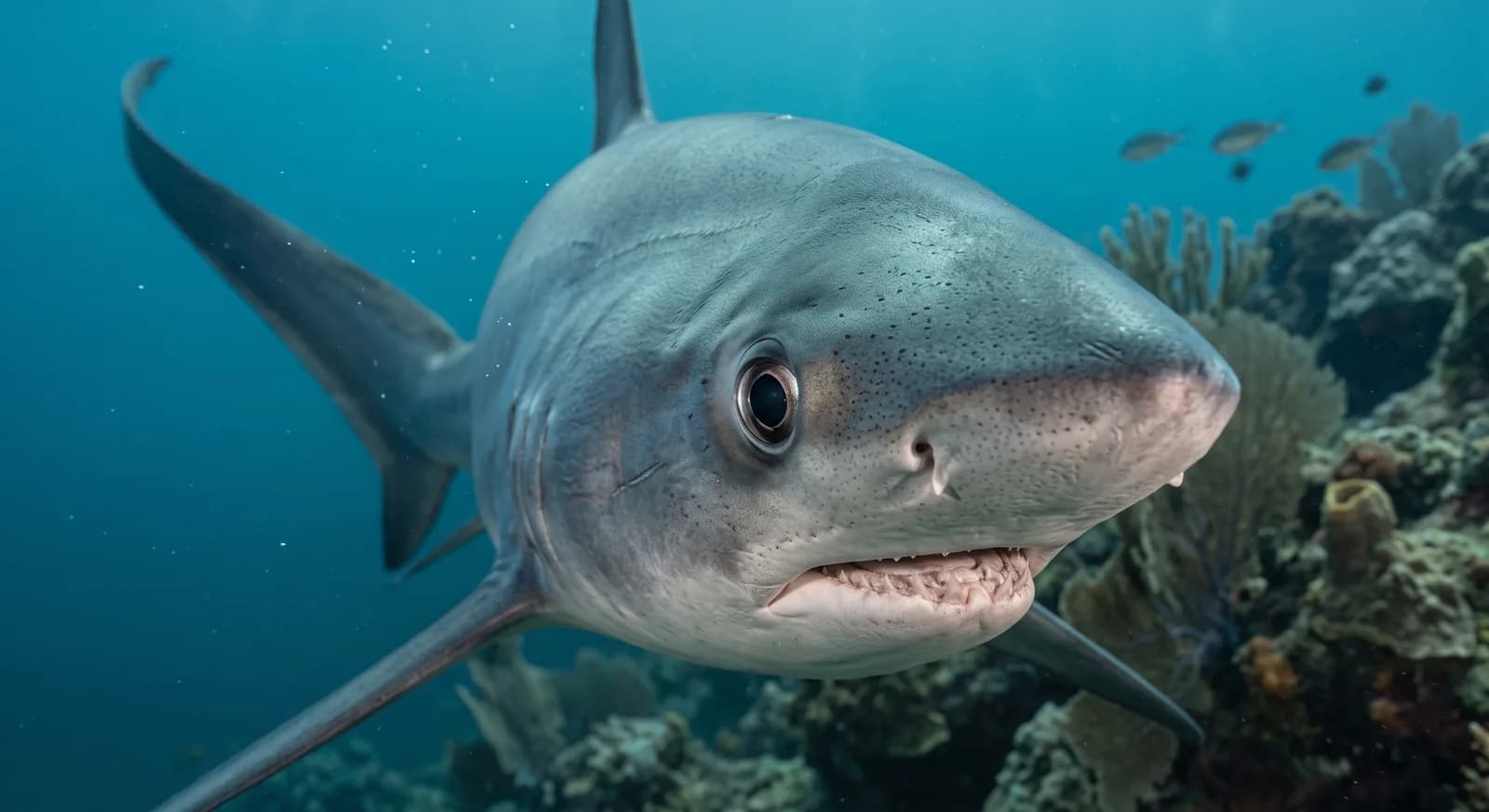
Grayfish
Alopias vulpinus
 Vulnerable
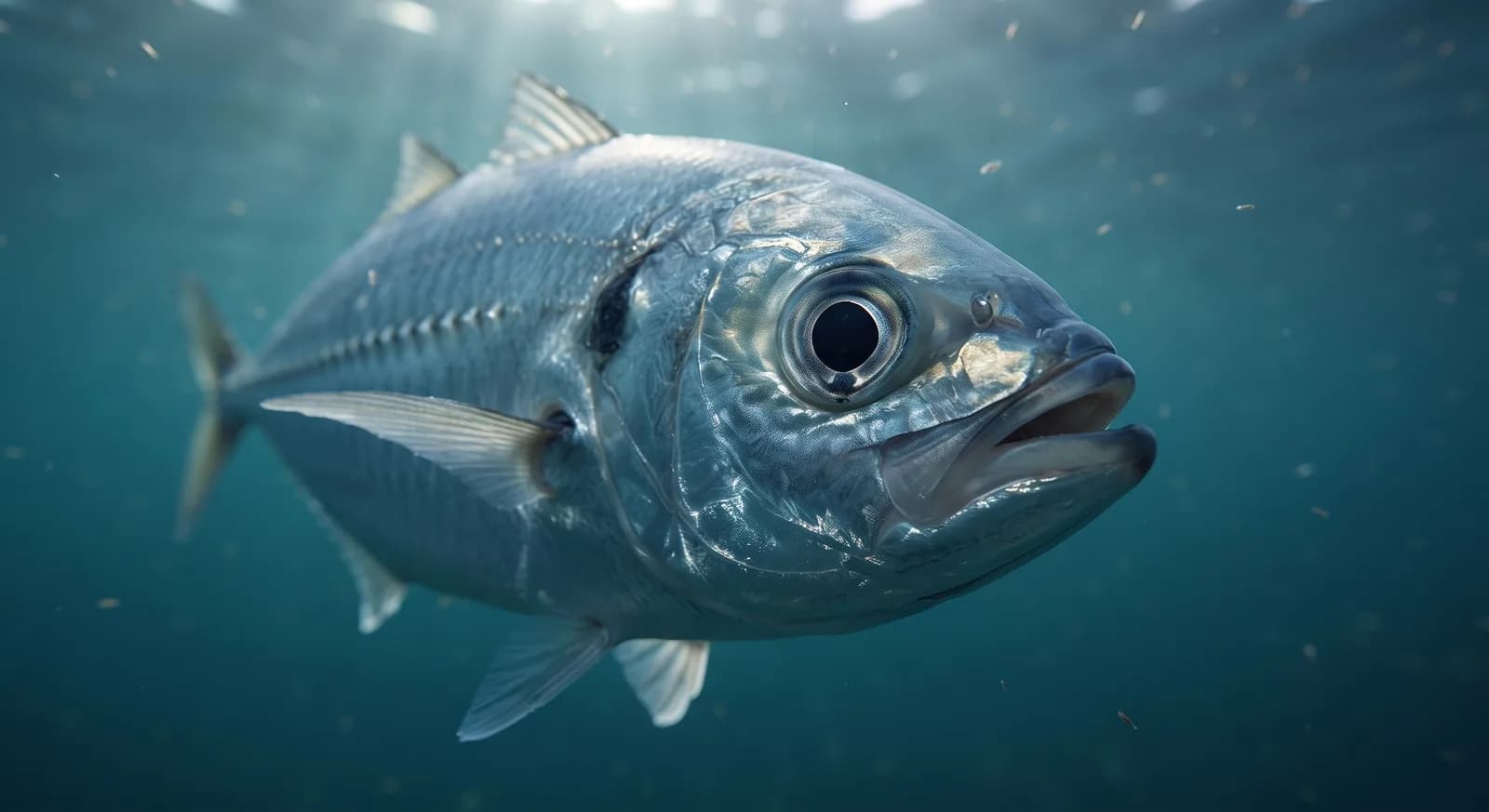
Horse Mackerel
Trachurus trachurus
How to help
The great white shark is classified as vulnerable. Organizations such as Shark Research Institute work specifically on its conservation and that of its habitat; looking into their programs is a good starting point if you want to get involved.
It's documented in 12 real protected areas — part of why protecting these places matters for its conservation.
Keep exploring
Based on what we already know about great white shark.
Comments
Share an experience, a fun fact or a tip for seeing the great white shark.
Be the first to comment.