One of the 2 jacks on WAnimals
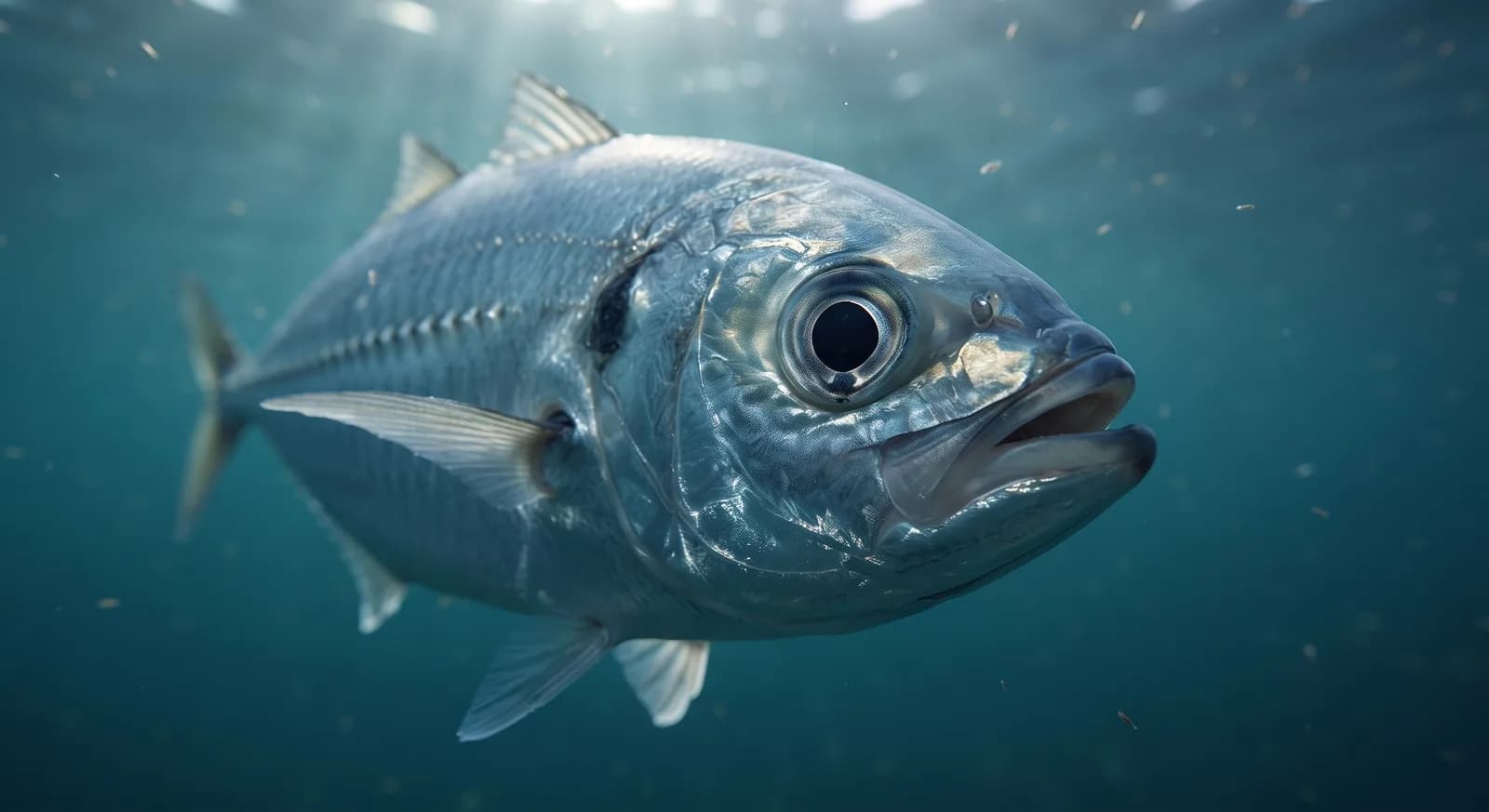
Bony fish · Perciformes · Carangidae
Horse Mackerel
Trachurus trachurus
It faces a high risk of extinction in the wild over the medium term. See full glossary
Despite its fairly modest size, it is one of the longest-lived fish known for its size class, reaching up to 40 years according to otolith studies.
Weight
1.5 kg – 2 kg
Size
22 cm – 70 cm
Lifespan
25 years
Diet
Carnivore
Feeds mainly on other animals.
Activity
Diurnal
Active mainly during the day.
Social structure
School
Gathers in coordinated schools, typical of fish.
Sighting difficulty
Moderate
Fun facts
- It can live up to 40 years, exceptionally long for its size.
- Its scientific name comes from the Greek for 'rough' and 'tail', after the line of bony scutes along its side.
- It eats small crustaceans and fish, including trumpetfish.
Life cycle & biology
- Skeleton type
- Vertebrate - internal bony skeleton (fish)
- Habitat & environment
- Coastal and continental-shelf waters of the eastern Atlantic, from Norway to South Africa, including the Mediterranean and the Black Sea
- Birth weight
- Pelagic egg; larva roughly 5 mm on hatching
- Size at birth
- A pelagic larva some 5 mm long on hatching
- Sexual maturity
- 2-4 years (16-25 cm long, most often around 21 cm)
- Gestation / incubation
- The egg develops over a few days (no precise figure found)
- Litter / clutch size
- Up to 140,000 eggs per female in 5-7 batches a season
Sources consulted: Wageningen University Research; American Oceans; FishBase; Grokipedia; ResearchGate (blue jack mackerel comparativo); A-Z Animals
Where to find it
See its range on the interactive mapWhere to watch it
Parques y spots de buceo donde se ha documentado esta especie — se muestran 20 de 150 documentados.
Related species
Other species in the catalogue with the most in common with Horse Mackerel — same habitat, park, country, tags or family.
Greater Amberjack
Seriola dumerili
Crevalle Jack
Caranx hippos
 Vulnerable
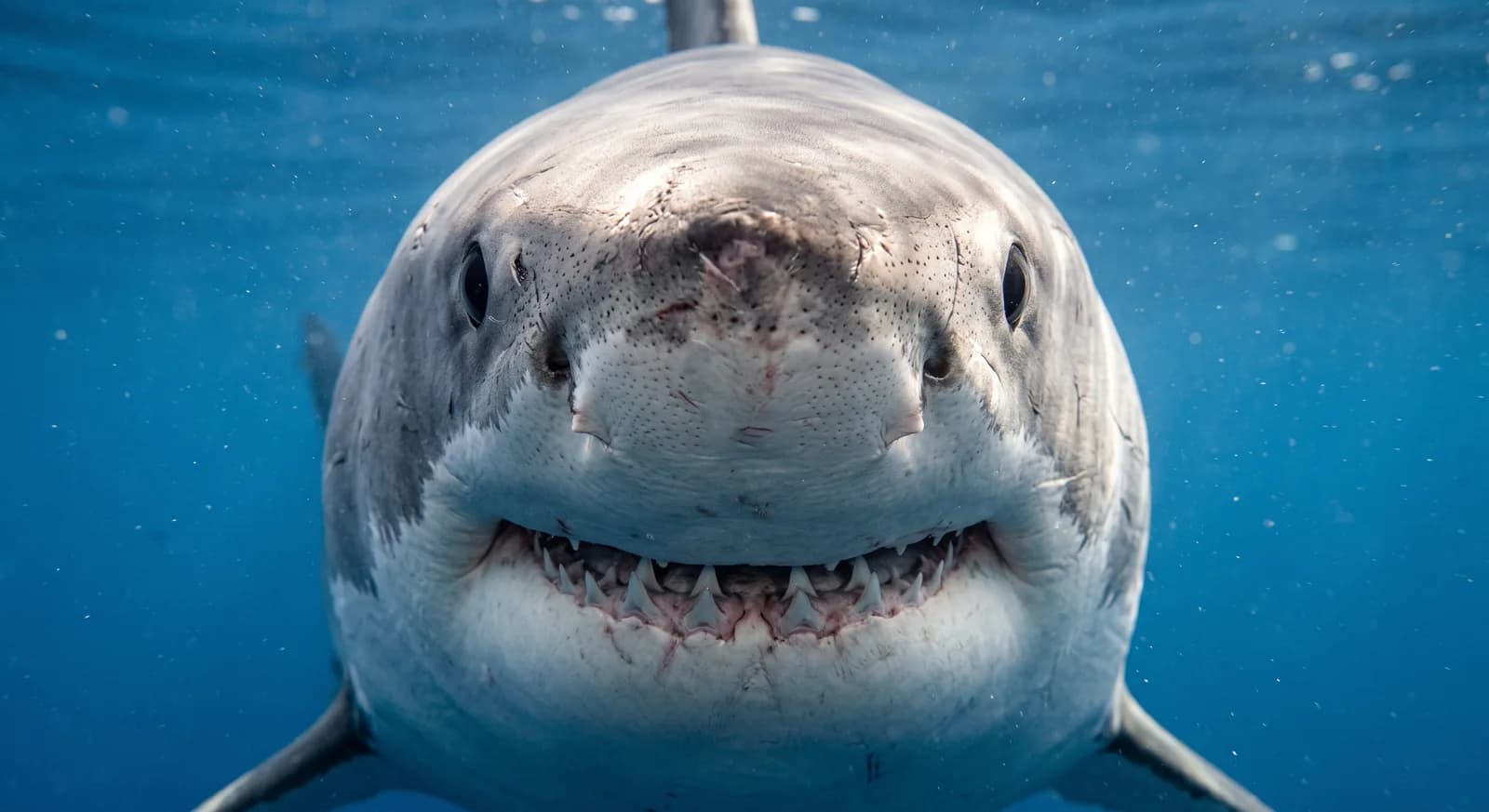
Great White Shark
Carcharodon carcharias
Porbeagle
Lamna nasus
 Vulnerable
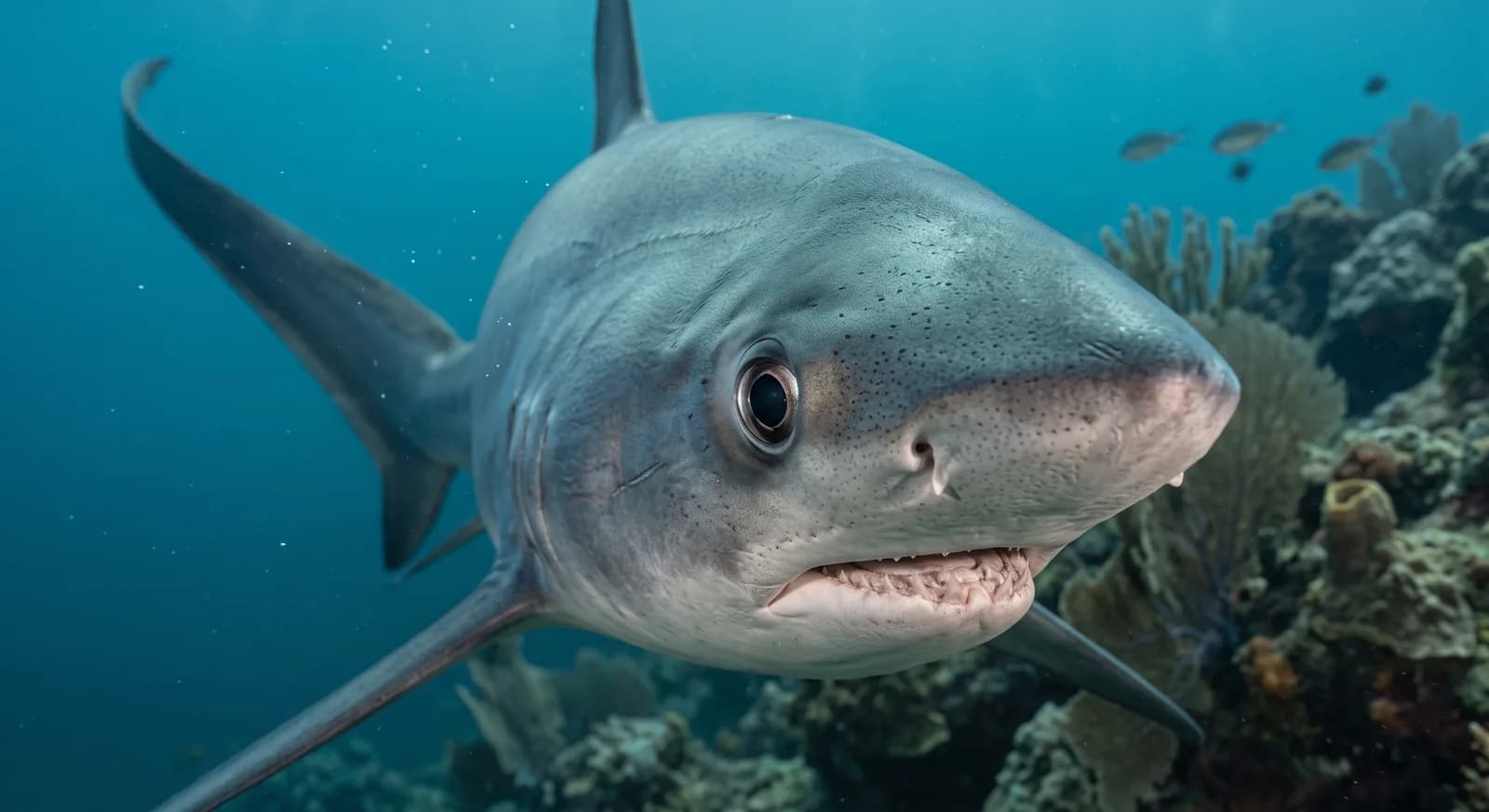
Grayfish
Alopias vulpinus
Spurdog
Squalus acanthias
How to help
The horse mackerel is classified as vulnerable. Organizations such as UICN, WWF y Wildlife Conservation Society work specifically on its conservation and that of its habitat; looking into their programs is a good starting point if you want to get involved.
It's documented in 17 real protected areas — part of why protecting these places matters for its conservation.
Keep exploring
Based on what we already know about horse mackerel.
Comments
Share an experience, a fun fact or a tip for seeing the horse mackerel.
Be the first to comment.