Bony fish · Perciformes · Carangidae
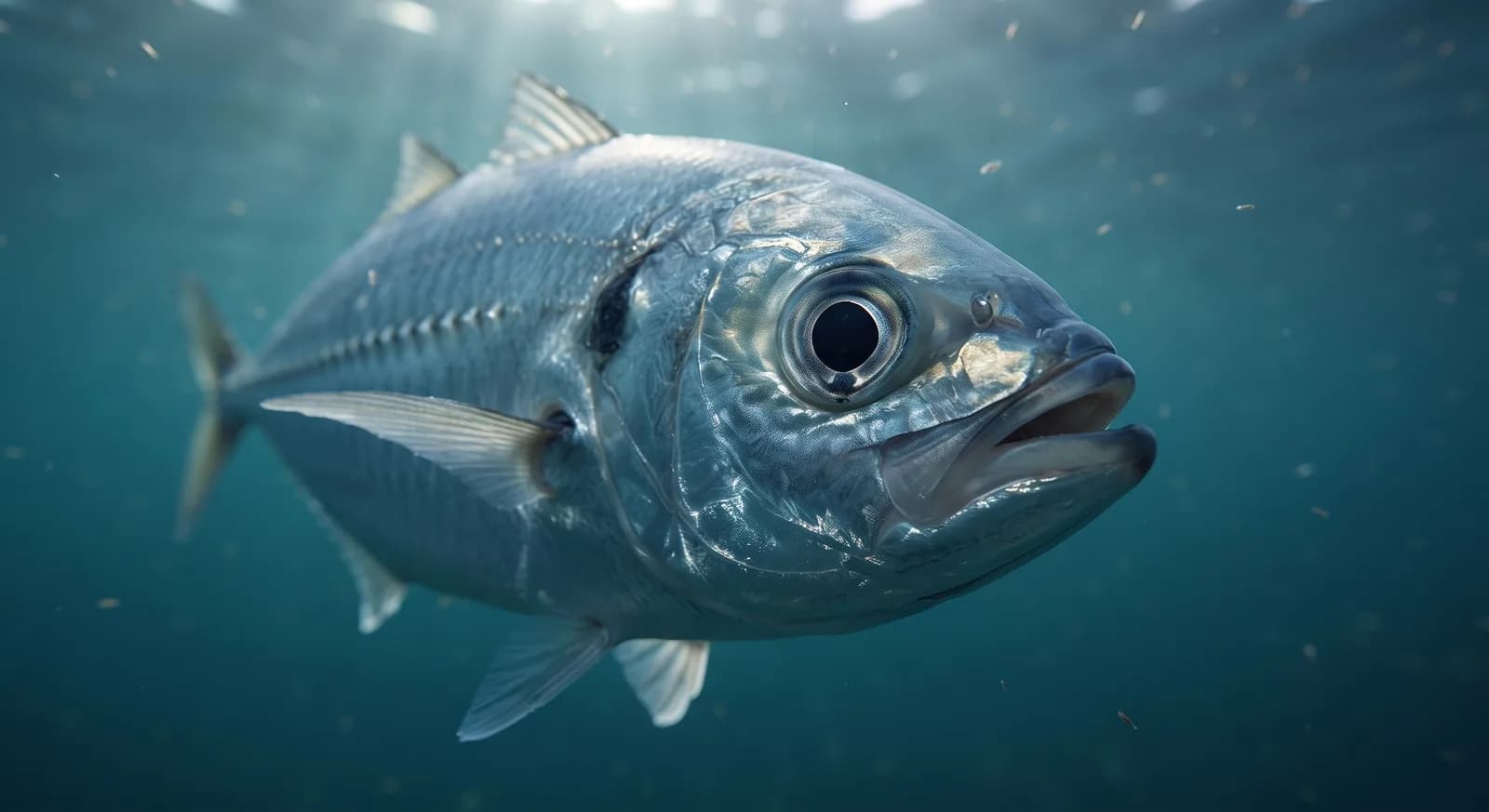
Greater Amberjack
Seriola dumerili
The species is abundant and widely distributed; it faces no significant short-term risk. See full glossary
The greater amberjack — known in Spanish as pez de limón, pez limón, seriola, lirio, medregal coronado, coronado de ley, lecha or lechola — is a perciform fish of the family Carangidae. No subspecies are recognised.
Weight
up to 80.6 kg
Size
up to 1.9 m
Lifespan
15 years
Diet
Carnivore
Feeds mainly on other animals.
Social structure
School
Gathers in coordinated schools, typical of fish.
Sighting difficulty
Easy
Fun facts
- It is the largest jack: it reaches 190 cm and a little over 80 kg.
- Large individuals accumulate ciguatoxin and cases of ciguatera poisoning from eating it have been documented.
Life cycle & biology
- Skeleton type
- Vertebrate - internal bony skeleton (bony fish)
- Habitat & environment
- Coastal waters and reefs of tropical and warm-temperate seas worldwide, between 1 and 385 m and usually between 18 and 72 m; small individuals occupy shallow water and large ones move deeper
- Sexual maturity
- Length at first maturity 90.8 cm (range 80-127 cm); half the males mature at 64.6 cm and half the females at 73.3 cm fork length
Sources consulted: https://es.wikipedia.org/wiki/Seriola_dumerili
Where to find it
See its range on the interactive mapWhere to watch it
Parques y spots de buceo donde se ha documentado esta especie — se muestran 20 de 151 documentados.
Related species
Other species in the catalogue with the most in common with Greater Amberjack — same habitat, park, country, tags or family.
Crevalle Jack
Caranx hippos
 Vulnerable
Horse Mackerel
Trachurus trachurus
European Anchovy
Engraulis encrasicolus
Whiting
Merlangius merlangus
Tropical Two-wing Flyingfish
Exocoetus volitans
Mackerel
Scomber scombrus
Keep exploring
Based on what we already know about greater amberjack.
Comments
Share an experience, a fun fact or a tip for seeing the greater amberjack.
Be the first to comment.