One of the 2 stiff-tailed ducks on WAnimals
Birds · Anseriformes · Anatidae
White-Headed Duck
Oxyura leucocephala
It has not yet been assessed against the IUCN criteria. See full glossary
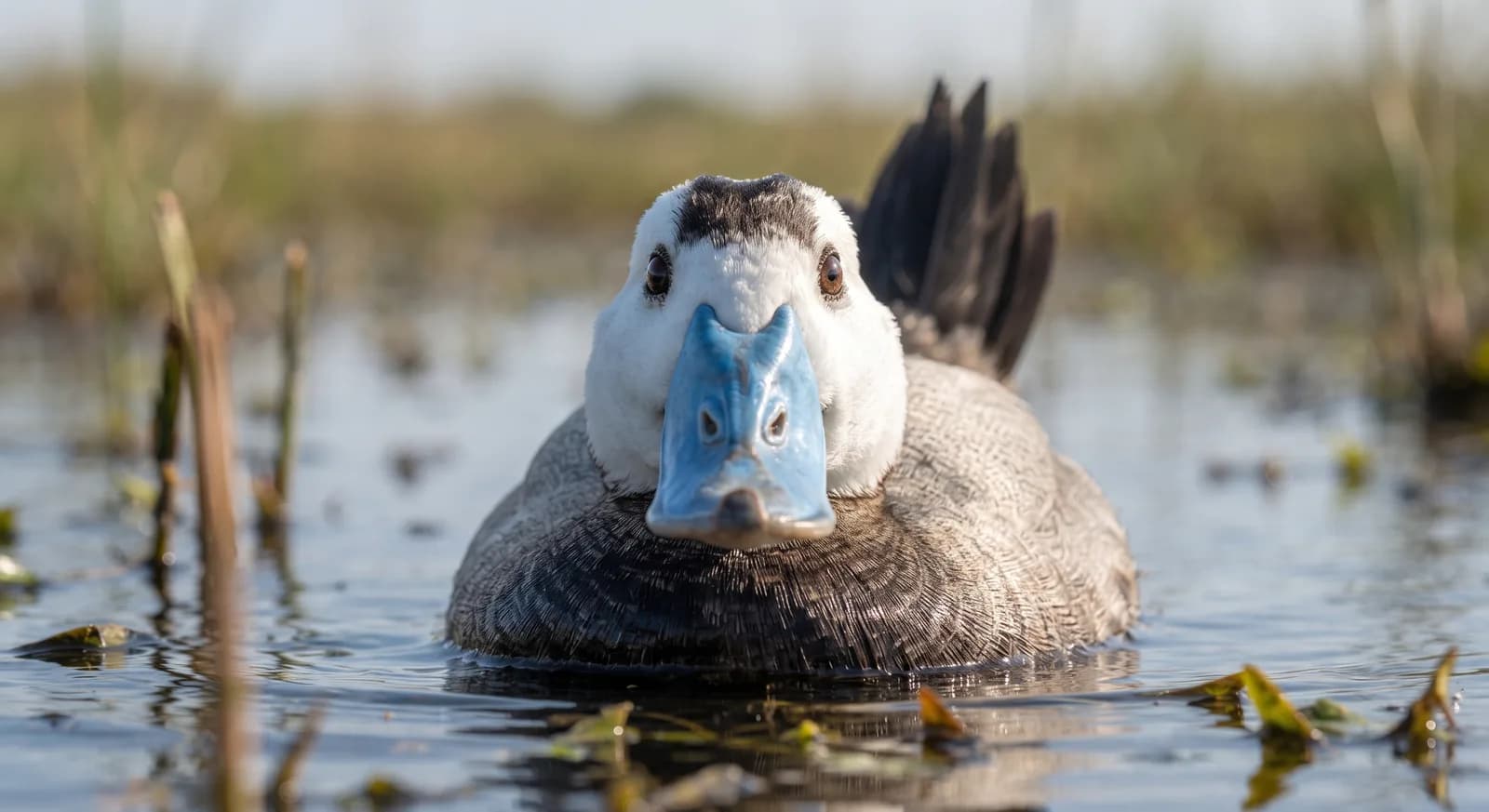
A small, dumpy diving duck with a short neck and a long, stiff tail that it holds cocked over the water. Its legs are set far back, which makes diving easy but leaves it clumsy on land. The breeding male has a white head with a black crown and nape and a swollen, bright blue bill; the female is greyish brown with a dark band below the eye.
Weight
580 g – 750 g
Size
43 cm – 48 cm
Diet
Omnivore
Combines animal and plant food depending on availability.
Activity
Diurnal
Active mainly during the day.
Social structure
Solitary
Lives and hunts alone, joining others only to breed.
Sighting difficulty
Unknown
Estimated population
In the 1970s only a few dozen individuals were left, confined to a handful of lagoons in the south of Córdoba
Fun facts
- GeneralIt came to the brink of extinction in Spain, down to 22 birds in 1977; today it is a recovery story.
- Its recovery is one of the great successes of Spanish conservation: from a few dozen birds in the 1970s to a viable population, thanks to the protection of the Andalusian lagoons and a captive breeding programme begun at Doñana in 1984 that was already releasing 41 ducklings by 1989.
- It rarely flies: taking off needs a long run across the water, and faced with danger it would rather dive.
- The male's bill turns from grey to blue in the breeding season, and that change marks the start of the territorial fighting.
Life cycle & biology
- Skeleton type
- Vertebrate - internal bony skeleton (bird)
- Habitat & environment
- Shallow lagoons with dense marsh vegetation
- Sexual maturity
- Courtship begins in February and March; breeding ends in August
Sources consulted: IUCN Red List; SEO/BirdLife (III Atlas: Orueta 2022); Catálogo Español de Especies Amenazadas (RD 139/2011); Directiva Aves Anexo I; MITECO, Estrategia para la conservación de la cerceta pardilla, focha moruna y malvasía cabeciblanca (2014); Torres-Esquivias 2003, Quercus 207; Ballesteros et al. 2008; Aguilar y Sánchez 1982; Scopoli 1769
Where to find it
See its range on the interactive mapBest time: From February to August, when the male's bill turns from grey to blue and courtship begins
Where to watch it
Parques y spots de buceo donde se ha documentado esta especie — se muestran 10 de 16 documentados.
Related species
Other species in the catalogue with the most in common with White-Headed Duck — same habitat, park, country, tags or family.
Northern Shoveler
Spatula clypeata
Tufted Duck
Aythya fuligula
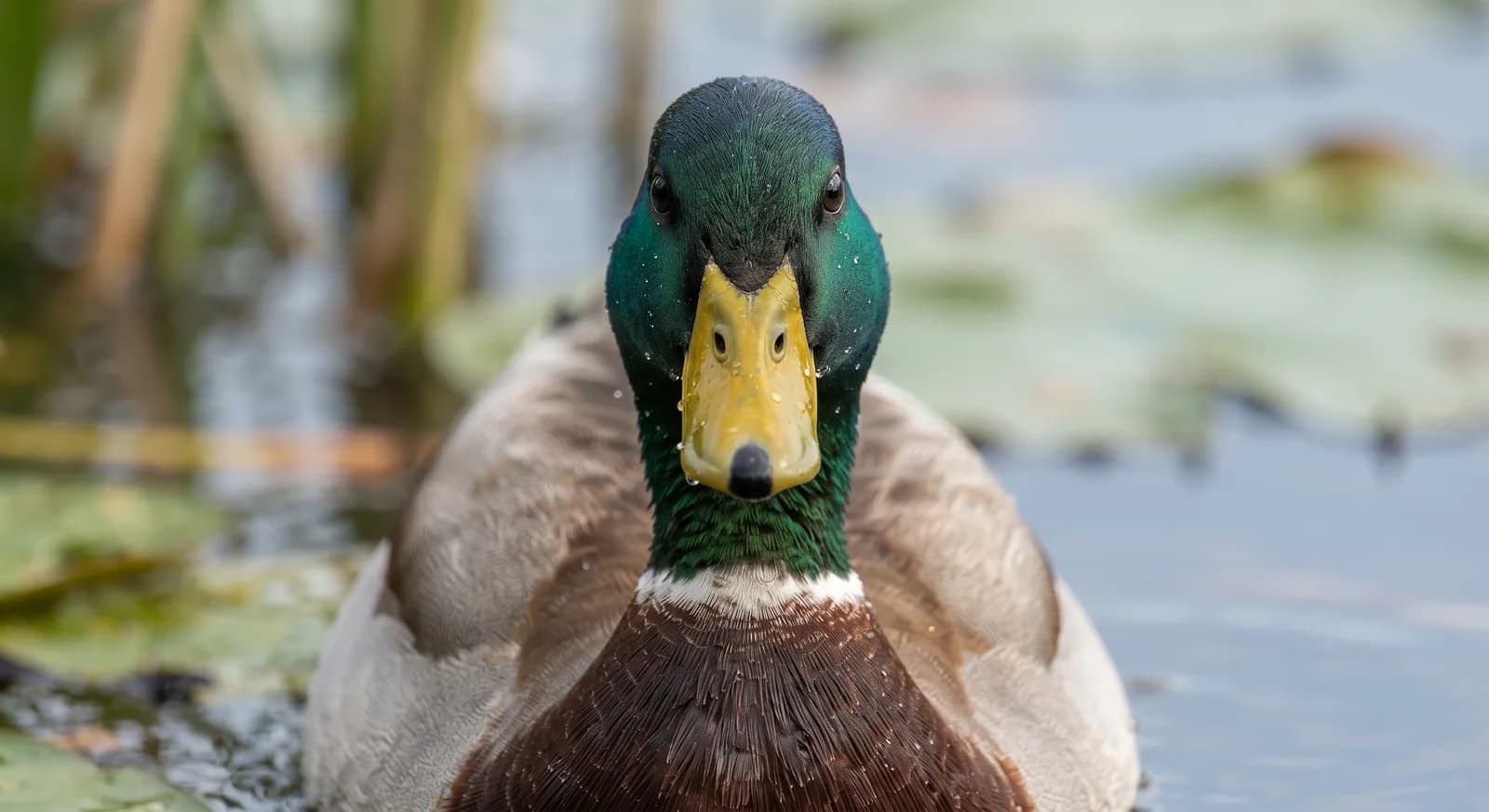 Least Concern
Mallard
Anas platyrhynchos
Ruddy Shelduck
Tadorna ferruginea
Common Shelduck
Tadorna tadorna
Common Pochard
Aythya ferina
Keep exploring
Based on what we already know about white-headed duck.
Comments
Share an experience, a fun fact or a tip for seeing the white-headed duck.
Be the first to comment.