One of the 8 otters on WAnimals
Mammals · Carnivora · Mustelidae
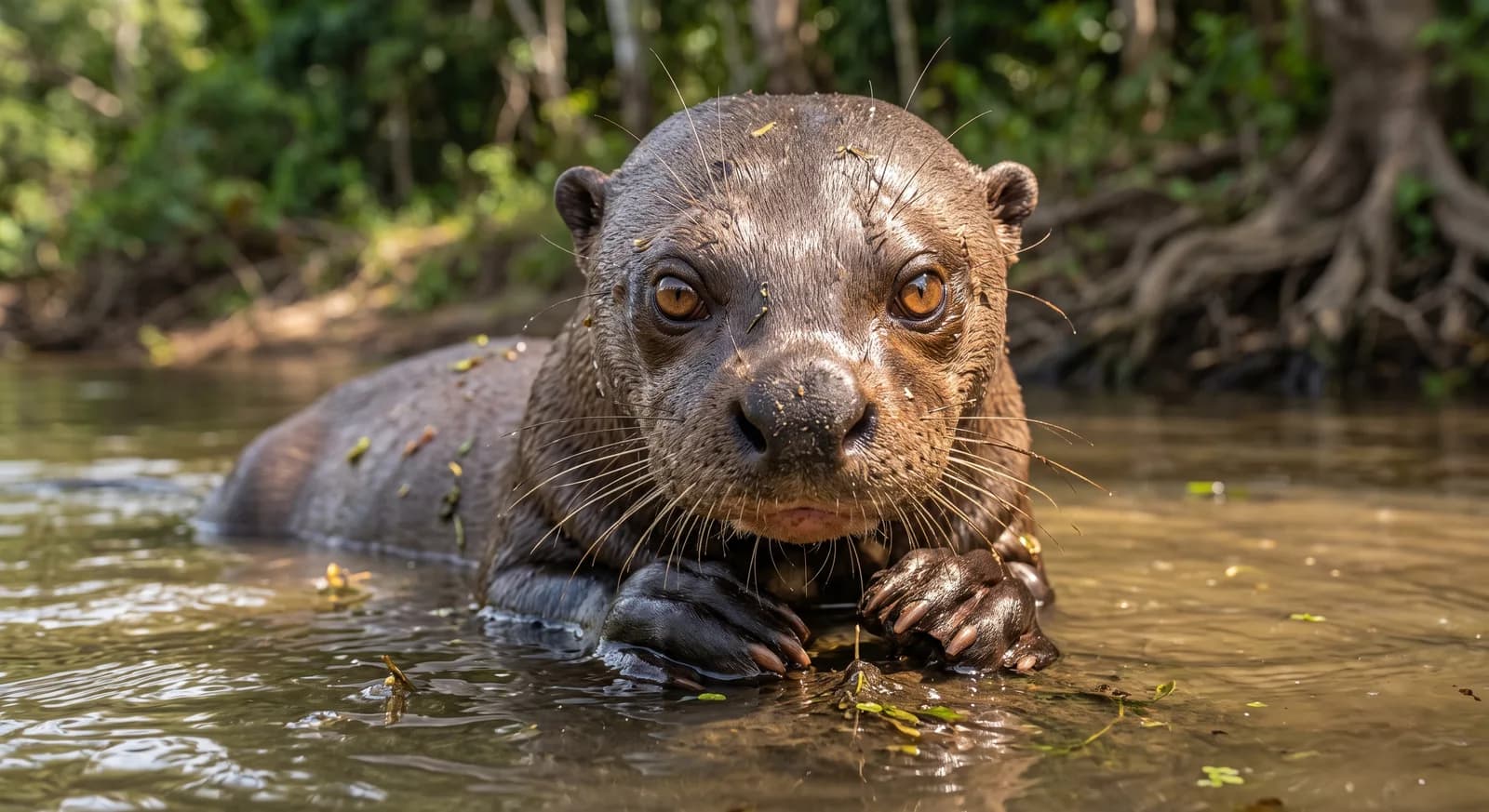
Giant Otter
Pteronura brasiliensis
It faces a very high risk of extinction in the wild in the near future. See full glossary
The largest otter species in the world, it lives in very noisy family groups along Amazonian rivers and lakes.
Weight
22 kg – 32 kg
Size
1.5 m – 1.8 m
Lifespan
12 years
Diet
Piscivore
Feeds mainly on fish.
Activity
Diurnal
Active mainly during the day.
Social structure
Family group
Lives in small family groups with close bonds.
Sighting difficulty
Hard
Estimated population
Between 2,000 and 5,000 animals in the wild, in highly fragmented and mostly small subpopulations; extinct or almost extinct in Uruguay and Argentina and reduced to a single subpopulation in Paraguay
Fun facts
- It can eat up to 4 kg of fish a day.
- Every animal has a unique pattern of throat markings.
- It is known as the 'river wolf' for its social behaviour.
Life cycle & biology
- Skeleton type
- Vertebrate - internal bony skeleton (mammal)
- Habitat & environment
- Rivers, lakes and wetlands of the Amazon basin and other parts of South America
- Birth weight
- 170-230 g at birth, altricial
- Size at birth
- 170-230 g at birth
- Sexual maturity
- ~2-3 years
- Gestation / incubation
- 65-70 days
- Litter / clutch size
- 1 to 5 young per litter (most commonly 2-3)
- Lifespan in captivity
- Documented record of up to 17.3 years
Sources consulted: Animalia.bio; AnAge (genomics.senescence.info); PMC (demography Manu National Park study); Animal Diversity Web; IUCN Red List 2023 (e.T18711A244867206), En peligro bajo los criterios A2cde+3ce; la propuesta de la CMS de 2026 cifra en un 50 % el declive de los últimos 25 años || IUCN Red List, evaluación de Pteronura brasiliensis de 2023; IUCN/SSC Otter Specialist Group
Where to watch it
Parques y spots de buceo donde se ha documentado esta especie — se muestran 10 de 21 documentados.
Related species
Other species in the catalogue with the most in common with Giant Otter — same habitat, park, country, tags or family.
Greater Grison
Galictis vittata
 Endangered
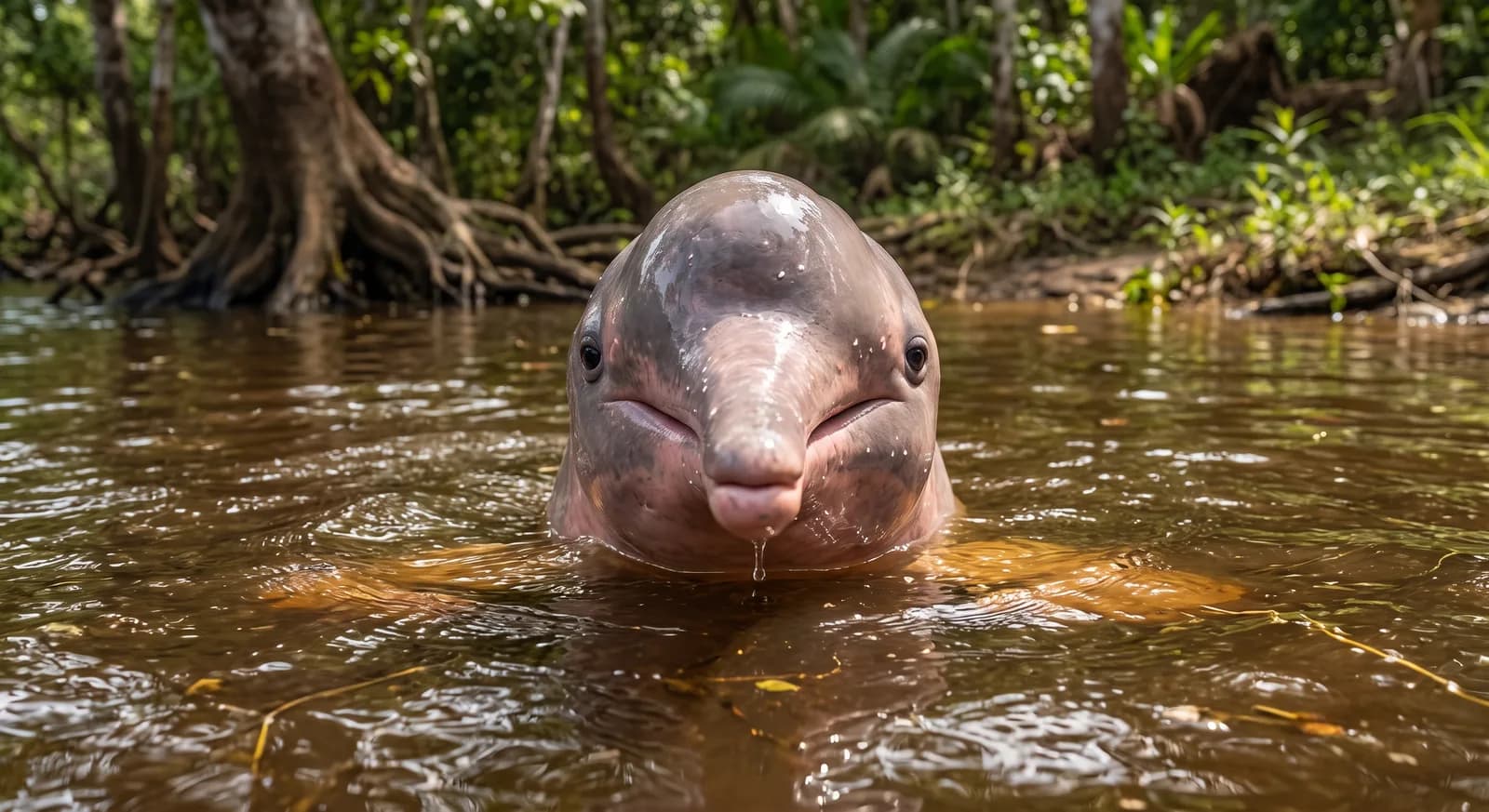
Amazon River Dolphin
Inia geoffrensis
 Endangered
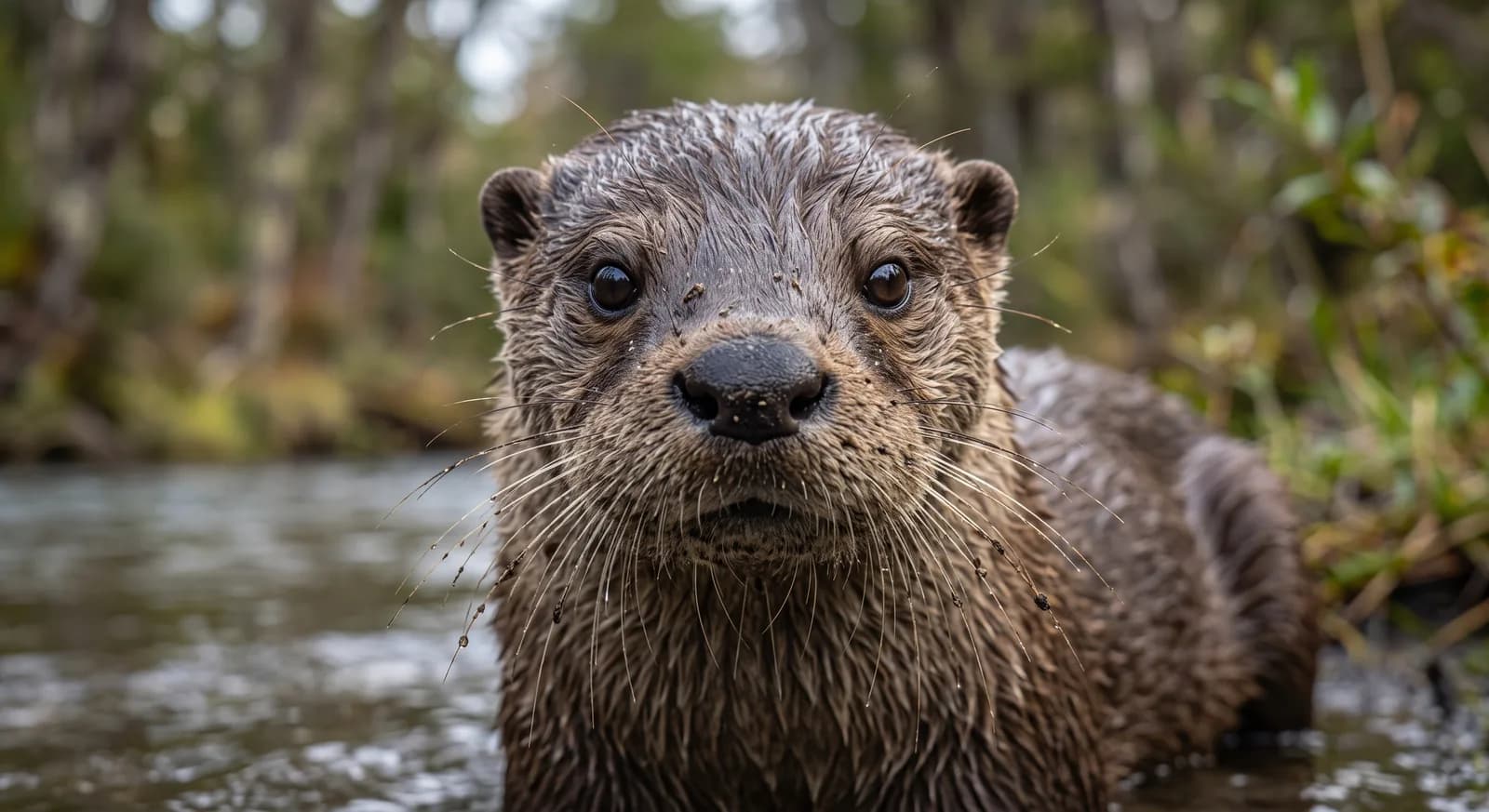
Southern River Otter
Lontra provocax
Bolivian Squirrel Monkey
Saimiri boliviensis
Northern Pygmy Marmoset
Cebuella pygmaea
 Near Threatened
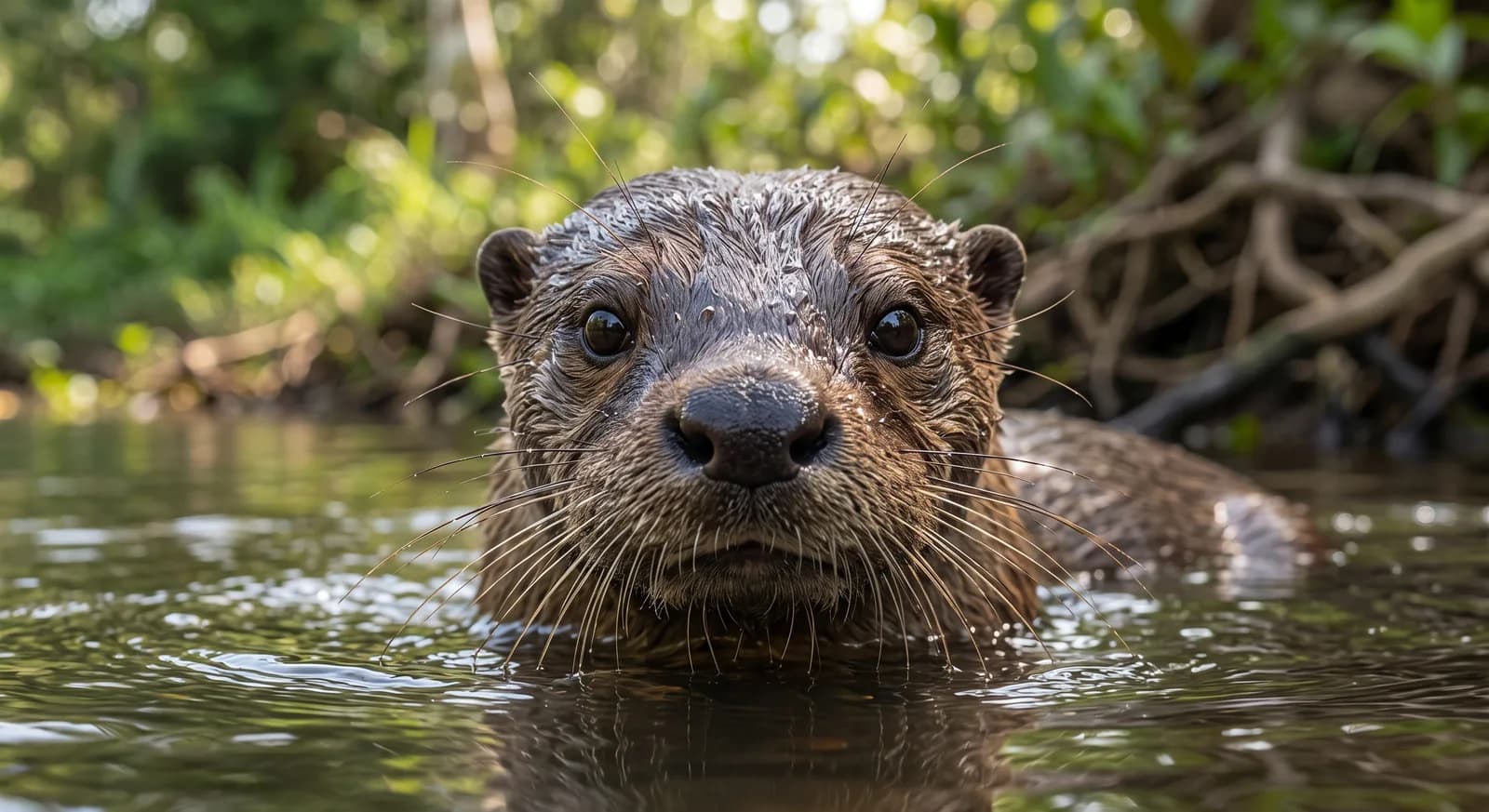
Neotropical Otter
Lontra longicaudis
How to help
The giant otter is classified as endangered. Organizations such as Projeto Ariranhas (Giant Otter Project) work specifically on its conservation and that of its habitat; looking into their programs is a good starting point if you want to get involved.
It's documented in 10 real protected areas — part of why protecting these places matters for its conservation.
Keep exploring
Based on what we already know about giant otter.
Comments
Share an experience, a fun fact or a tip for seeing the giant otter.
Be the first to comment.