One of the 4 oryxes on WAnimals
Mammals · Artiodactyla · Bovidae
Beisa Oryx
Oryx beisa
It faces a very high risk of extinction in the wild in the near future. See full glossary
It has a unique brain-cooling system: it chills the blood flowing to the brain through a network of capillaries in the nose, letting it tolerate body temperatures of up to 47°C without brain damage.
Weight
79 kg – 210 kg
Size
1 m – 1.2 m
Lifespan
16 years
Diet
Herbivore
Feeds mainly on plants.
Activity
Diurnal
Active mainly during the day.
Social structure
Herd
Lives in large groups as a strategy against predators.
Sighting difficulty
Hard
Fun facts
- It has a unique brain-cooling system that lets it tolerate body temperatures of 47°C.
- Its mask-like face pattern is unique among African antelopes.
- It supplements its grazing with browse through the dry season.
Life cycle & biology
- Skeleton type
- Vertebrate - internal bony skeleton (mammal)
- Habitat & environment
- Arid steppe, semi-desert and dry savannah of the Horn of Africa and eastern Kenya
- Birth weight
- 9 - 10 kg
- Size at birth
- Precocial; the mother leaves the herd and keeps the calf hidden for 2-6 weeks
- Sexual maturity
- 1.5-2 years (female) | ~5 years (male, according to some sources)
- Gestation / incubation
- 240-259 days (~8-8.5 months)
- Litter / clutch size
- 1 young per birth, and possibly one every 11 months in ideal conditions
- Lifespan in captivity
- Documented record of up to 22-24 years in captivity
Sources consulted: BioDB; Animal Corner; Samburu National Reserve; Animalia.bio; Safari Partner; MpalaLive; San Diego Zoo; African Wildlife Foundation
Where to find it
See its range on the interactive mapBest time: All year round in the arid savannahs of the Horn of Africa; it is easiest to see in the dry season, when it gathers near waterholes.
Where to watch it
Parks and dive sites where this species has been documented.
Related species
Other species in the catalogue with the most in common with Beisa Oryx — same habitat, park, country, tags or family.
Waterbuck
Kobus ellipsiprymnus
Klipspringer
Oreotragus oreotragus
Kirk's Dik-dik
Madoqua kirkii
Hartebeest
Alcelaphus buselaphus
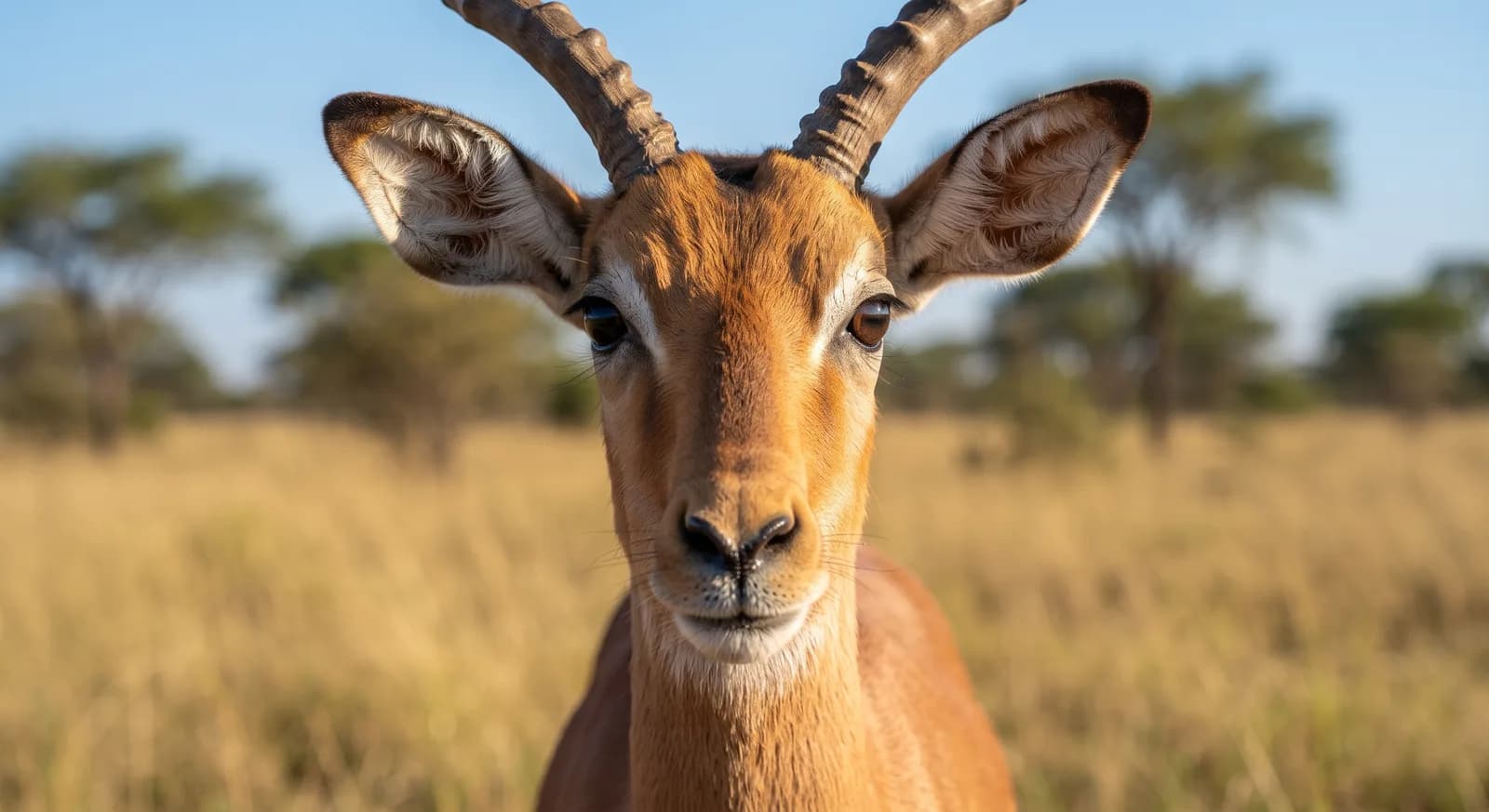 Least Concern
Impala
Aepyceros melampus
Hirola
Beatragus hunteri
How to help
The beisa oryx is classified as endangered. Organizations such as UICN, WWF y Wildlife Conservation Society work specifically on its conservation and that of its habitat; looking into their programs is a good starting point if you want to get involved.
It's documented in 8 real protected areas — part of why protecting these places matters for its conservation.
Keep exploring
Based on what we already know about beisa oryx.
Comments
Share an experience, a fun fact or a tip for seeing the beisa oryx.
Be the first to comment.