Bony fish · Perciformes · Anarhichadidae
Wolf Fish
Anarhichas lupus
The species is abundant and widely distributed; it faces no significant short-term risk. See full glossary
The Atlantic wolffish — known in Spanish as pez lobo del Atlántico, pez lobo atlántico, pez lobo or perro del norte — is a fish of the family Anarhichadidae, which lives in the North Atlantic and the Arctic.
Size
60 cm – 1.5 m
Lifespan
20 years
Diet
Carnivore
Feeds mainly on other animals.
Social structure
Solitary
Lives and hunts alone, joining others only to breed.
Sighting difficulty
Easy
Fun facts
- It replaces its entire set of teeth every year, after breeding, and during that period it eats practically nothing.
- Its blood contains antifreeze proteins that let it live in water below zero degrees.
- The male guards the eggs, a mass the size of a football, for several months with hardly any food.
- By crushing sea urchins it keeps their numbers down and helps stop them from stripping the kelp forests.
- It makes antifreeze in its blood. Its antifreeze proteins allow it to live in waters below zero, the same solution the Antarctic fishes arrived at on their own.
- Its teeth are a demolition tool: prominent canines at the front and crushing molars behind, with which it breaks the shells of bivalves, sea urchins and crabs.
- It renews that entire set of teeth every year. After spawning it loses its teeth and grows new ones, a process during which it stops eating.
- Unlike almost all fishes of the North Atlantic, it tends its clutch: the male guards the mass of eggs for months until they hatch.
- Its flesh and skin have traditionally been put to use, and in Iceland the skin was tanned as leather.
Life cycle & biology
- Skeleton type
- Vertebrate - internal bony skeleton (fish)
- Habitat & environment
- Rocky and gravel bottoms of the North Atlantic, from 20 to 500 m
Sources consulted: https://es.wikipedia.org/wiki/Anarhichas_lupus
Where to find it
See its range on the interactive mapRelated species
Other species in the catalogue with the most in common with Wolf Fish — same habitat, park, country, tags or family.
Horn Shark
Heterodontus francisci
 Least Concern
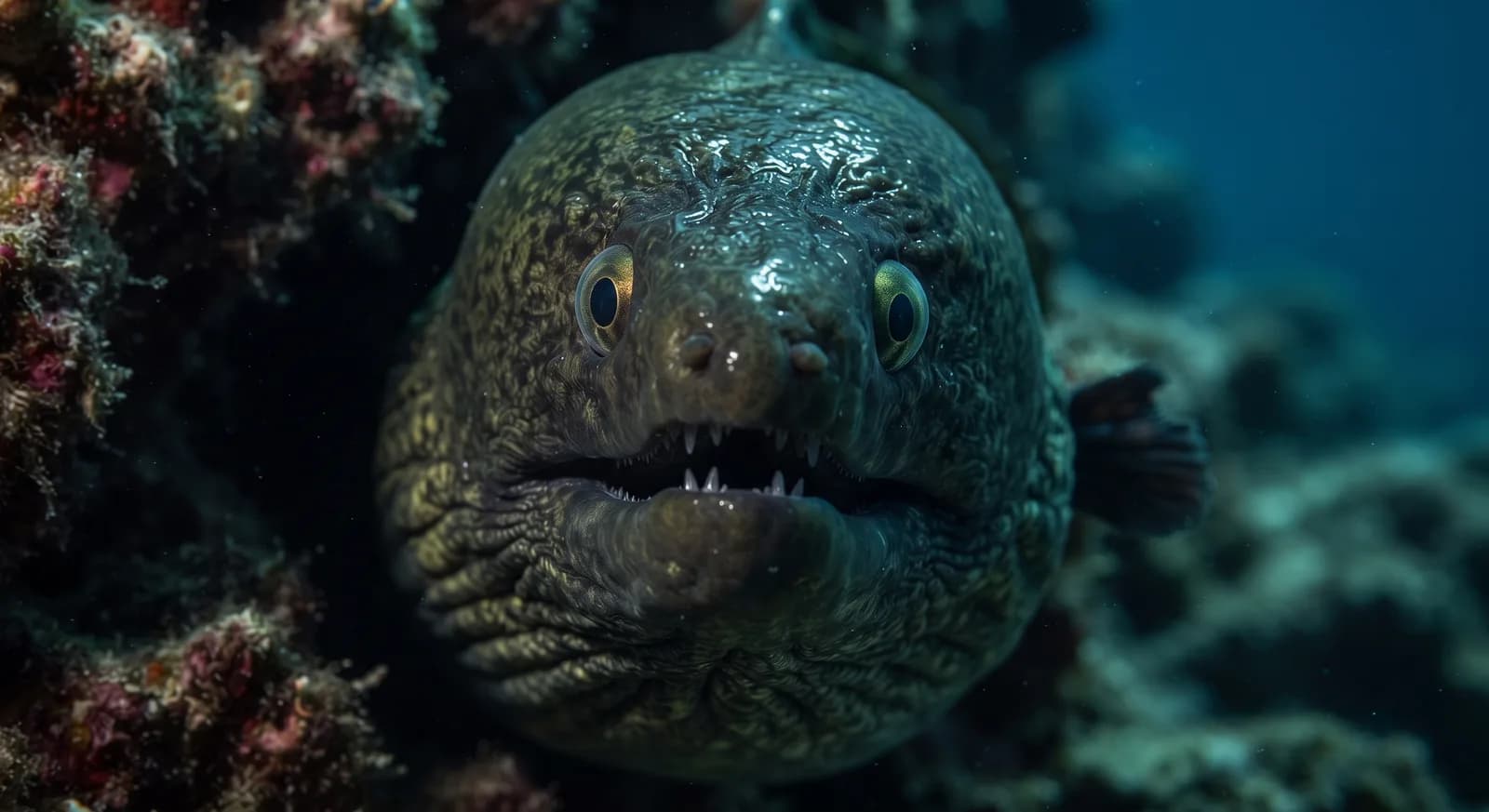
Green Moray
Gymnothorax funebris
Moray Eel
Muraena helena
 Least Concern
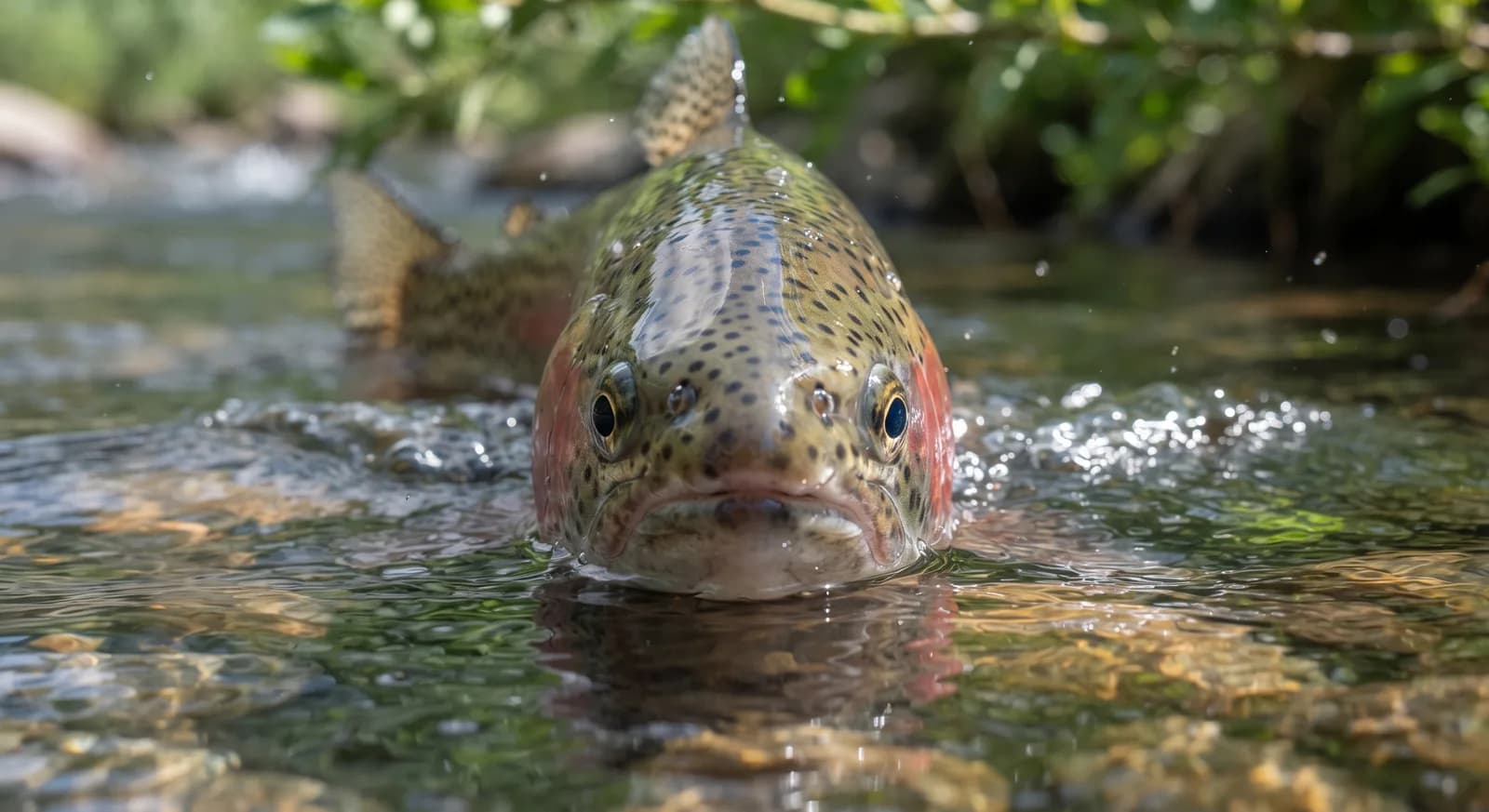
Rainbow Trout
Oncorhynchus mykiss
European Hake
Merluccius merluccius
Angler
Lophius piscatorius
Keep exploring
Based on what we already know about wolf fish.
Comments
Share an experience, a fun fact or a tip for seeing the wolf fish.
Be the first to comment.