 Least Concern
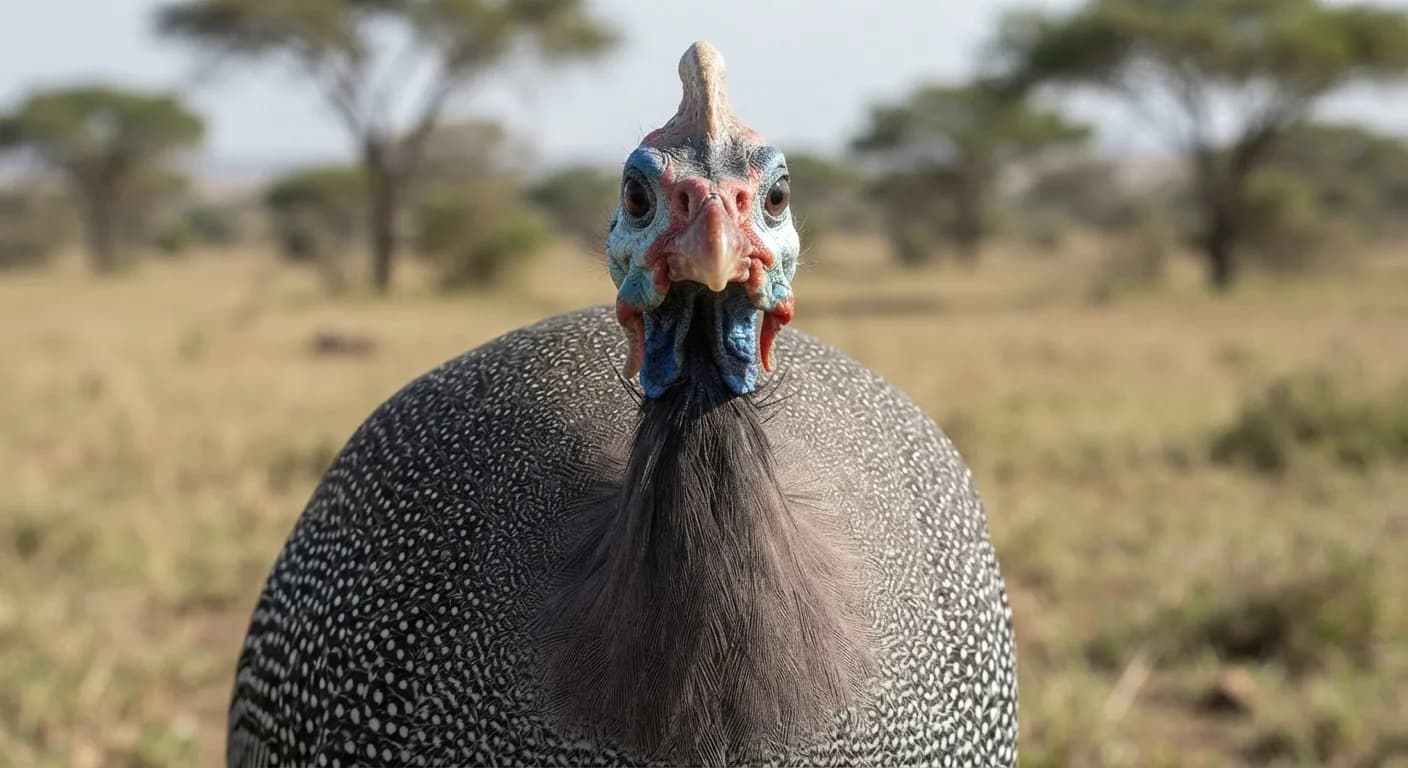
Helmeted Guineafowl
Numida meleagris
Birds · Charadriiformes · Turnicidae
Turnix sylvaticus
The species is abundant and widely distributed; it faces no significant short-term risk.
The common buttonquail is a species of charadriiform bird of the family Turnicidae. There are nine subspecies or different forms distributed across tropical Africa, the western Mediterranean, South-East Asia and the Philippines. Several of them are geographically isolated on islands or archipelagos, such as Turnix sylvatica nigrorum (Negros island), T. s. masaaki (Mindanao, Philippines), T. s. suluensis (Jolo island, Sulu archipelago) and T. s. whiteheadi (Luzon, Philippines). Others occupy somewhat wider territories, such as T. s. davidi (Indochina and Taiwan), T. s. dussumier (Pakistan, India and Nepal) and T. s. lepurana (Africa south of the Sahara). The nominate subspecies, Turnix sylvatica sylvatica, was distributed at the start of the twentieth century along the coastal strip of Morocco, Algeria and Tunisia, as well as Sicily, southern Portugal and coastal Andalusia. Today, however, it has been reduced to a couple of pockets in Morocco and is officially considered extinct in Spain, its last European stronghold. At present there are several groups in Spain and Morocco working to locate these last individuals.
Weight
35 g – 70 g
Size
15 cm – 16 cm
Life expectancy
6 years
Diet
Omnivore
Combines animal and plant food depending on availability.
Activity
Diurnal
Active mainly during the day.
Social structure
Solitary
Lives and hunts alone, joining others only to breed.
Sources consulted: Wikipedia (es): Turnix sylvaticus
Other species in the catalogue with the most in common with Common Buttonquail — same habitat, park, country, tags or family.
Based on what we already know about common buttonquail.