Species group · Mammals
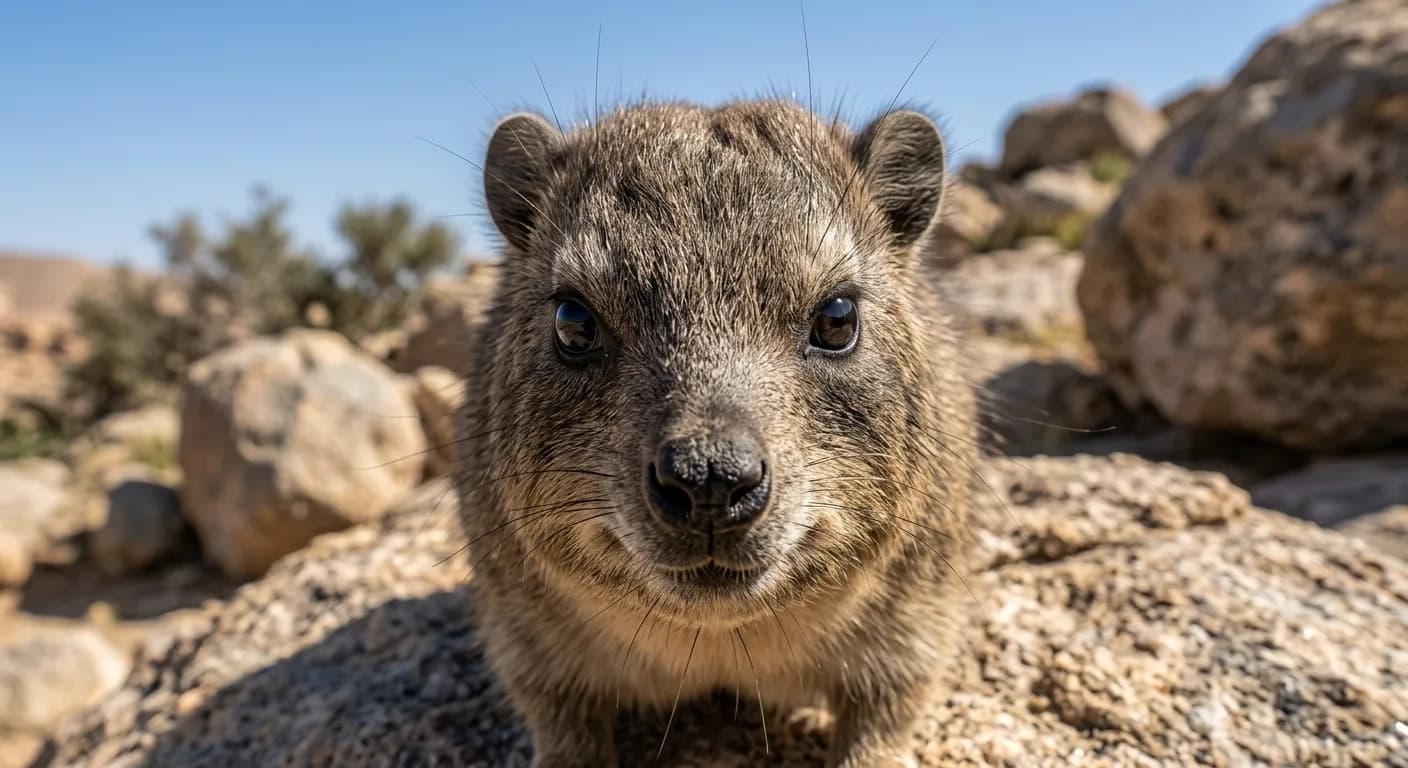
Hyraxes
WAnimals has 3 species of hyrax, in the family Procaviidae.
- 3 species
- 1 family
- 47 countries
- 36 parks
- Weight
- 1.3 kg – 4.5 kg
- Length
- 30.5 cm – 60 cm
- Lifespan
- 8 – 12 years
Ranges calculated from the profiles that record the figure, not from all 3.
All 3 species of hyraxes on WAnimals
Each one has its own full profile. This group does not replace them: it brings them together.
Conservation status
3 Least Concern
No species documented in this group is genuinely at risk according to the IUCN, with the data available today.
Where they live
Recorded in 47 countries. The ones with the most species in the group:
Where to see them
Did you know…?
It shares unusual anatomical features with the elephant, such as permanently growing incisor tusks.
From Rock Hyrax
It eats a wide range of grasses, leaves and fruit.
From Rock Hyrax
It lives among rocky outcrops and in deserts and savannah across much of Africa and the Arabian Peninsula.
From Rock Hyrax
It lives on the same rocks as the rock hyrax without competing: one browses leaves and the other grazes grass, and they even look after each other's young in communal crèches, one of the clearest cases of coexistence between two related species.
From Bush Hyrax
Its upper incisors grow continuously and project like tiny tusks: an inheritance from its kinship with the elephants, whose tusks are also modified incisors.
From Bush Hyrax
Its night call is one of the most startling voices of the African forest: a series of creaks rising in pitch until they end in a shriek audible more than a kilometre away.
From Southern Tree Hyrax
It climbs smooth trunks thanks to moist, muscular foot pads that it can hollow out like suckers.
From Southern Tree Hyrax