Least Concern
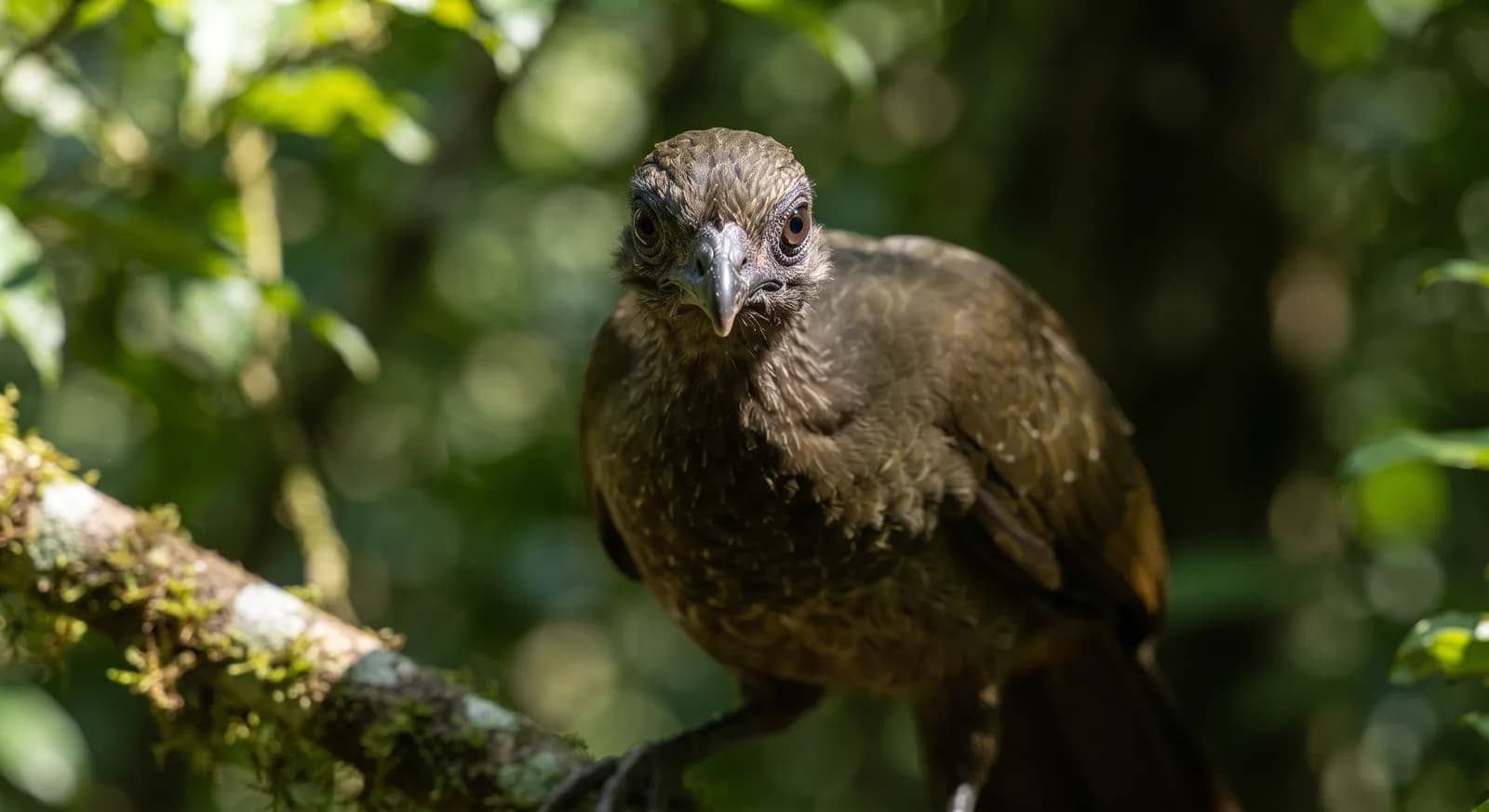
Crested Guan
Penelope purpurascens
11 countries34 parks
Species group · Birds
WAnimals has 3 species of guan, in the family Cracidae.
Ranges calculated from the profiles that record the figure, not from all 3.
Each one has its own full profile. This group does not replace them: it brings them together.
No species documented in this group is genuinely at risk according to the IUCN, with the data available today.
Recorded in 16 countries. The ones with the most species in the group:
It is one of the main dispersers of large seeds in the Mesoamerican forests: it swallows fruit whole and deposits it kilometres from the parent tree, a service few birds in the region can provide.
From
The male performs a display flight at dawn, beating his wings with a characteristic mechanical whirring, a sound forest guides recognise before they see the bird.
From
Its size and its meat make it a prime target for subsistence hunting, and it disappears quickly from forests under hunting pressure even where the habitat remains intact.
From
The male performs a display flight at dawn in which he produces a drumming whirr with his wings, a mechanical sound that carries through the forest and marks his territory.
From
It is an important disperser of large seeds in the Atlantic forest and the yungas, and its disappearance reduces the regeneration of several trees of those forests.
From
Its meat is prized and it is one of the first large birds to disappear from a forest under hunting pressure, which makes it a good indicator of conservation status.
From
The male produces a whirring with its wings during courtship: it launches into a short, descending flight, beating its primaries so that they generate a mechanical drumming, a sound that does not come from the throat.
·
From
Its cobalt-blue facial skin and red legs contrast with its black plumage and make it unmistakable in the cloud forest.
From