 Least Concern
Guppy
Poecilia reticulata
Bony fish · Cyprinodontiformes · Poeciliidae
Poecilia sphenops
The species is abundant and widely distributed; it faces no significant short-term risk.
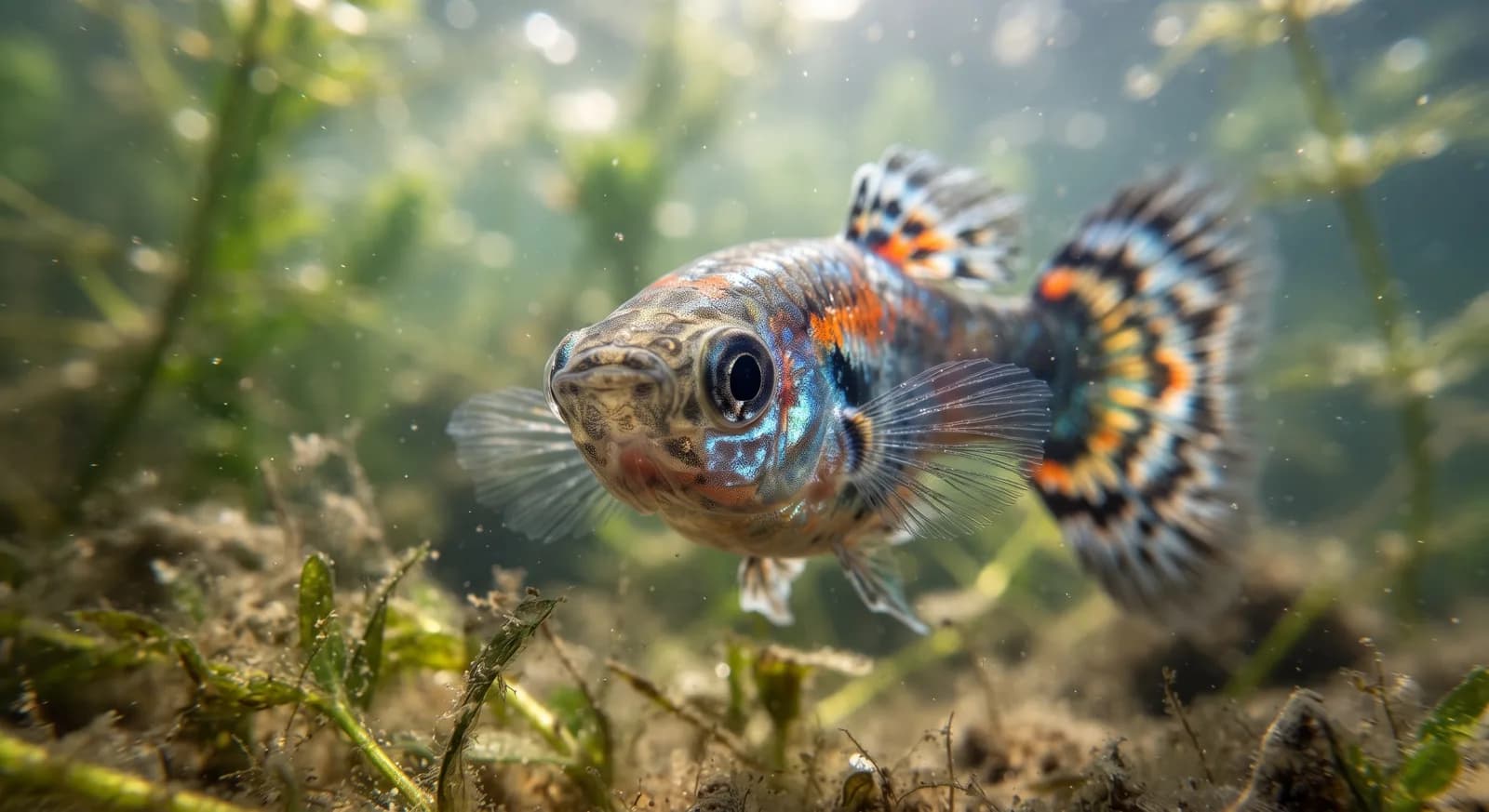
The molly is a Central American live-bearing fish with a stocky body and a length under 8 cm, found in streams, springs and estuaries from Mexico to Honduras. It tolerates everything from fresh water to full marine salinity and water very low in oxygen, which lets it colonise pools and irrigation ditches where hardly any other fish survives. The female gives birth to between 20 and 150 fully formed fry after about 28 days of gestation. It is one of the most widely kept aquarium fish in the world, and most of the individuals in the trade are selected varieties, such as the black molly.
Size
4 cm – 7.5 cm
Life expectancy
5 years
Diet
Omnivore
Combines animal and plant food depending on availability.
Activity
Diurnal
Active mainly during the day.
Social structure
School
Gathers in coordinated schools, typical of fish.
Sources consulted: Wikipedia (es): Poecilia sphenops · Fichas de acuariofilia de Poecilia sphenops · FishBase (Froese & Pauly) via fichas de acuariofilia · FishBase, Poecilia sphenops · bioRxiv 209346, fotoperiodo y rendimiento reproductivo en Poecilia sphenops · Fichas de manejo de Poecilia sphenops
Best time: The spawning season in natural conditions runs from July to October, coinciding with the rainy season, with a second peak in February
The pins mark the dive sites where its presence is documented.
Parks and dive sites where this species has been documented.
Other species in the catalogue with the most in common with Molly — same habitat, park, country, tags or family.
Based on what we already know about molly.