Skip to content
WAnimals
  • Map
  • Species
  • Parks
  • Diving
Log inCreate account
WAnimals

The guide for travellers and animal lovers: discover, plan and share your wild adventures around the world.

Discover wildlife

  • Species
  • Ecosystems
  • Glossary
  • Tags

Explore places

  • Map
  • Countries
  • Parks
  • Diving

Plan experiences

  • Guides

Learn

  • Blog

Resources

  • Help centre
  • Contact
  • Install the app

Follow us

Account

  • Log in
  • Create account

© 2026 WAnimals. All rights reserved.

About usHow we build our profilesTerms of servicePrivacyLegal notice
MapSpeciesParksDiving
  1. Home
  2. Species
  3. Tungara Frog

One of the 47 frogs on WAnimals
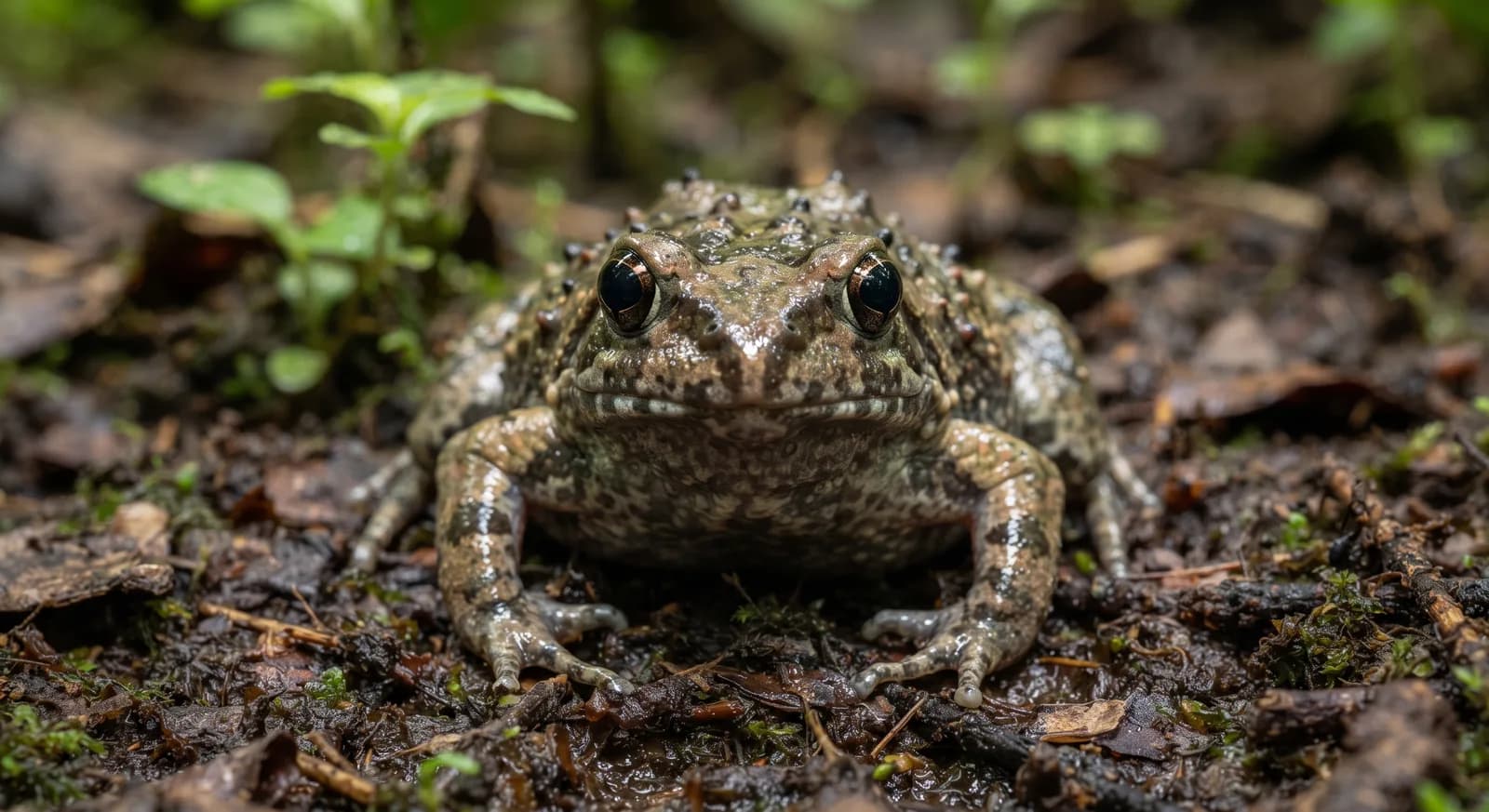
Tungara Frog (Physalaemus pustulosus)

Amphibians · Anura · Leptodactylidae

Tungara Frog

Physalaemus pustulosus

Least Concern

The species is abundant and widely distributed; it faces no significant short-term risk.

Spotted something wrong?

The túngara frog is a species of anuran amphibian of the family Leptodactylidae. It lives on the floor of humid and dry primary forest, as well as in secondary forest. Its name comes from its call, which sounds like "tún-gara, tún-gara". It is found from eastern and southern Mexico, through Central America, and as far as Colombia, Venezuela and Trinidad and Tobago.

Size

2.5 cm – 3.5 cm

Life expectancy

4 years

Diet

Insectivore

Feeds mainly on insects and other invertebrates.

Activity

Nocturnal

Active mainly at night.

Social structure

Colony

Lives in large concentrations, often for breeding reasons.

Sighting difficulty

Easy

RainforestFreshwaterGrassland
11countries45parks1same family

AI-generated images: illustrations, not photographs.

Fun facts

  • Its call carries a lethal cost: adding the second part of the call multiplies its appeal to females, but it also alerts the bat that hunts it by listening for exactly that note. The frog adjusts its call according to the risk.
  • The bat does not detect it by sound alone: it also uses the ripples the call makes on the surface of the water, which persist after the frog falls silent, so falling silent is not enough to escape.
  • It whips up a foam nest with its hind legs while spawning, and that foam protects the eggs from drying out, from heat and from predators until they hatch.
  • It is one of the world's most studied animals in sexual selection research, and its call is the reason.
  • The male gives a basic whine to which he can add one or more final chucks. Females clearly prefer calls with chucks, so adding them increases his breeding success.
  • But the chuck comes at a cost: frog-eating bats of the genus Trachops use it to locate the males. The male is caught between attracting females and attracting predators, and adjusts his call according to how many rivals and how much risk he perceives.
  • The bat does not just hear the sound. Studies have shown that it also detects the ripples the call creates on the water surface, so falling silent in time is not enough to hide.
  • The female whips the male's secretion with her legs into a floating foam nest where she lays the eggs, protecting them from desiccation and from predators.

Life cycle and biology

Skeleton type
Vertebrate - internal bony skeleton (amphibian)
Habitat and environment
Temporary pools, ditches and waterlogged ground of tropical America
Sexual maturity
10 months
Gestation / incubation
Larval development in foam nests
Litter / clutch size
250 eggs

Sources consulted: https://es.wikipedia.org/wiki/Engystomops_pustulosus

Where to find it

Loading map…

Where to see it

Parks and dive sites where this species has been documented — showing 10 of 45.

Related species

Other species in the catalogue with the most in common with Tungara Frog — same habitat, park, country, tags or family.

Same taxonomic family
Shares a park
Shares a park
Shares a park
Shares a park
Shares a park

Keep exploring

Based on what we already know about tungara frog.

Comments

Share an experience, a fun fact or a tip for seeing the tungara frog.

Be the first to comment.

See full glossary
This page in other languages: Español · Deutsch · Français · Português · Italiano

The pins mark the parks where its presence is documented.

See its range on the interactive map→
Sian Ka'anMexico
CalakmulMexico
CorcovadoCosta Rica
TortugueroCosta Rica
Manuel AntonioCosta Rica
MonteverdeCosta Rica
Arenal VolcanoCosta Rica
Volcán BarúPanama
CoibaPanama
DarienPanama
See all 45 parks
Least Concern

Rufous Frog

Leptodactylus fuscus

Southern TamanduaLeast Concern

Southern Tamandua

Tamandua tetradactyla

Mexican Free-tailed BatLeast Concern

Mexican Free-tailed Bat

Tadarida brasiliensis

Least Concern

Pallas's Mastiff Bat

Molossus molossus

Least Concern

Greater Sac-Winged Bat

Saccopteryx bilineata

Least Concern

Greater Bulldog Bat

Noctilio leporinus

CountriesCosta Rica
ParksSian Ka'anMexico
TagsInsectivore
Insectivore
Nocturnal
Colonial
Amphibian
Rainforest
Freshwater
Grassland

North America9

South America2

Costa Rica
Panama
Guatemala
Honduras
Colombia
Nicaragua
Belize
Costa Rica
El Salvador
Guatemala
Honduras
Mexico
Nicaragua
Panama
Trinidad and Tobago
Colombia
Venezuela