Skip to content
WAnimals
  • Map
  • Species
  • Parks
  • Diving
Log inCreate account
WAnimals

The guide for travellers and animal lovers: discover, plan and share your wild adventures around the world.

Discover wildlife

  • Species
  • Ecosystems
  • Glossary
  • Tags

Explore places

  • Map
  • Countries
  • Parks
  • Diving

Plan experiences

  • Guides

Learn

  • Blog

Resources

  • About us
  • How we build our profiles
  • Help centre
  • Contact
  • Install the app

Follow us

Account

  • Log in
  • Create account

© 2026 WAnimals. All rights reserved.

Terms of servicePrivacyCookiesLegal notice
MapSpeciesParksDiving
  1. Home
  2. Species
  3. Pallas's Mastiff Bat

One of the 29 bats on WAnimals

Mammals · Chiroptera · Molossidae

Pallas's Mastiff Bat

Molossus molossus

Least Concern

The species is abundant and widely distributed; it faces no significant short-term risk.

Spotted something wrong?

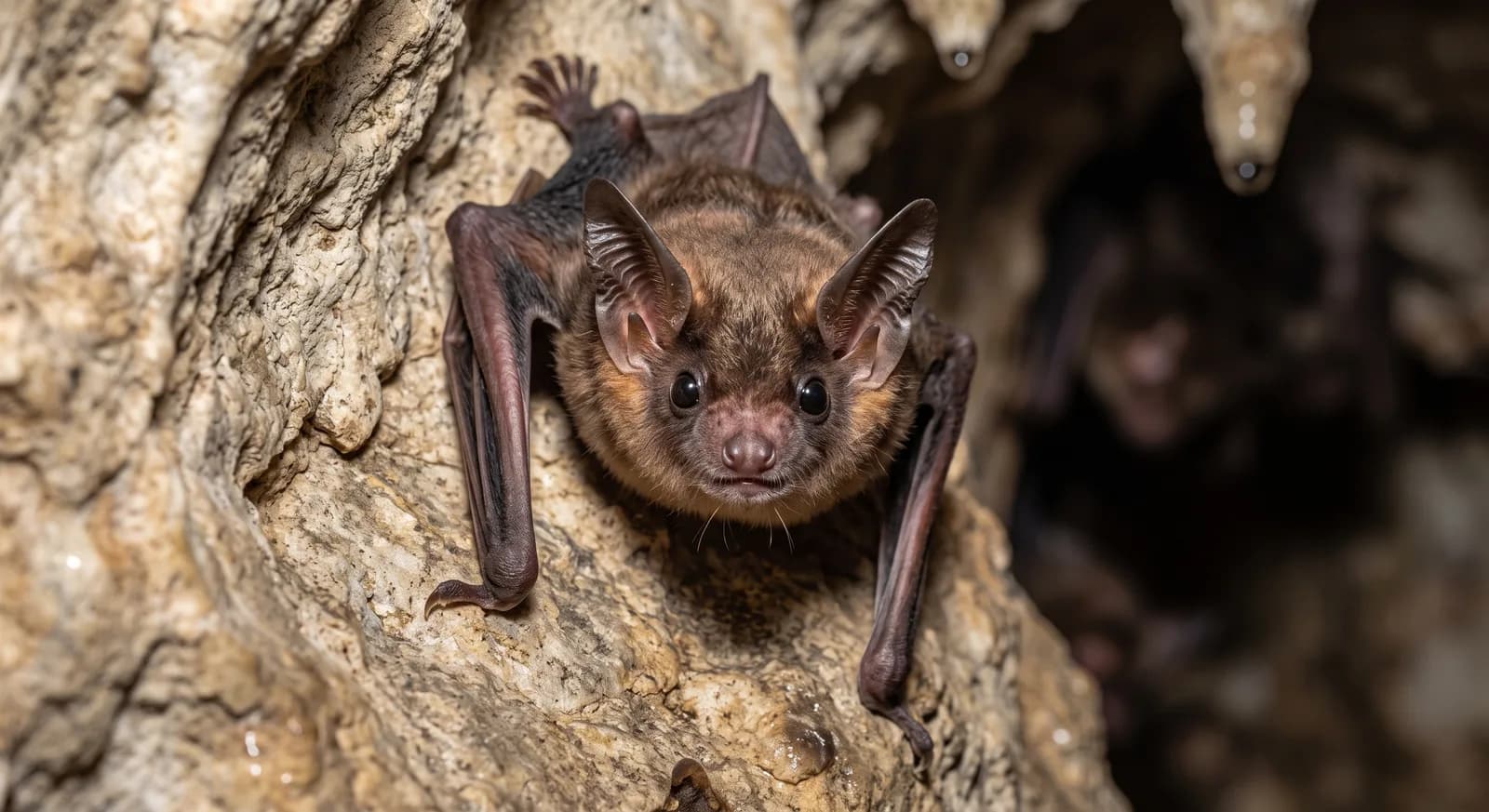
Pallas's mastiff bat is one of the commonest and most urban bats in Latin America. It owes its name to a flat, wrinkled muzzle reminiscent of a mastiff's. It has the narrow, pointed wings of a fast open-air flier, and hunts mainly beetles and flying ants in the first hours of the night. It forms colonies in roofs, cavity walls and expansion joints in buildings, which has made it a regular neighbour in tropical cities.

Weight

10 g – 20 g

Size

6 cm – 8 cm

Life expectancy

6 years

Diet

Insectivore

Feeds mainly on insects and other invertebrates.

Activity

Crepuscular

Active mainly at dawn and dusk.

Social structure

Colony

Lives in large concentrations, often for breeding reasons.

SavannaRainforestGrassland
17countries65parks2same family

Fun facts

  • It concentrates its hunting into two very short peaks, just after dusk and before dawn: it can fill its stomach in less than an hour and spend the rest of the night at rest.
  • It is one of the great free pest controllers of tropical cities: a medium-sized colony eats several kilos of insects every night.

Life cycle and biology

Skeleton type
Vertebrate - internal bony skeleton (mammal)
Habitat and environment
Roofs, cavities in buildings and trees in urban and rural areas of tropical America
Sexual maturity
3.4 months
Gestation / incubation
3.5 months
Litter / clutch size
1

Sources consulted: Wikipedia (en): Velvety free-tailed bat

Where to find it

Loading map…

Where to see it

Parks and dive sites where this species has been documented — showing 10 of 65.

Related species

Other species in the catalogue with the most in common with Pallas's Mastiff Bat — same habitat, park, country, tags or family.

Same taxonomic family
Shares a park
Shares a park
Shares a park
Shares a park
Shares a park

Keep exploring

Based on what we already know about pallas's mastiff bat.

Share an experience, a fun fact or a tip for seeing the pallas's mastiff bat.
See full glossary
This page in other languages: Español · Deutsch · Français · Português · Italiano

The pins mark the parks where its presence is documented.

See its range on the interactive map→
Sian Ka'anMexico
CalakmulMexico
Sumidero CanyonMexico
Sierra GordaMexico
CorcovadoCosta Rica
TortugueroCosta Rica
Manuel AntonioCosta Rica
MonteverdeCosta Rica
Arenal VolcanoCosta Rica
CoibaPanama
See all 65 parks
Mexican Free-tailed BatLeast Concern

Mexican Free-tailed Bat

Tadarida brasiliensis

Least Concern

Southern Naked-tailed Armadillo

Cabassous unicinctus

Southern TamanduaLeast Concern

Southern Tamandua

Tamandua tetradactyla

Least Concern

Big Brown Bat

Eptesicus fuscus

Least Concern

Pallas's Long-Tongued Bat

Glossophaga soricina

Least Concern

Greater Sac-Winged Bat

Saccopteryx bilineata

CountriesCosta Rica
ParksSian Ka'anMexico
TagsInsectivore
Insectivore
Crepuscular
Colonial
Savanna
Rainforest
Grassland
Mammal

North America9

South America8

Costa Rica
Mexico
Panama
Colombia
Peru
Brazil
Costa Rica
Cuba
Guatemala
Honduras
Mexico
Nicaragua
Panama
Puerto Rico
Trinidad and Tobago
Argentina
Bolivia
Brazil
Colombia
Ecuador
Paraguay
Peru
Venezuela