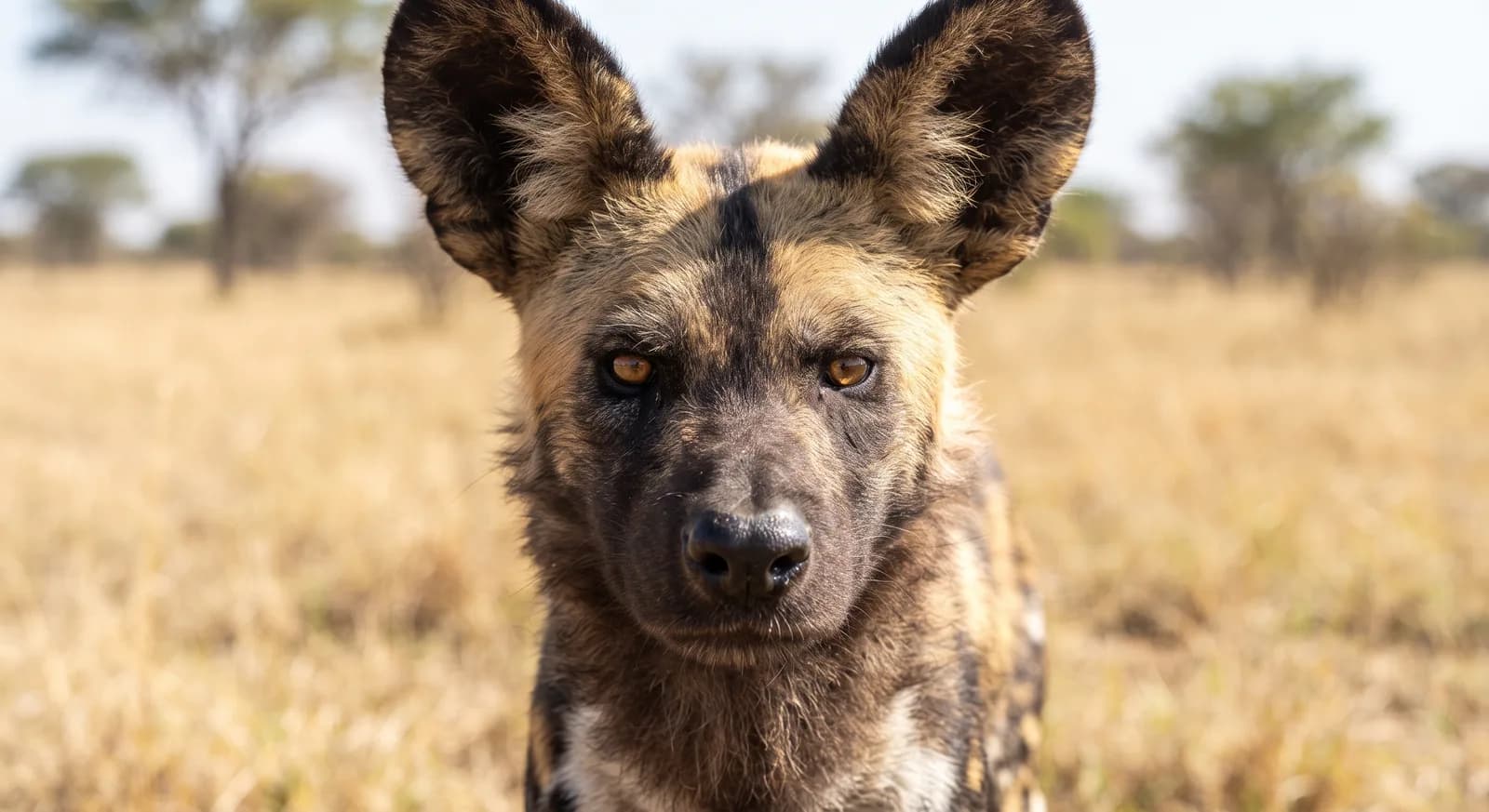
 Endangered
African Wild Dog
Lycaon pictus
Africa
Côte d'Ivoire combines the rainforest of the south with the Sudanian savannah of the north, separated by a mosaic belt where the two environments intermingle. Taï national park keeps the largest block of primary rainforest left in West Africa, a closed-canopy forest with eleven primate species, forest elephants, pygmy hippopotamuses and an exceptional density of birds and amphibians. In the north, Comoé is one of the largest parks on the continent and protects wooded savannah, gallery forest and floodplains along the river of the same name. The coast, of lagoons and mangroves, includes the Ehotilé Islands park and the Banco urban forest, in the middle of Abidjan, one of the few national parks located inside a large African city.
National animal: The African elephant, national symbol present on the coat of arms and in the country's historic name
The chimpanzees of Taï use stones as hammers and roots or logs as anvils to crack very hard nuts, a technique they learn over years by watching the adults and that varies between neighbouring groups, like a cultural tradition. Archaeological digs in the forest have found stones used by chimpanzees some four thousand three hundred years ago, which shows that the custom has been passed from generation to generation for millennia.
The country lost an enormous share of its forest in a few decades to the expansion of cocoa, and Taï is today the last great refuge of the region's primary forest. Comoé came off the list of World Heritage in Danger in 2017 after its wildlife recovered.
Taï in the dry season for habituated chimpanzees and forest birds. Comoé between December and April for large mammals by the river. Banco year-round for primates and birds within Abidjan.
Where else might I want to travel?
Same region: West Africa
Same region: West Africa
Same region: West Africa
Same region: West Africa
216 species found
Based on what we already know about Côte d’Ivoire.