Skip to content
WAnimals
  • Map
  • Species
  • Parks
  • Diving
Log inCreate account
WAnimals

The guide for travellers and animal lovers: discover, plan and share your wild adventures around the world.

Discover wildlife

  • Species
  • Ecosystems
  • Glossary
  • Tags

Explore places

  • Map
  • Countries
  • Parks
  • Diving

Plan experiences

  • Guides

Learn

  • Blog

Resources

  • About us
  • How we build our profiles
  • Help centre
  • Contact
  • Install the app

Follow us

Account

  • Log in
  • Create account

© 2026 WAnimals. All rights reserved.

Terms of servicePrivacyCookiesLegal notice
MapSpeciesParksDiving
  1. Home
  2. Species
  3. Secretarybird
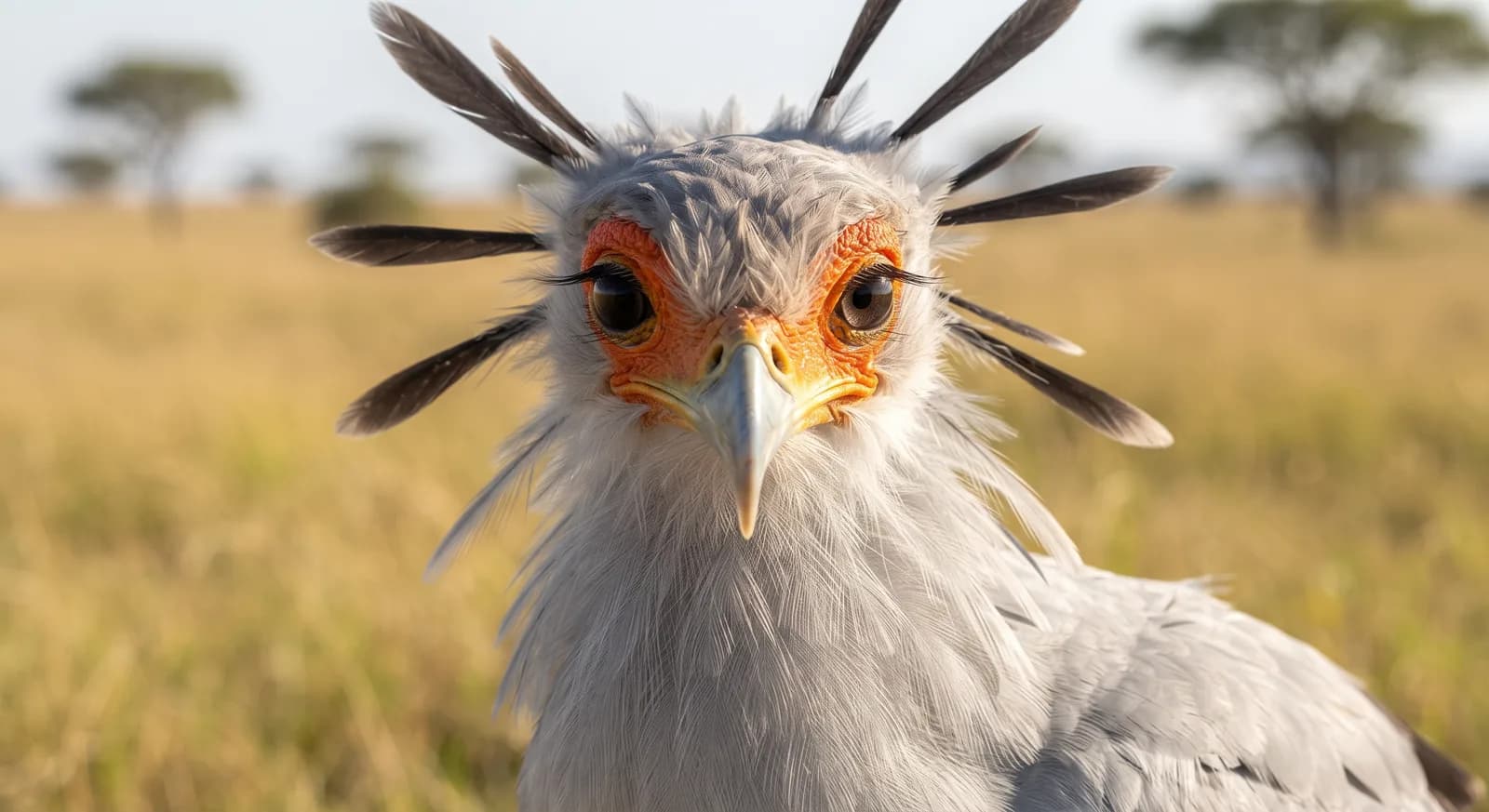
Secretarybird (Sagittarius serpentarius)

Birds · Accipitriformes · Sagittariidae

Secretarybird

Sagittarius serpentarius

Endangered

At very high risk of extinction in the wild in the near future.

Spotted something wrong?

It is the only bird of prey that specialises in walking long distances in search of prey, venomous snakes included, which it kills by stamping on them with its long legs.

Weight

2.3 kg – 4.5 kg

Size

1.1 m – 1.3 m

Life expectancy

10 years
Diet

Carnivore

Feeds mainly on other animals.

Activity

Diurnal

Active mainly during the day.

Social structure

In pairs

Usually lives in pairs, sometimes for life.

Savanna
43countries40parks

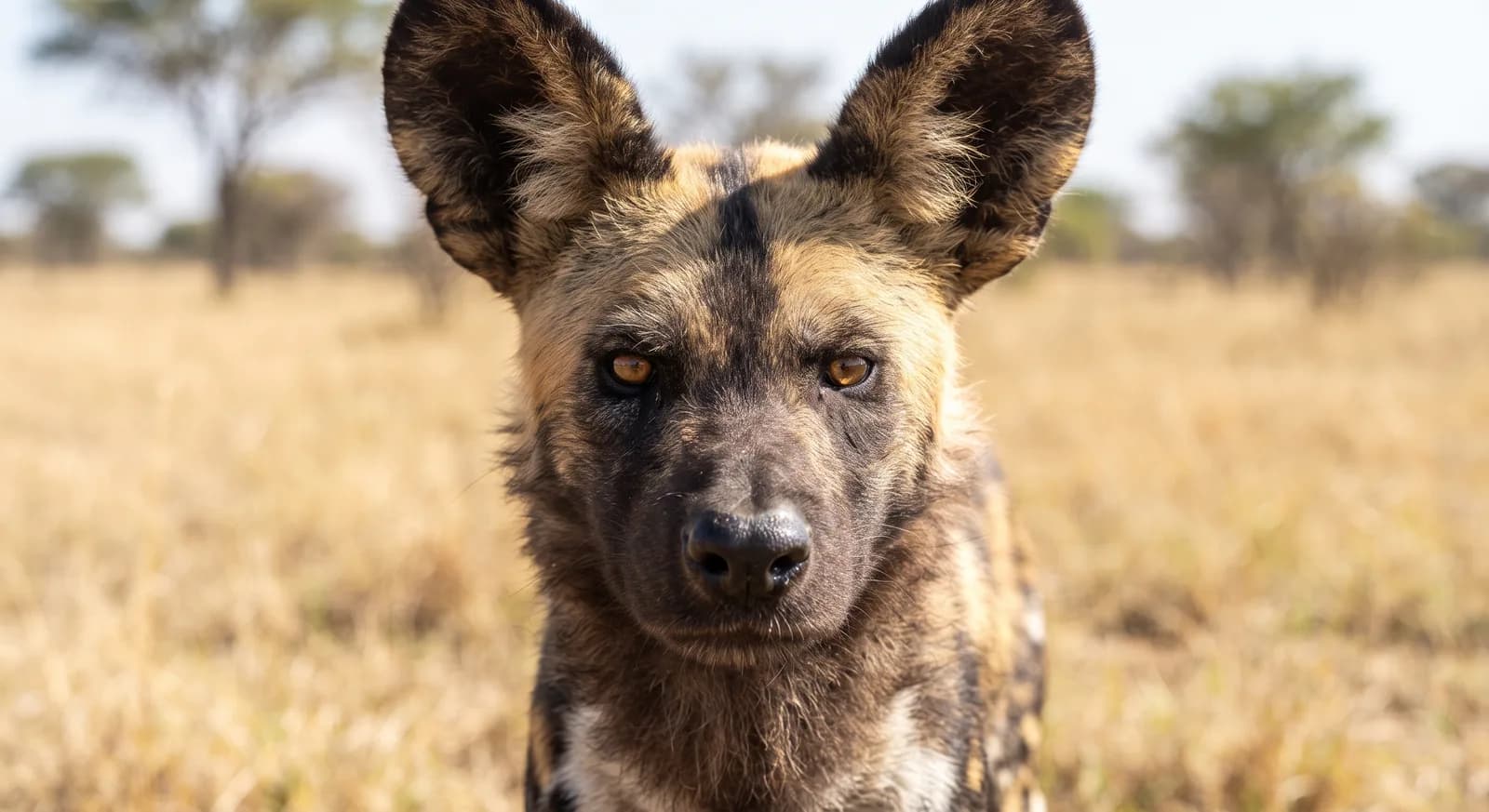
AI-generated images: illustrations, not photographs.

Fun facts

  • Its name may come from the likeness between its crest of black feathers and the quill pens 19th-century clerks tucked behind the ear.
  • It eats insects, small mammals, snakes and lizards, hunted on foot and killed by stamping.
  • It lives in open grassland and savannah of sub-Saharan Africa.
  • comportamientoIt hunts venomous snakes by stamping on them repeatedly with its long legs rather than striking with the bill as most raptors do.

Life cycle and biology

Skeleton type
Vertebrate - internal bony skeleton (bird)
Habitat and environment
Open grassland and savannah of sub-Saharan Africa
Birth weight
Born altricial and covered in white down
Size at birth
Born altricial
Gestation / incubation
42-46 days
Litter / clutch size
1 to 3 eggs per clutch (most commonly 2)

Sources consulted: Dimensions.com · Animal Diversity Web · Oiseaux.net · Fact Animal · Wikipedia (Secretarybird)

Where to find it

Best time: All year round in the African savannah, by day, striding across open grassland; it gathers in recently burnt areas during the dry season.

Loading map…

Where to see it

Parks and dive sites where this species has been documented — showing 10 of 40.

Related species

Other species in the catalogue with the most in common with Secretarybird — same habitat, park, country, tags or family.

Shares a park
Shares a park
Shares a park
Shares a park
Shares a park
Shares a park

How to help

The secretarybird is classified as endangered. Organisations such as the IUCN, WWF and the Wildlife Conservation Society work specifically on its conservation and that of its habitat; looking into their programmes is a good starting point if you want to get involved.

It's documented in 10 protected areas — one reason why protecting these places matters for its conservation.

Keep exploring

Based on what we already know about secretarybird.

Share an experience, a fun fact or a tip for seeing the secretarybird.
See full glossary
This page in other languages: Español · Deutsch · Français · Português · Italiano

The pins mark the parks where its presence is documented.

See its range on the interactive map→
Serengeti National ParkTanzania
Maasai Mara National ReserveKenya
Kruger National ParkSouth Africa
NgorongoroTanzania
TsavoKenya
Lake NakuruKenya
KgalagadiSouth Africa
Moremi (Okavango Delta)Botswana
ChobeBotswana
EtoshaNamibia
See all 40 parks
African Wild DogEndangered

African Wild Dog

Lycaon pictus

Grey Crowned CraneEndangered

Grey Crowned Crane

Balearica regulorum

Martial EagleEndangered

Martial Eagle

Polemaetus bellicosus

Lappet-faced VultureEndangered

Lappet-faced Vulture

Torgos tracheliotos

Grevy's ZebraEndangered

Grevy's Zebra

Equus grevyi

Least Concern

Violet Turaco

Musophaga violacea

CountriesSouth Africa
ParksSerengeti National ParkTanzania
TagsCarnivore
Carnivore
Diurnal
In pairs
Endangered
Bird
Savannah
South Africa
Kenya
Botswana
Tanzania
Uganda
Namibia
Angola
Benin
Botswana
Burkina Faso
Burundi
Cameroon
Central African Republic
Chad
Côte d’Ivoire
Democratic Republic of the Congo
Djibouti
Equatorial Guinea
Eritrea
Eswatini
Ethiopia
Gabon
Gambia
Ghana
Guinea
Guinea-Bissau
Kenya
Lesotho
Liberia
Malawi
Mali
Mauritania
Mozambique
Namibia
Niger
Nigeria
Republic of the Congo
Rwanda
Senegal
Sierra Leone
Somalia
South Africa
South Sudan
Sudan
Tanzania
Togo
Uganda
Zambia
Zimbabwe