Skip to content
WAnimals
  • Map
  • Species
  • Parks
  • Diving
Log inCreate account
WAnimals

The guide for travellers and animal lovers: discover, plan and share your wild adventures around the world.

Discover wildlife

  • Species
  • Ecosystems
  • Glossary
  • Tags

Explore places

  • Map
  • Countries
  • Parks
  • Diving

Plan experiences

  • Guides

Learn

  • Blog

Resources

  • Help centre
  • Contact
  • Install the app

Follow us

Account

  • Log in
  • Create account

© 2026 WAnimals. All rights reserved.

About usHow we build our profilesTerms of servicePrivacyLegal notice
MapSpeciesParksDiving
  1. Home
  2. Species
  3. Giant Pangolin

One of the 6 pangolins on WAnimals
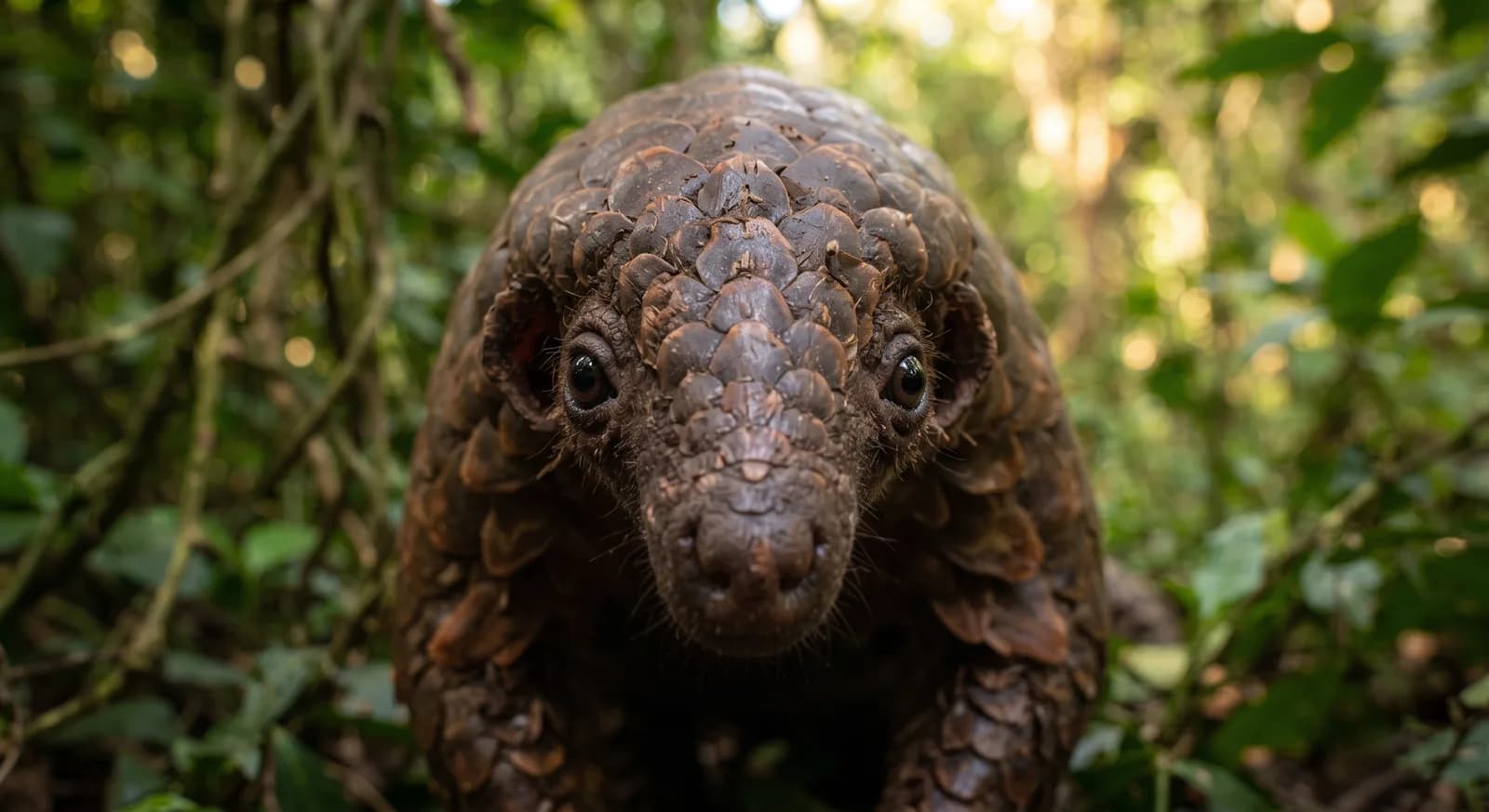
Giant Pangolin (Smutsia gigantea)

Mammals · Pholidota · Manidae

Giant Pangolin

Smutsia gigantea

Endangered

At very high risk of extinction in the wild in the near future.

Spotted something wrong?

The giant pangolin is a pholidote of the family Manidae. It is distributed across Africa in a band along the equator extending from West Africa to Uganda. The giant pangolin is the largest pangolin species, hence its name. It feeds mainly on ants and termites, which it catches with its long tongue. The species was first described by Johann Karl Wilhelm Illiger in 1815 and no subspecies are known.

Weight

30 kg – 40 kg

Size

80 cm – 1 m

Diet

Insectivore

Feeds mainly on insects and other invertebrates.
Activity

Nocturnal

Active mainly at night.

Social structure

Solitary

Lives and hunts alone, joining others only to breed.

Sighting difficulty

Hard

SavannaRainforest
22countries14parks5same family

AI-generated images: illustrations, not photographs.

Fun facts

  • anatomíaIt is the largest pangolin in the world and can dig burrows several metres deep with its powerful front claws.
  • It walks on its hind legs, body upright and tail as a counterweight, keeping its front claws off the ground so as not to wear them down.
  • It has no teeth at all: it grinds the insects in a muscular stomach containing small stones and grit swallowed on purpose.

Life cycle and biology

Skeleton type
Vertebrate - internal bony skeleton (mammal)
Habitat and environment
Rainforest, gallery forest and wooded savannah of equatorial Africa, near water
Gestation / incubation
5 months
Litter / clutch size
1

Sources consulted: https://es.wikipedia.org/wiki/Smutsia_gigantea

Where to find it

Loading map…

The pins mark the parks where its presence is documented.

Where to see it

Parks and dive sites where this species has been documented — showing 10 of 14.

Related species

Other species in the catalogue with the most in common with Giant Pangolin — same habitat, park, country, tags or family.

Same taxonomic family
Shares a park
Shares a park
Shares a park
Shares a park
Shares a park

How to help

The giant pangolin is classified as endangered. Organisations such as the IUCN, WWF and the Wildlife Conservation Society work specifically on its conservation and that of its habitat; looking into their programmes is a good starting point if you want to get involved.

It's documented in 7 protected areas — one reason why protecting these places matters for its conservation.

Keep exploring

Based on what we already know about giant pangolin.

Comments

Share an experience, a fun fact or a tip for seeing the giant pangolin.

Be the first to comment.

See full glossary
This page in other languages: Español · Deutsch · Français · Português · Italiano
See its range on the interactive map→
BwindiUganda
KakumGhana
TaiCôte d’Ivoire
SalongaDemocratic Republic of the Congo
Dzanga-SanghaCentral African Republic
Odzala-KokouaRepublic of the Congo
DjaCameroon
Mount Nimba Strict Nature ReserveGuinea
Monte Alén National ParkEquatorial Guinea
Sapo National ParkLiberia
See all 14 parks
Endangered

Tree Pangolin

Phataginus tricuspis

Pygmy HippopotamusEndangered

Pygmy Hippopotamus

Choeropsis liberiensis

Giant Slippery FrogEndangered

Giant Slippery Frog

Conraua goliath

Least Concern

Egyptian Rousette

Rousettus aegyptiacus

African Straw-coloured Fruit-batNear Threatened

African Straw-coloured Fruit-bat

Eidolon helvum

ChimpanzeeEndangered

Chimpanzee

Pan troglodytes

CountriesCameroon
ParksBwindiUganda
TagsInsectivore
Insectivore
Nocturnal
Solitary
Endangered
Savanna
Rainforest
Mammal
Cameroon
Republic of the Congo
Central African Republic
Côte d’Ivoire
Democratic Republic of the Congo
Equatorial Guinea
Angola
Benin
Burundi
Cameroon
Central African Republic
Côte d’Ivoire
Democratic Republic of the Congo
Equatorial Guinea
Gabon
Gambia
Ghana
Guinea
Guinea-Bissau
Liberia
Nigeria
Republic of the Congo
Rwanda
Sierra Leone
South Sudan
Tanzania
Togo
Uganda