Birds · Piciformes · Ramphastidae
Collared Aracari
Pteroglossus torquatus
The species is abundant and widely distributed; it faces no significant short-term risk. See full glossary
The collared aracari is a small, slender toucan, black above and yellow below with a red and a black band across the belly. It lives in very sociable family groups that move in single file through the canopy. Its night-time behaviour is remarkable: up to six adults sleep together in the same tree hole, folding their tails over their backs to fit.
Weight
190 g – 280 g
Size
39 cm – 41 cm
Lifespan
15 years
Diet
Omnivore
Combines animal and plant food depending on availability.
Activity
Diurnal
Active mainly during the day.
Social structure
Family group
Lives in small family groups with close bonds.
Sighting difficulty
Easy
Fun facts
- GeneralA small toucan that sleeps in tree holes with its tail folded over its back.
- They sleep packed together: up to six adults share the same tree hole each night, folding their tails over their backs like a closed fan so that they all fit.
- It practises cooperative breeding: young from earlier broods help feed the chicks of the breeding pair, something that is uncommon among toucans.
- It regularly preys on other birds' nests: it raids the eggs and chicks of other canopy birds, a habit that sits oddly with its reputation as a fruit-eating toucan.
Life cycle & biology
- Skeleton type
- Vertebrate - internal bony skeleton (bird)
- Habitat & environment
- Lowland rainforest, secondary forest and plantations of Central America and northern South America
- Size at birth
- Altricial: born blind, naked or with sparse down and entirely dependent
- Sexual maturity
- 2 years
- Gestation / incubation
- 16 days of incubation
- Litter / clutch size
- 3 eggs
Sources consulted: https://es.wikipedia.org/wiki/Pteroglossus_torquatus
Where to find it
See its range on the interactive mapBest time: All year round in the forests of Central America and northern South America, by day; it moves in small parties that roost together in tree holes.
Where to watch it
Parques y spots de buceo donde se ha documentado esta especie — se muestran 10 de 41 documentados.
Related species
Other species in the catalogue with the most in common with Collared Aracari — same habitat, park, country, tags or family.
Emerald Toucanet
Aulacorhynchus prasinus
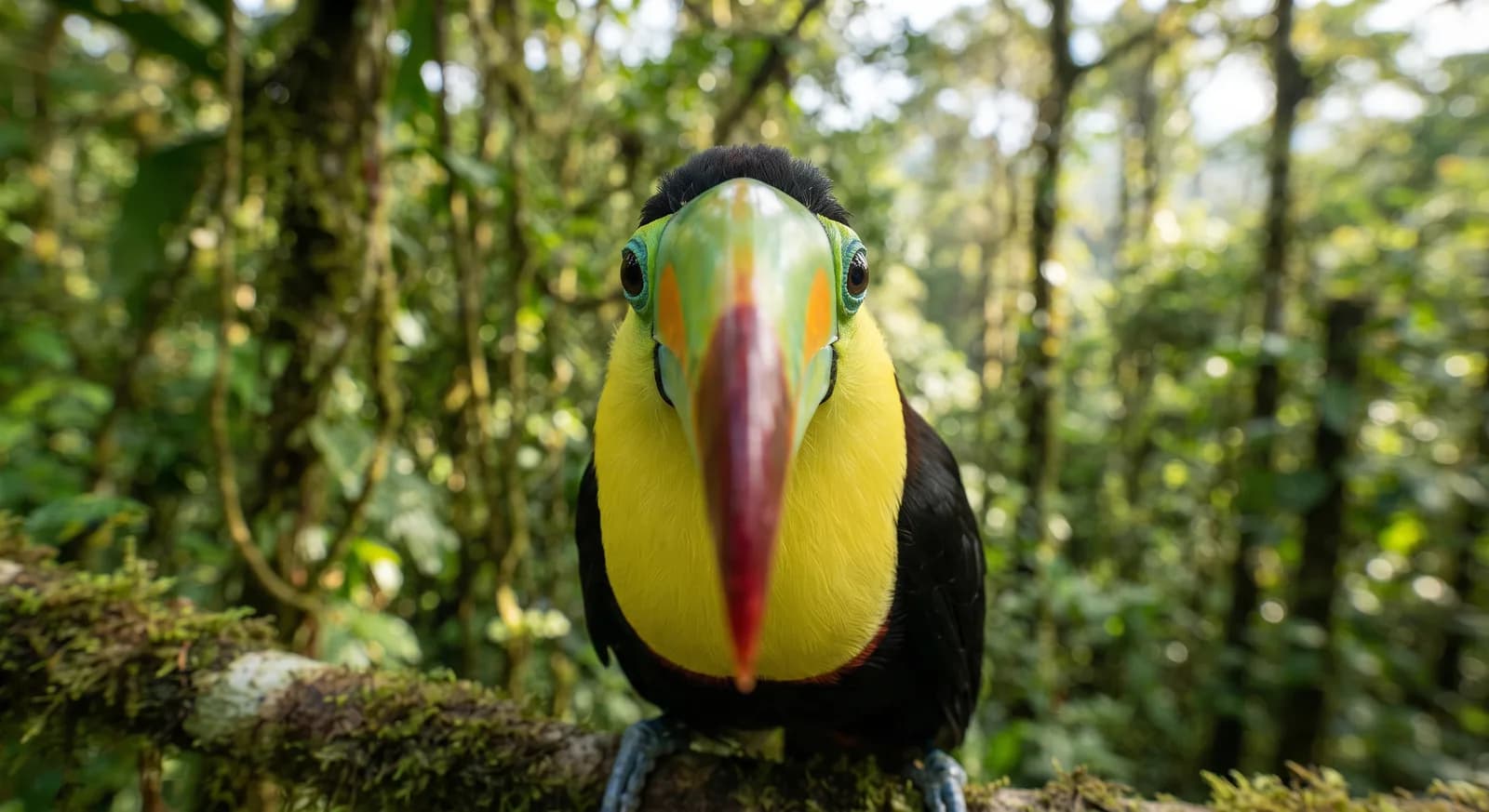 Near Threatened
Keel-billed Toucan
Ramphastos sulfuratus
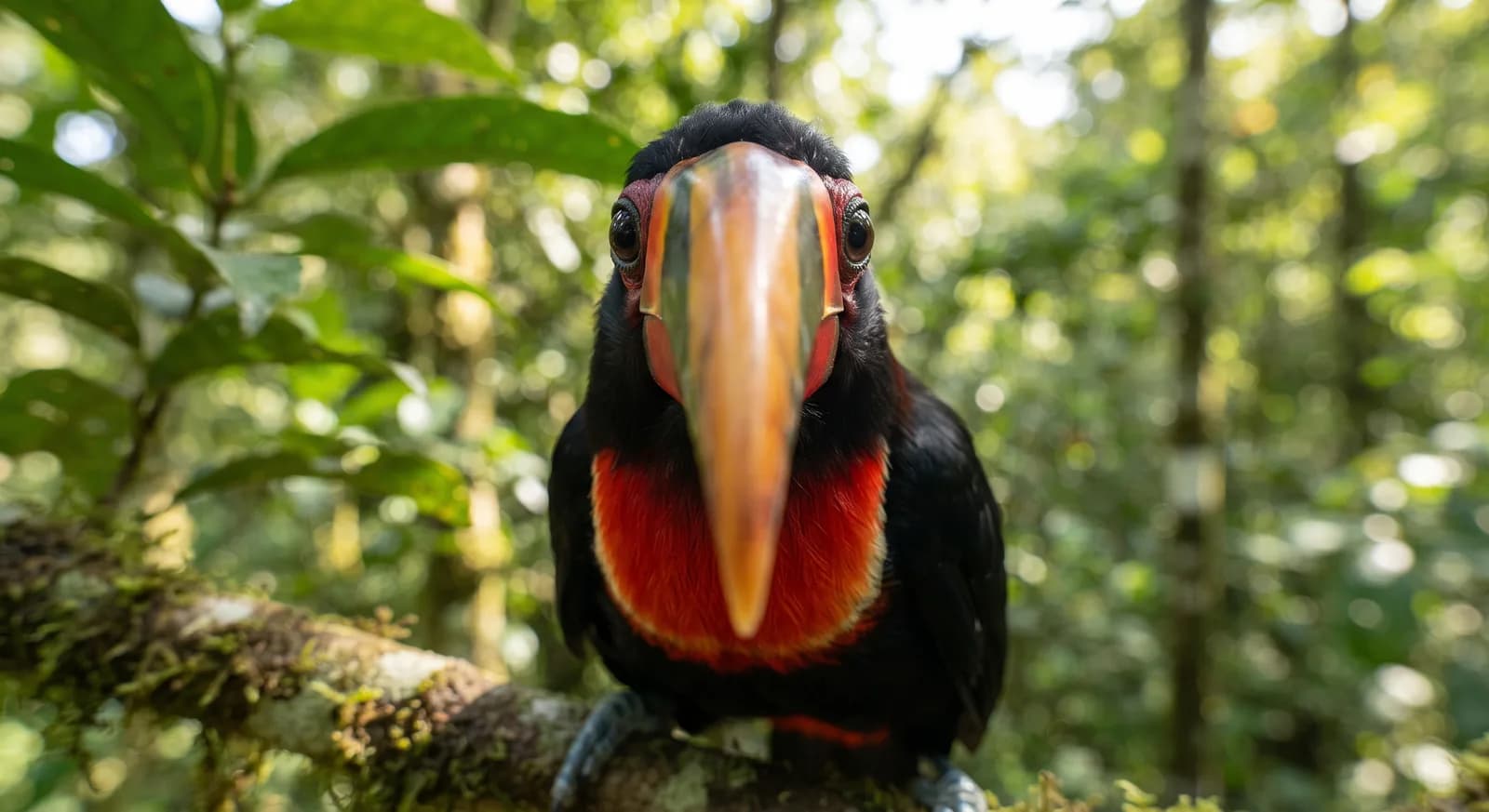 Least Concern
Red-breasted Toucan
Ramphastos dicolorus
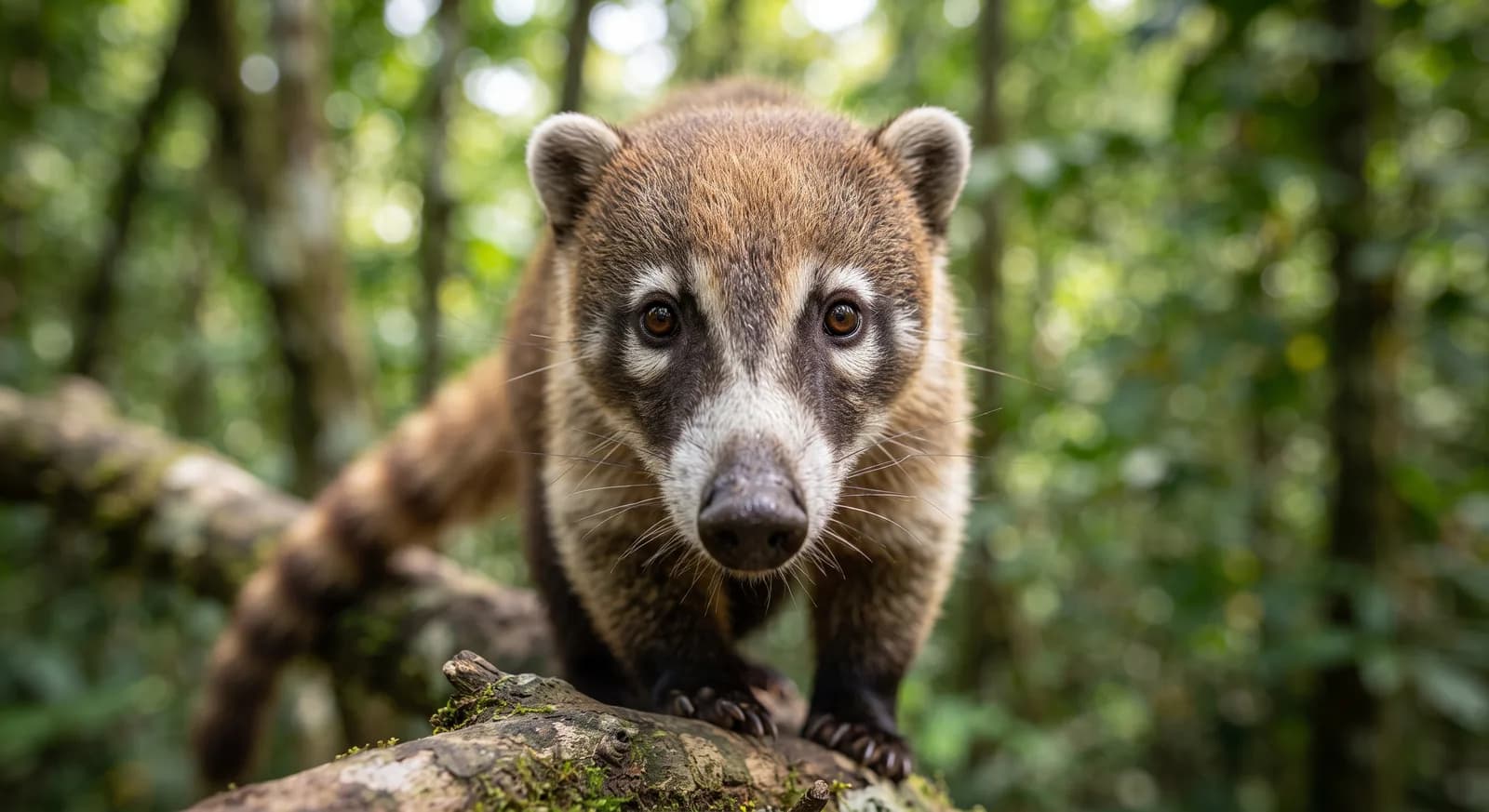 Least Concern
White-nosed Coati
Nasua narica
Collared Trogon
Trogon collaris
Indigo Bunting
Passerina cyanea
Keep exploring
Based on what we already know about collared aracari.
Comments
Share an experience, a fun fact or a tip for seeing the collared aracari.
Be the first to comment.