One of the 13 seals on WAnimals
Mammals · Carnivora · Phocidae
Hooded Seal
Cystophora cristata
It faces a high risk of extinction in the wild over the medium term. See full glossary
The hooded seal is a large seal of the North Atlantic that spends most of the year on the open sea, diving to great depth in search of fish and squid. It gathers on drifting ice to give birth and mate in an extremely brief period. The males have two spectacular nasal ornaments that they use in courtship displays and in confrontations. Commercial hunting and, above all, the retreat of the seasonal ice it depends on for breeding have caused its decline.
Weight
145 kg – 300 kg
Size
2 m – 2.6 m
Lifespan
35 years
Diet
Carnivore
Feeds mainly on other animals.
Activity
Diurnal
Active mainly during the day.
Social structure
Solitary
Lives and hunts alone, joining others only to breed.
Sighting difficulty
Moderate
Fun facts
- GeneralThe male inflates a red sac out of one nostril like a balloon to court.
- comportamientoThe males can inflate a red nasal membrane into a balloon as part of their dominance and courtship displays.
- It has the shortest lactation of any mammal: barely four days, during which the pup doubles its weight on milk that is more than 60% fat, after which the mother leaves it on the ice.
- The male inflates a black nasal sac that covers his forehead like a hood and can also push his nasal septum out through one nostril and blow it up like a red balloon, two separate ornaments that he displays to rivals and females.
Life cycle & biology
- Skeleton type
- Vertebrate - internal bony skeleton (mammal)
- Habitat & environment
- Pack ice and cold waters of the North Atlantic
- Sexual maturity
- 3 years
- Gestation / incubation
- 7.9 months
- Litter / clutch size
- 1
Sources consulted: https://es.wikipedia.org/wiki/Cystophora_cristata
Where to find it
See its range on the interactive mapWhere to watch it
Parques y spots de buceo donde se ha documentado esta especie — se muestran 13 de 18 documentados.
Related species
Other species in the catalogue with the most in common with Hooded Seal — same habitat, park, country, tags or family.
Harp Seal
Pagophilus groenlandicus
Bearded Seal
Erignathus barbatus
 Least Concern
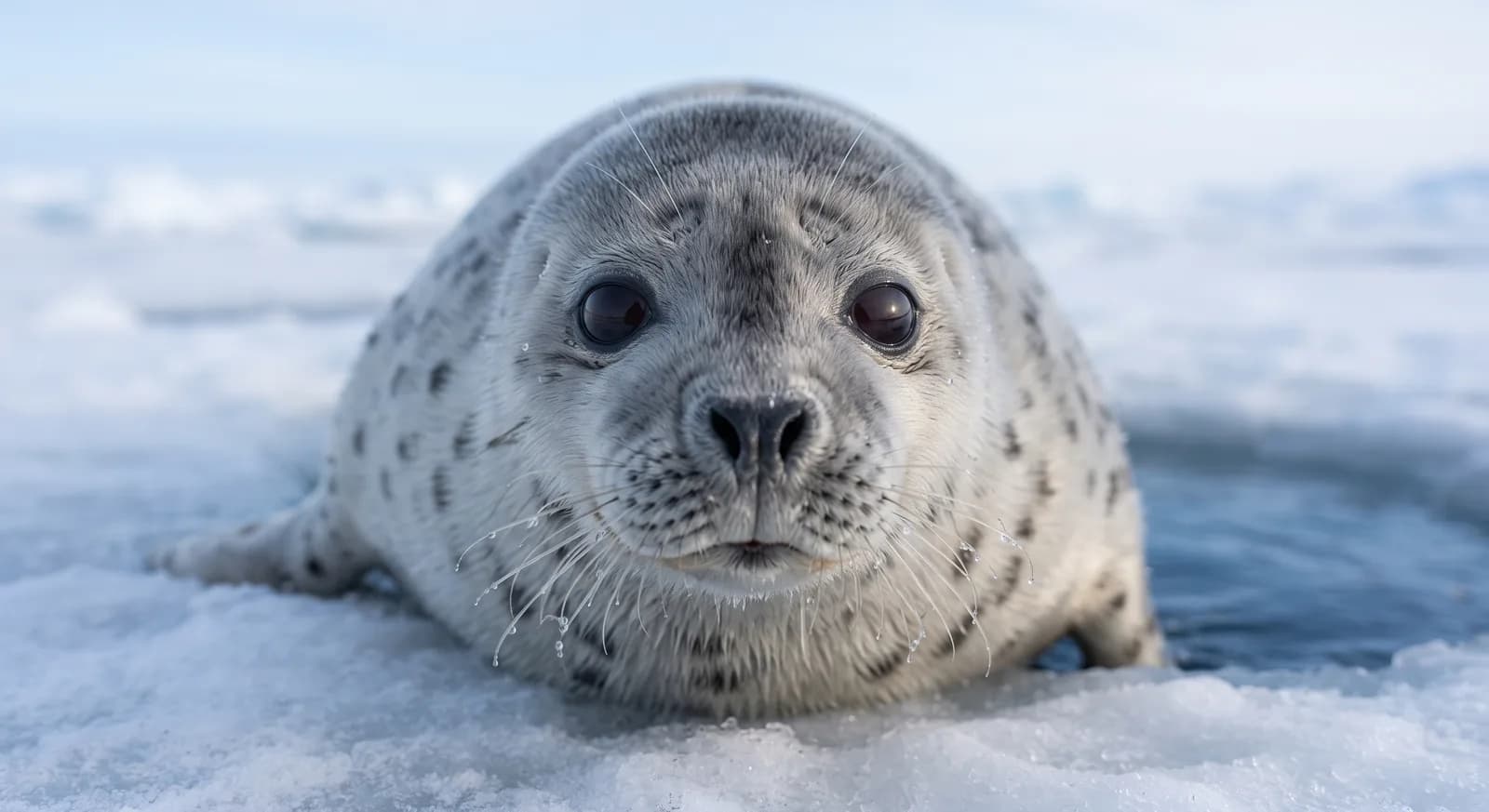
Ringed Seal
Pusa hispida
 Least Concern
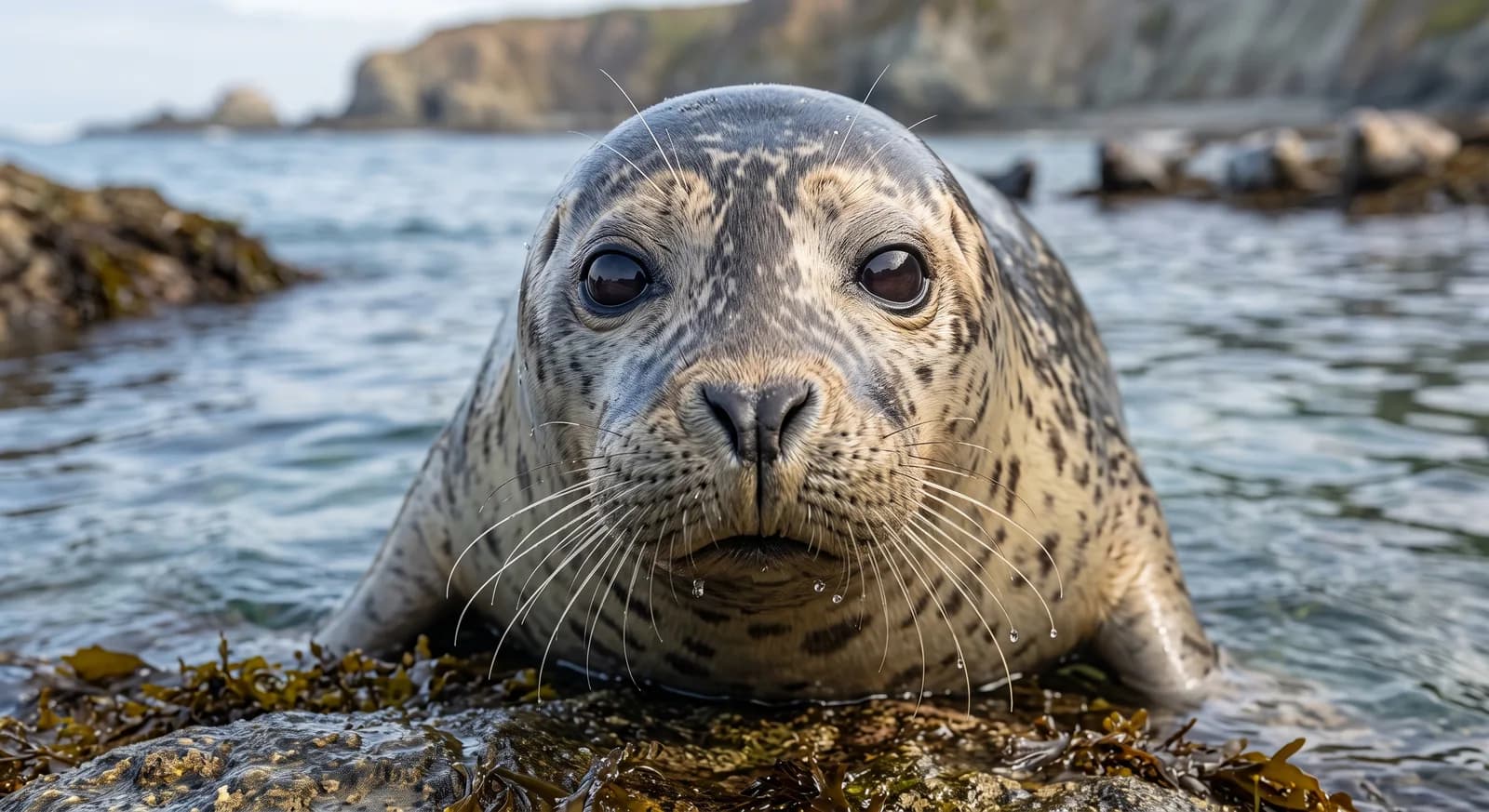
Harbor Seal
Phoca vitulina
 Least Concern
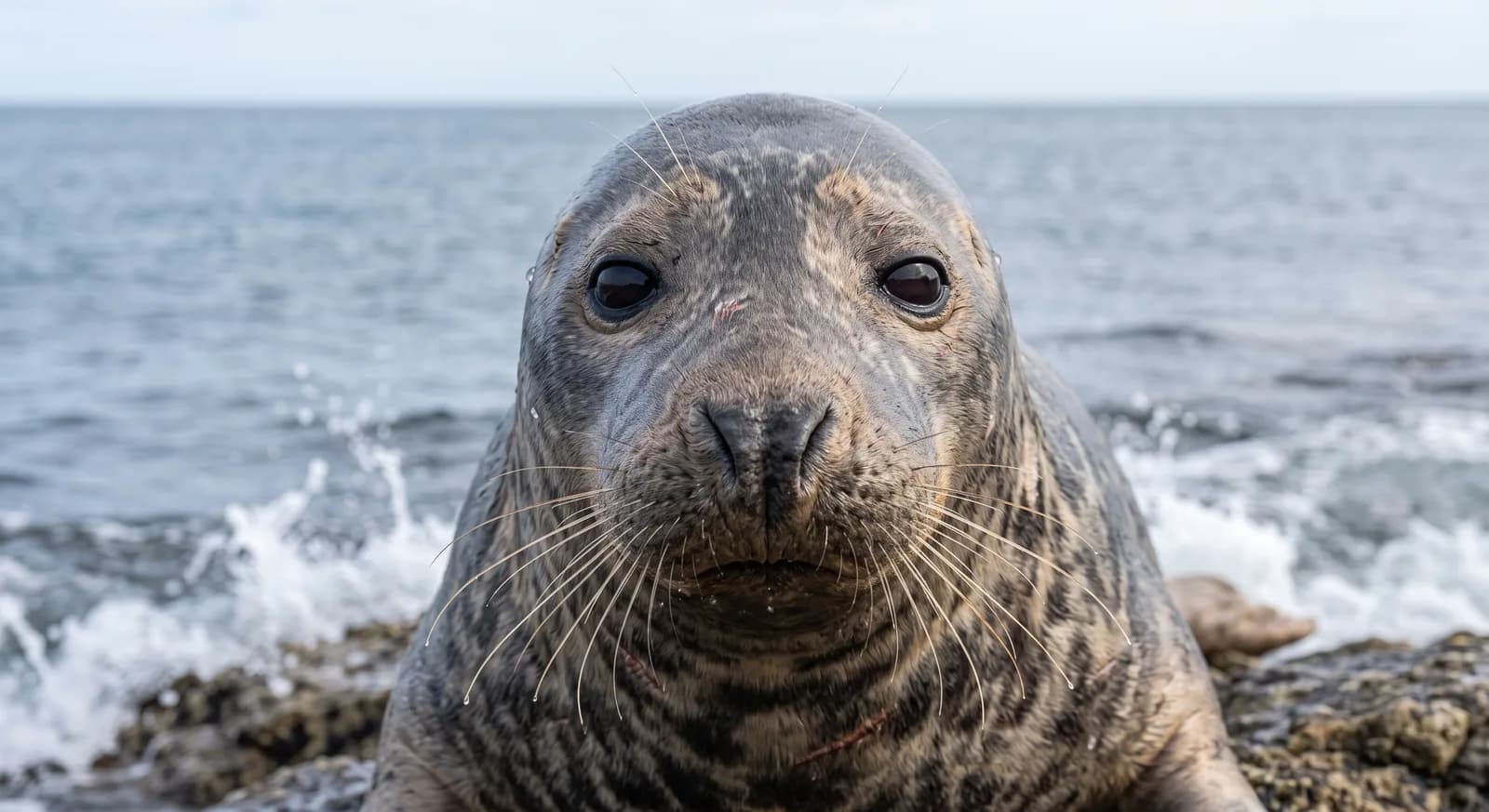
Grey Seal
Halichoerus grypus
 Vulnerable
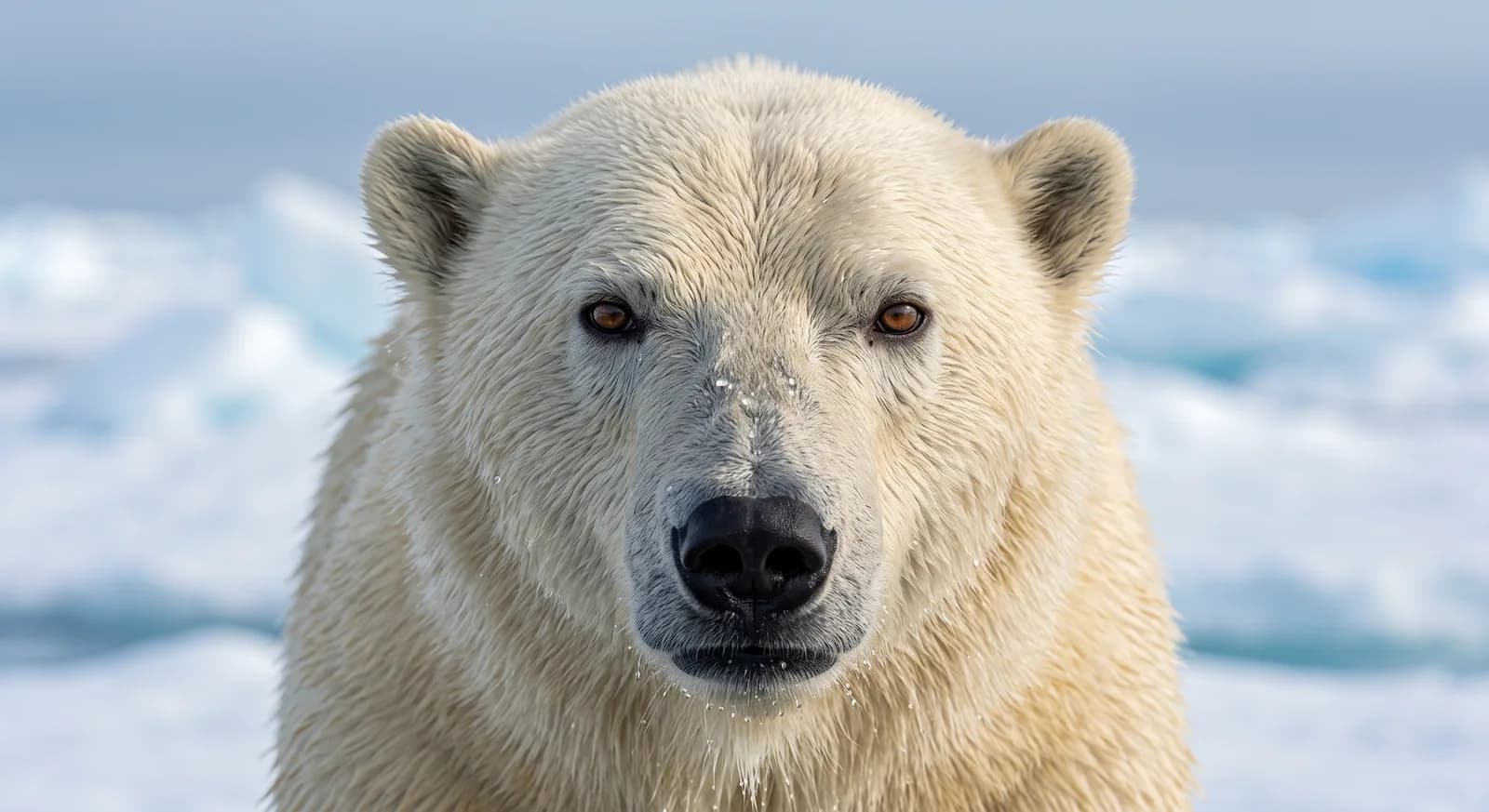
Polar Bear
Ursus maritimus
How to help
The hooded seal is classified as vulnerable. Organizations such as UICN, WWF y Wildlife Conservation Society work specifically on its conservation and that of its habitat; looking into their programs is a good starting point if you want to get involved.
It's documented in 6 real protected areas — part of why protecting these places matters for its conservation.
Keep exploring
Based on what we already know about hooded seal.
Comments
Share an experience, a fun fact or a tip for seeing the hooded seal.
Be the first to comment.