One of the 13 seals on WAnimals
Mammals · Carnivora · Phocidae
Harp Seal
Pagophilus groenlandicus
The species is abundant and widely distributed; it faces no significant short-term risk. See full glossary
The harp seal is one of the most abundant pinnipeds in the northern hemisphere, with several million animals spread across three great populations: the north-western Atlantic, the Greenland Sea and the White Sea. Its scientific name means ice-lover, and that defines its biology: it gives birth, suckles and moults on drifting sea ice. It makes migrations of thousands of kilometres and regularly dives below 200 metres to hunt capelin, polar cod and crustaceans.
Weight
115 kg – 140 kg
Size
1.6 m – 1.9 m
Lifespan
30 years
Diet
Carnivore
Feeds mainly on other animals.
Activity
Irregular activity
Active at irregular times, by day or night depending on circumstances.
Social structure
Colony
Lives in large concentrations, often for breeding reasons.
Sighting difficulty
Easy
Fun facts
- The pups are born with a woolly white coat that they lose at three or four weeks; that pelt was the target of the commercial hunt that provoked one of the largest conservation campaigns of the twentieth century.
- Suckling lasts barely twelve days, but the milk is more than 40% fat and the pup triples its weight before the mother leaves it on the ice.
Life cycle & biology
- Skeleton type
- Vertebrate - internal bony skeleton (mammal)
- Habitat & environment
- Pack ice and cold waters of the North Atlantic and the Arctic Ocean
- Birth weight
- ~11 kg
- Size at birth
- About 85 cm; born with the characteristic white coat
- Sexual maturity
- 4.5 years
- Gestation / incubation
- 7.5 months
- Litter / clutch size
- 1.25 (average)
Sources consulted: https://es.wikipedia.org/wiki/Pagophilus_groenlandicus
Where to find it
See its range on the interactive mapBest time: From February to March in the Gulf of St Lawrence and the White Sea, when the females pup on the ice and the white-coated young number in their thousands.
Where to watch it
Parques y spots de buceo donde se ha documentado esta especie — se muestran 14 de 21 documentados.
Related species
Other species in the catalogue with the most in common with Harp Seal — same habitat, park, country, tags or family.
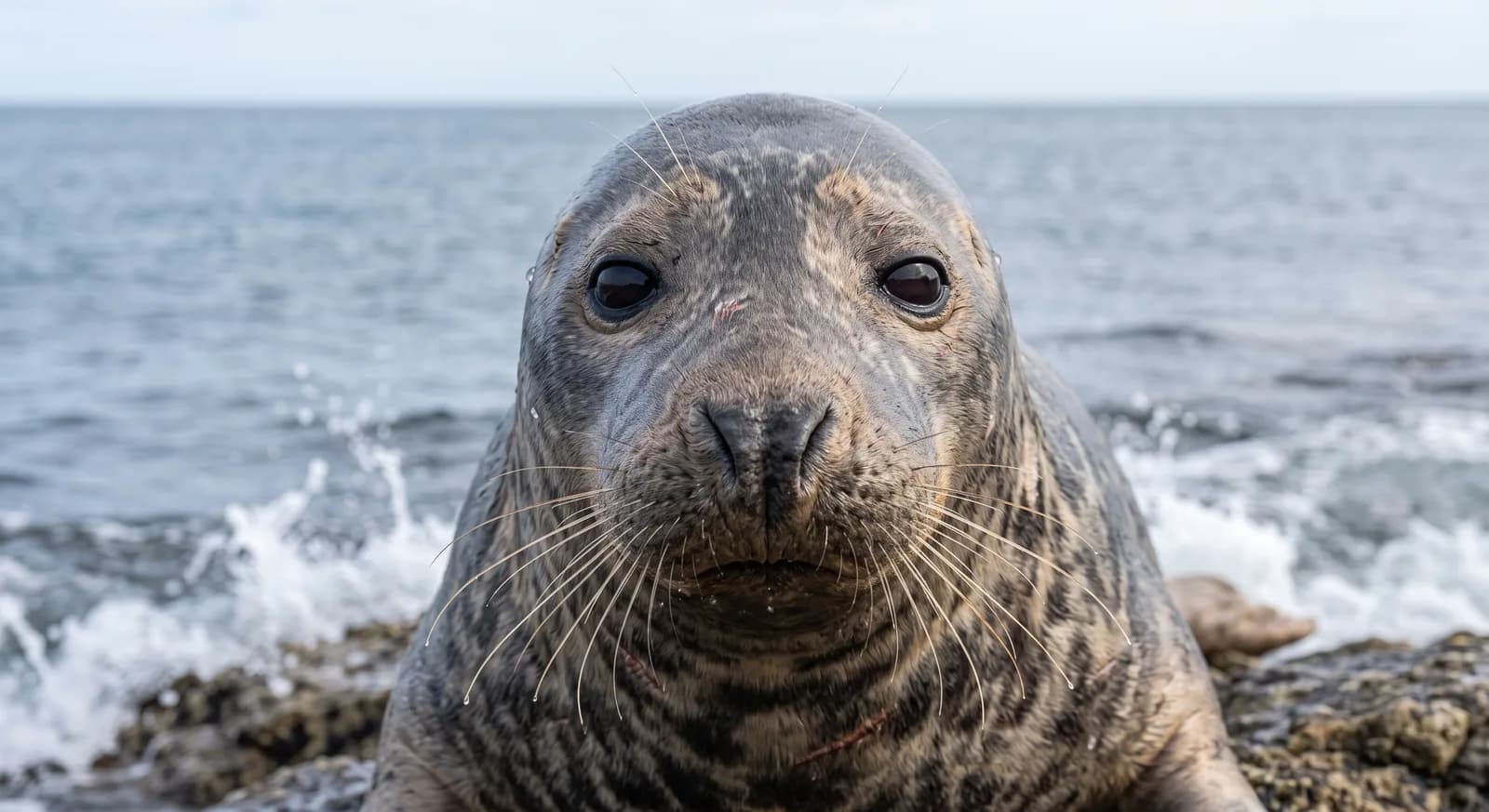 Least Concern
Grey Seal
Halichoerus grypus
Bearded Seal
Erignathus barbatus
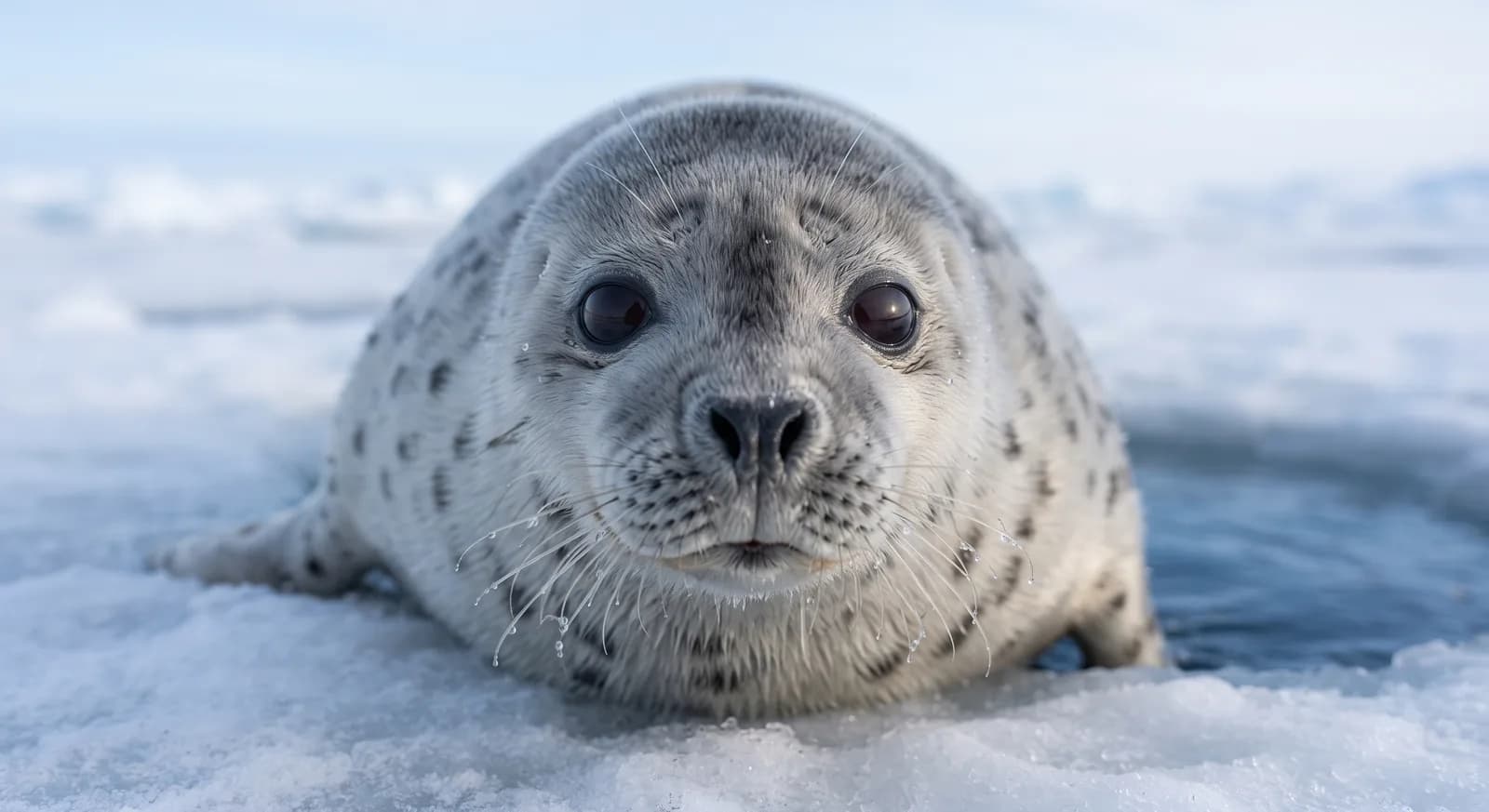 Least Concern
Ringed Seal
Pusa hispida
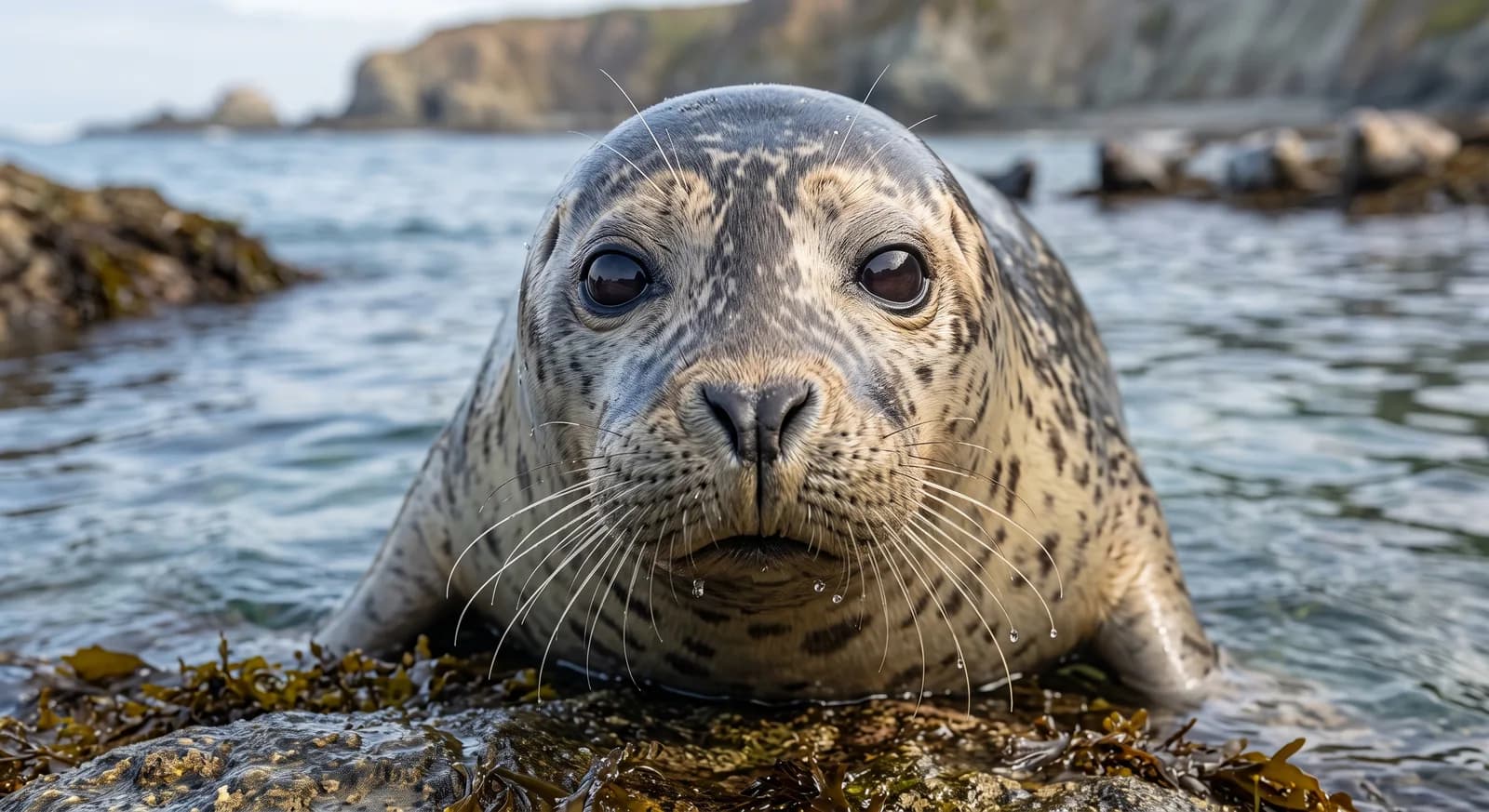 Least Concern
Harbor Seal
Phoca vitulina
Hooded Seal
Cystophora cristata
Spotted Seal
Phoca largha
Keep exploring
Based on what we already know about harp seal.
Comments
Share an experience, a fun fact or a tip for seeing the harp seal.
Be the first to comment.