One of the 13 seals on WAnimals
Mammals · Carnivora · Phocidae
Bearded Seal
Erignathus barbatus
The species is abundant and widely distributed; it faces no significant short-term risk. See full glossary
The bearded seal is the largest seal in the Arctic, with a heavy body, a small head and the long, dense whiskers that give it its beard and its name. It feeds by rooting on the sea floor: clams, crabs, worms and bottom-dwelling fish, which it locates by touch with its whiskers. It prefers shallow water with drifting ice and is important prey for the polar bear and the killer whale. It is also an essential resource for Inuit communities.
Weight
200 kg – 430 kg
Size
2.1 m – 2.7 m
Lifespan
25 years
Diet
Carnivore
Feeds mainly on other animals.
Activity
Diurnal
Active mainly during the day.
Social structure
Solitary
Lives and hunts alone, joining others only to breed.
Sighting difficulty
Easy
Fun facts
- GeneralThe males sing trilling songs underwater that carry 20 km.
- The male's song during the breeding season is one of the strangest sounds in the Arctic: a spiralling descending trill lasting almost a minute that carries for kilometres beneath the ice.
- Its whiskers curl at the tips as they dry, a detail that sets it apart from any other Arctic seal.
Life cycle & biology
- Skeleton type
- Vertebrate - internal bony skeleton (mammal)
- Habitat & environment
- Drifting ice and Arctic coastal shelves
- Sexual maturity
- 4.7 years
- Gestation / incubation
- 8.5 months
- Litter / clutch size
- 1
Sources consulted: https://es.wikipedia.org/wiki/Erignathus_barbatus
Where to find it
See its range on the interactive mapWhere to watch it
Parques y spots de buceo donde se ha documentado esta especie — se muestran 11 de 18 documentados.
Related species
Other species in the catalogue with the most in common with Bearded Seal — same habitat, park, country, tags or family.
Harp Seal
Pagophilus groenlandicus
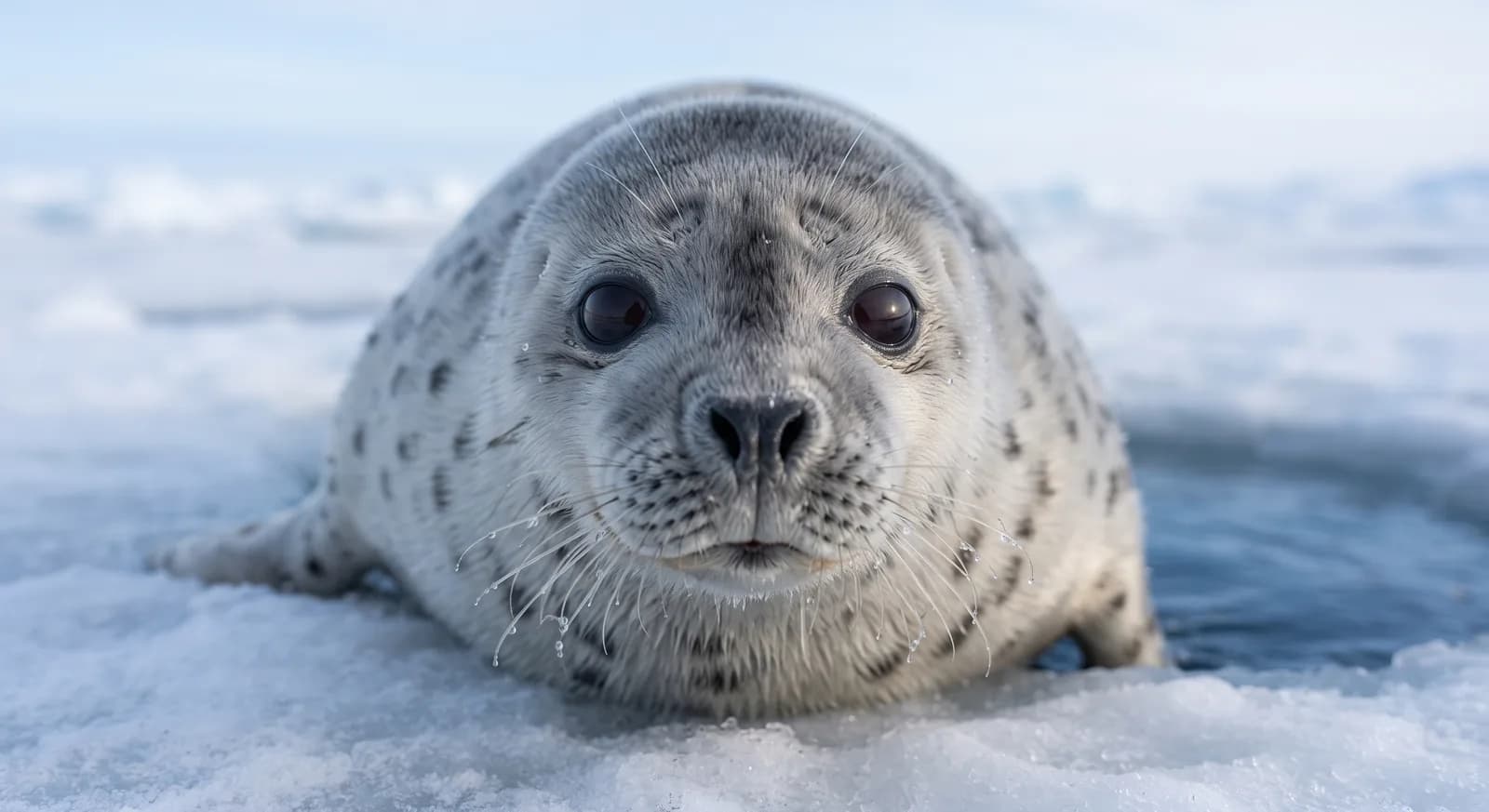 Least Concern
Ringed Seal
Pusa hispida
Hooded Seal
Cystophora cristata
Spotted Seal
Phoca largha
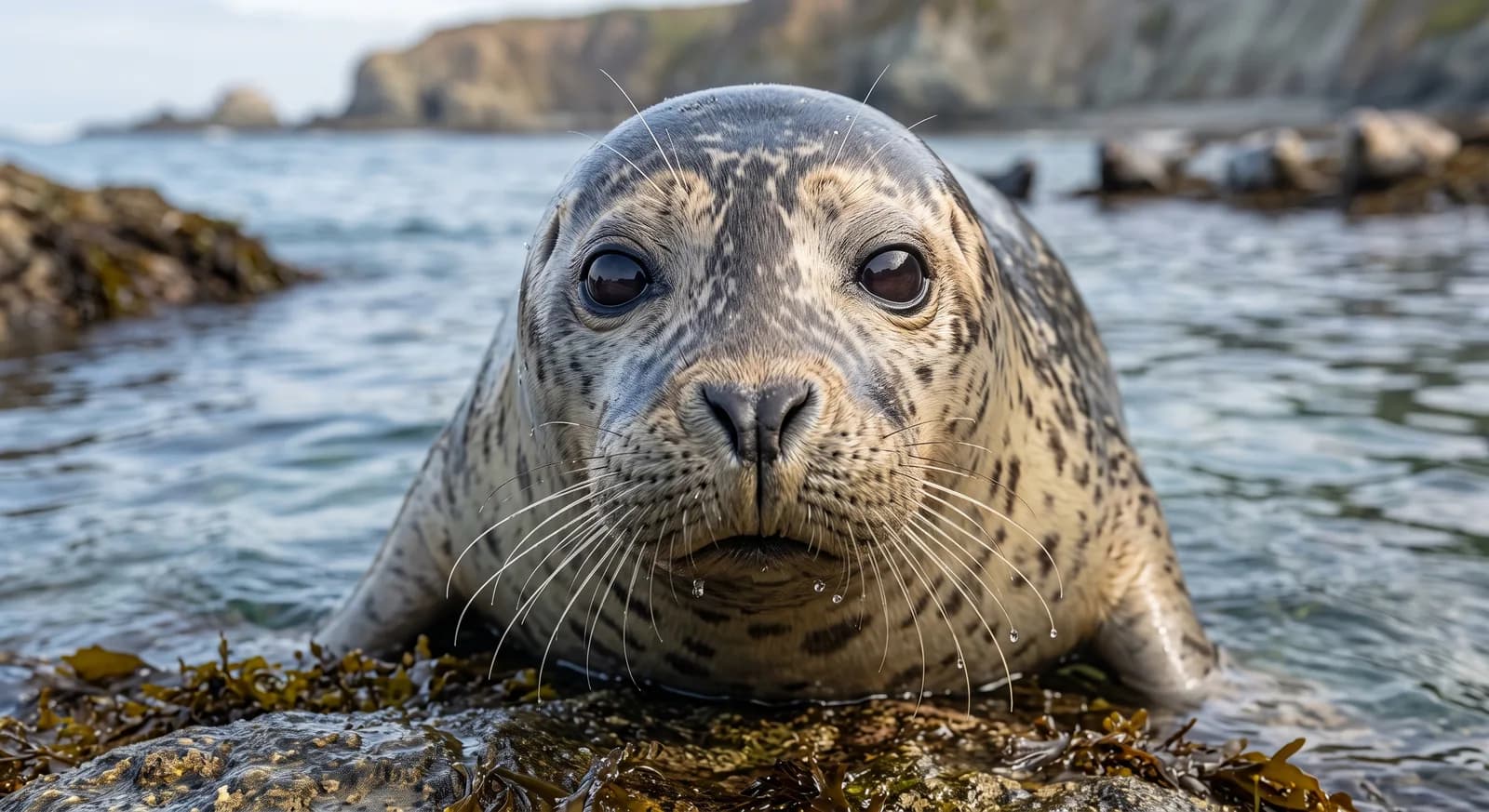 Least Concern
Harbor Seal
Phoca vitulina
Bowhead Whale
Balaena mysticetus
Keep exploring
Based on what we already know about bearded seal.
Comments
Share an experience, a fun fact or a tip for seeing the bearded seal.
Be the first to comment.