Species group · Birds
Bustards
WAnimals has 3 species of bustard, all in the family Otididae.
- 3 species
- 1 family
- 87 countries
- 62 parks
- Weight
- 1.6 kg – 19 kg
- Length
- 55 cm – 1.4 m
- Lifespan
- 12 – 30 years
Ranges calculated from the entries that record the figure, not from all 3.
All 3 species of bustards on WAnimals
Each one has its own full entry. This group does not replace them: it brings them together.
Conservation status
1 especies in this group están en alguna categoría de riesgo real según la UICN.
See the global conservation statusWhere they live
Recorded in 87 countries. The ones with the most species in the group:
Where to see them
Did you know…
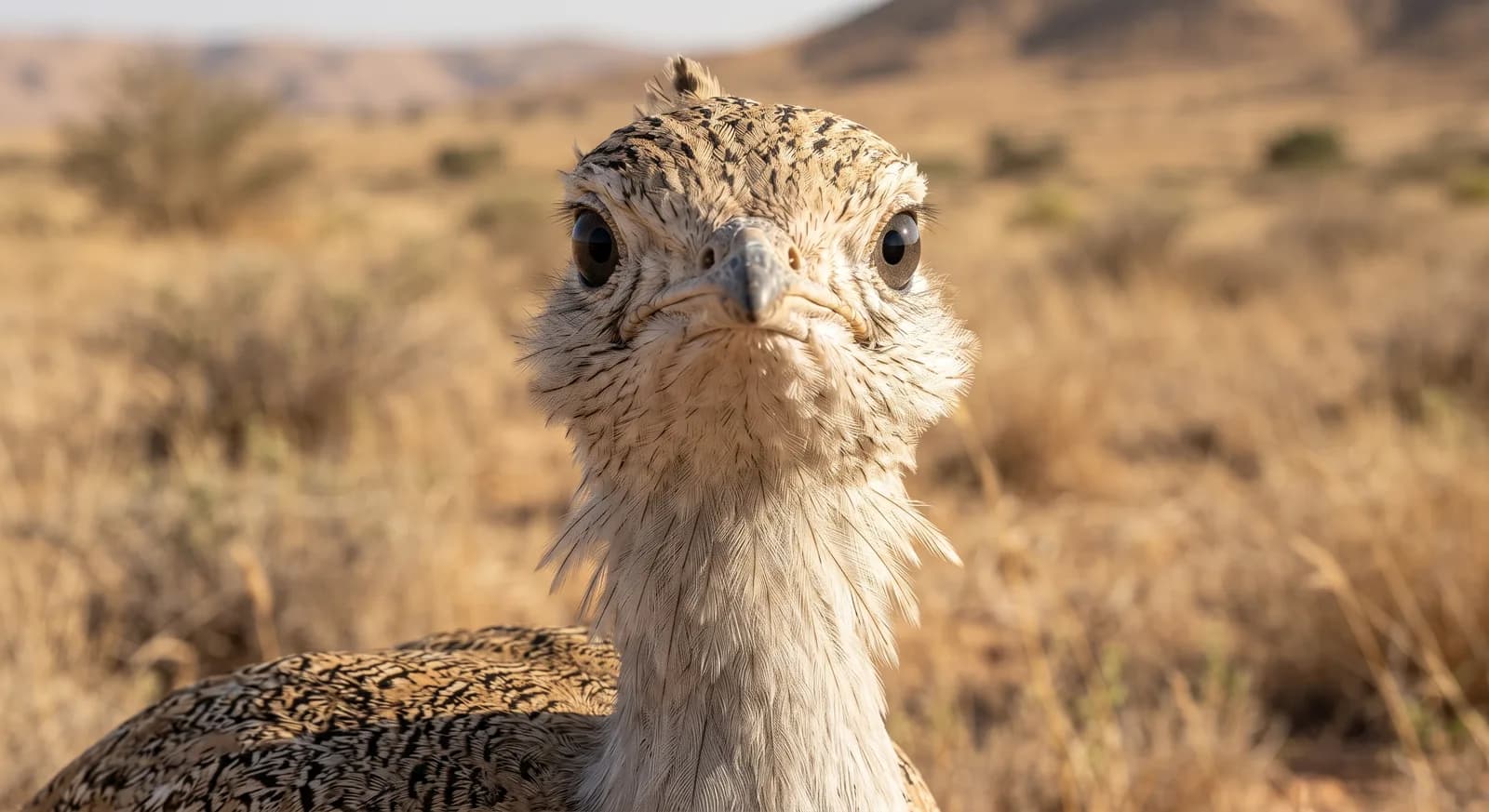
The Canarian houbara is the largest bird native to the archipelago and, at the same time, the smallest of the three subspecies in the world.
From Houbara Bustard
It is the animal symbol of Fuerteventura, alongside the Jandía cardón as the plant symbol.
From Houbara Bustard
Archaeological remains indicate it has been in the Canaries for between 130,000 and 170,000 years, but the genetics point to a second colonisation some 20,000-25,000 years ago, after which it became isolated.
From Houbara Bustard
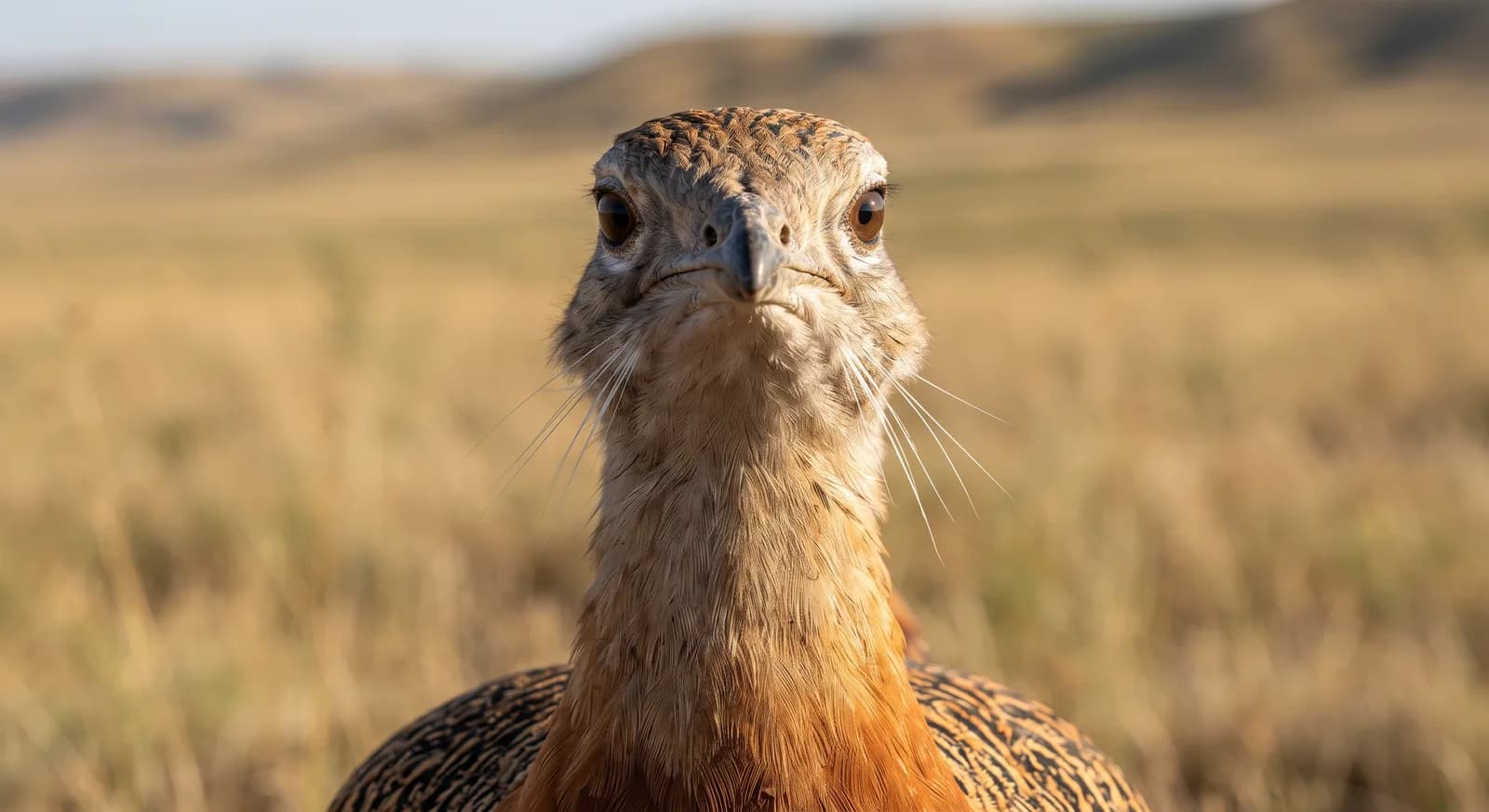
It is one of the heaviest flying birds in the world, and males perform a courtship display in which they all but turn their plumage inside out over their own bodies.
From Great Bustard
It is one of the heaviest flying birds in Africa, and the males court by inflating the neck and raising the plumage to look larger.
From Kori Bustard
It is one of the heaviest birds in the world still able to fly: a large male exceeds 18 kilos, at the limit of what the physics of flapping flight allows.
From Kori Bustard
It associates with oxpeckers, which perch on it to eat its parasites, and it also follows meerkat groups and savannah fires to catch the insects fleeing them.
From Kori Bustard