One of the 3 bustards on WAnimals
Birds · Otidiformes · Otididae
Houbara Bustard
Chlamydotis undulata
It faces a high risk of extinction in the wild over the medium term. See full glossary
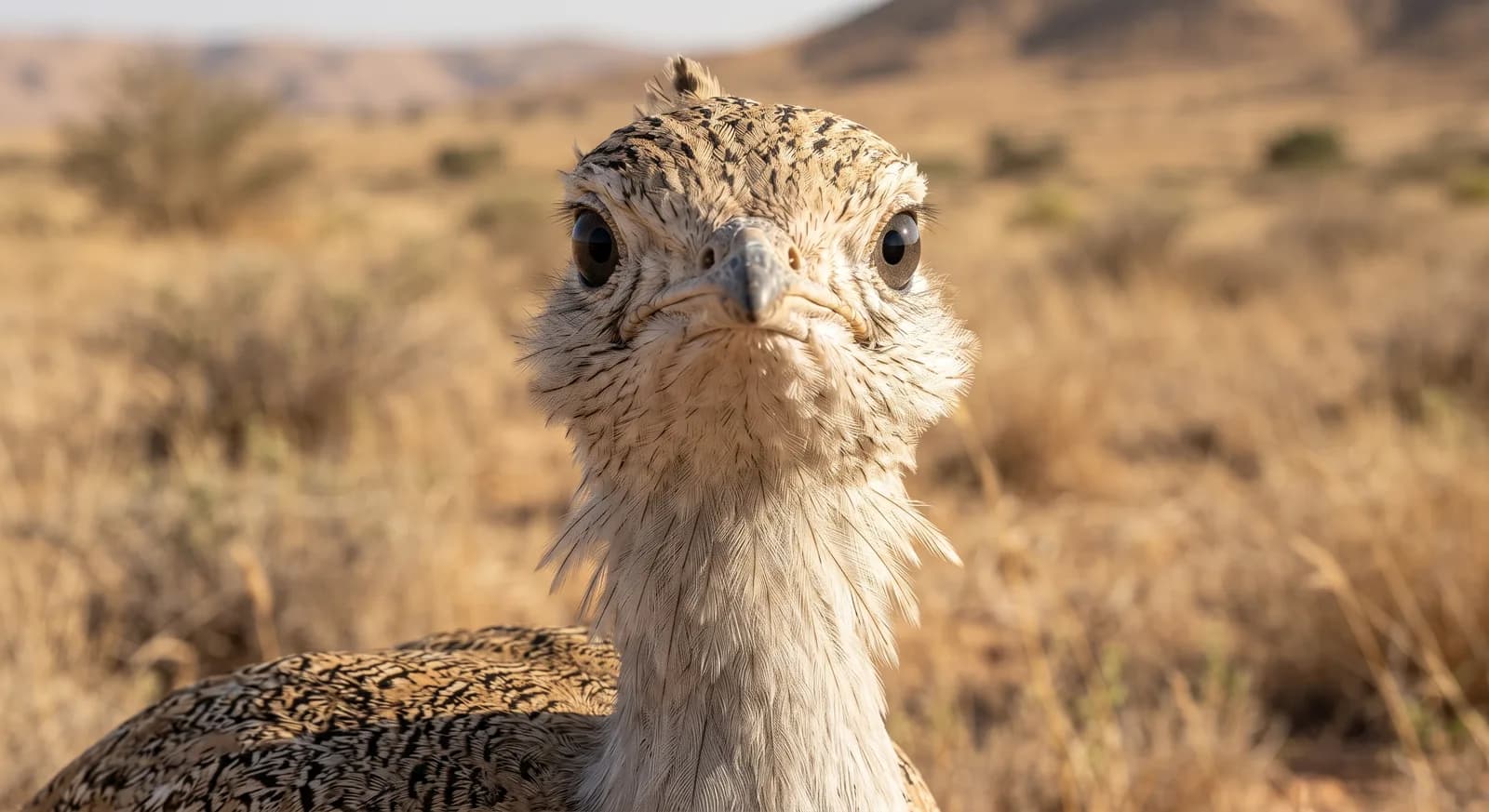
A large steppe bird with long, sturdy legs and a long neck, sand-coloured above and white below. It sports two long 'whiskers' of black feathers on either side of the neck, more obvious in summer, and an erectile crest on the head. The edges of the wings are black.
Weight
1.6 kg on average
Size
55 cm – 65 cm
Diet
Omnivore
Combines animal and plant food depending on availability.
Activity
Diurnal
Active mainly during the day.
Social structure
Solitary
Lives and hunts alone, joining others only to breed.
Sighting difficulty
Moderate
Estimated population
The Canarian subspecies was estimated at some 508 birds in 2023: 388 on Lanzarote, 108 on Fuerteventura and 12 on La Graciosa. It is one of the lowest figures since 1994
Fun facts
- The Canarian houbara is the largest bird native to the archipelago and, at the same time, the smallest of the three subspecies in the world.
- It is the animal symbol of Fuerteventura, alongside the Jandía cardón as the plant symbol.
- Archaeological remains indicate it has been in the Canaries for between 130,000 and 170,000 years, but the genetics point to a second colonisation some 20,000-25,000 years ago, after which it became isolated.
Life cycle & biology
- Skeleton type
- Vertebrate - internal bony skeleton (bird)
- Habitat & environment
- Sandy or stony plains with some vegetation cover, and areas of traditional farming. It shows a strong preference for areas with little human presence, far from towns and roads
- Sexual maturity
- 17.9 months
Sources consulted: IUCN Red List; Martín et al. 1997, Ardeola 44(1); Carrascal (censos de 2020 y 2023); GREFA (seguimiento anual); Libro Rojo de las Aves de España; Suárez-Santana et al. 2024, Veterinary Sciences 11(7); Banco de Datos de Biodiversidad de Canarias
Where to find it
See its range on the interactive mapBest time: All year round on Fuerteventura, Lanzarote and La Graciosa; the males' courtship is most spectacular in spring
Where to watch it
Parks and dive sites where this species has been documented.
Related species
Other species in the catalogue with the most in common with Houbara Bustard — same habitat, park, country, tags or family.
Kori Bustard
Ardeotis kori
Egyptian Spiny-tailed Lizard
Uromastyx aegyptia
Steppe Tortoise
Testudo horsfieldii
Little Bustard
Tetrax tetrax
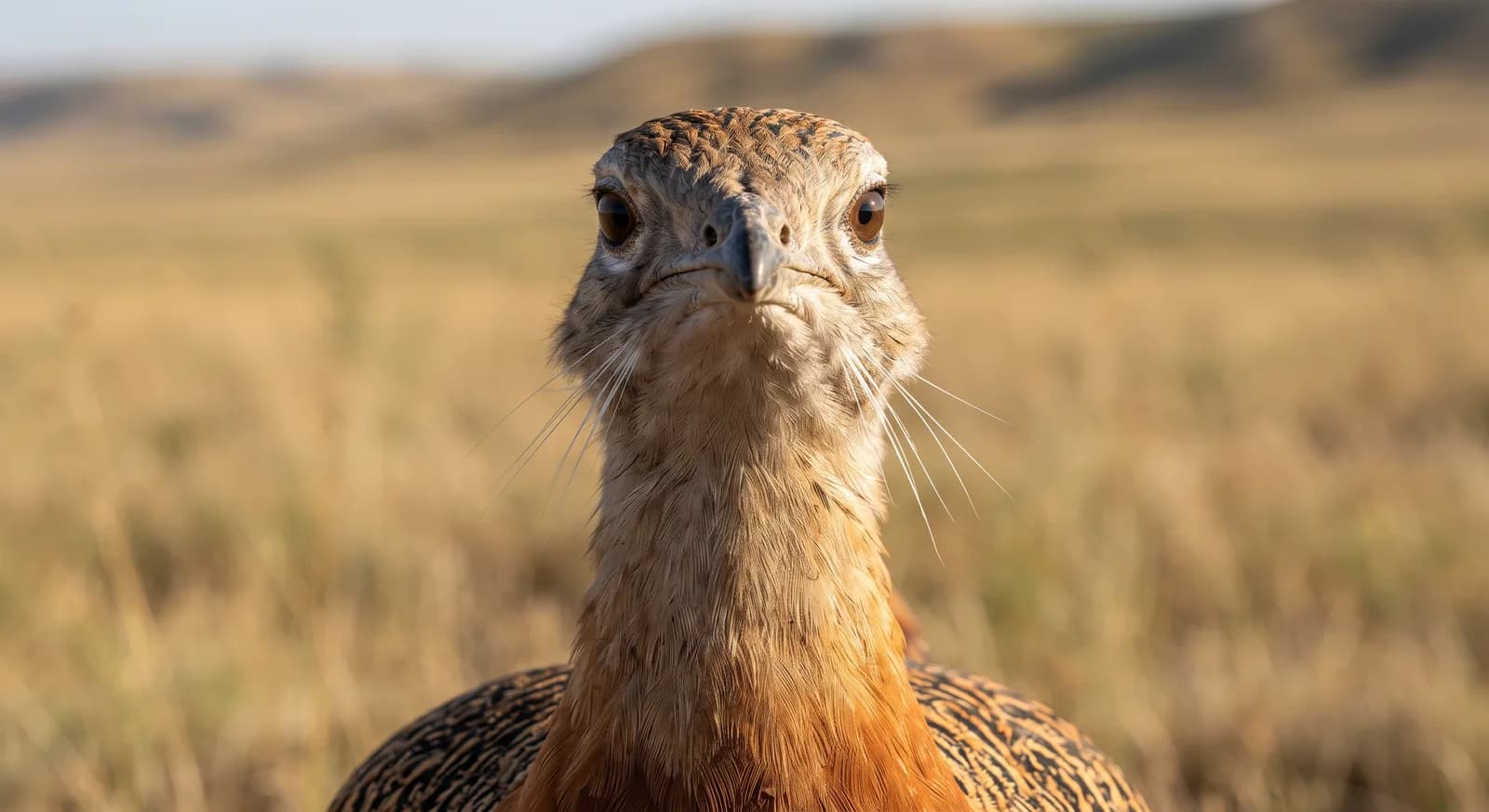 Near Threatened
Great Bustard
Otis tarda
 Vulnerable
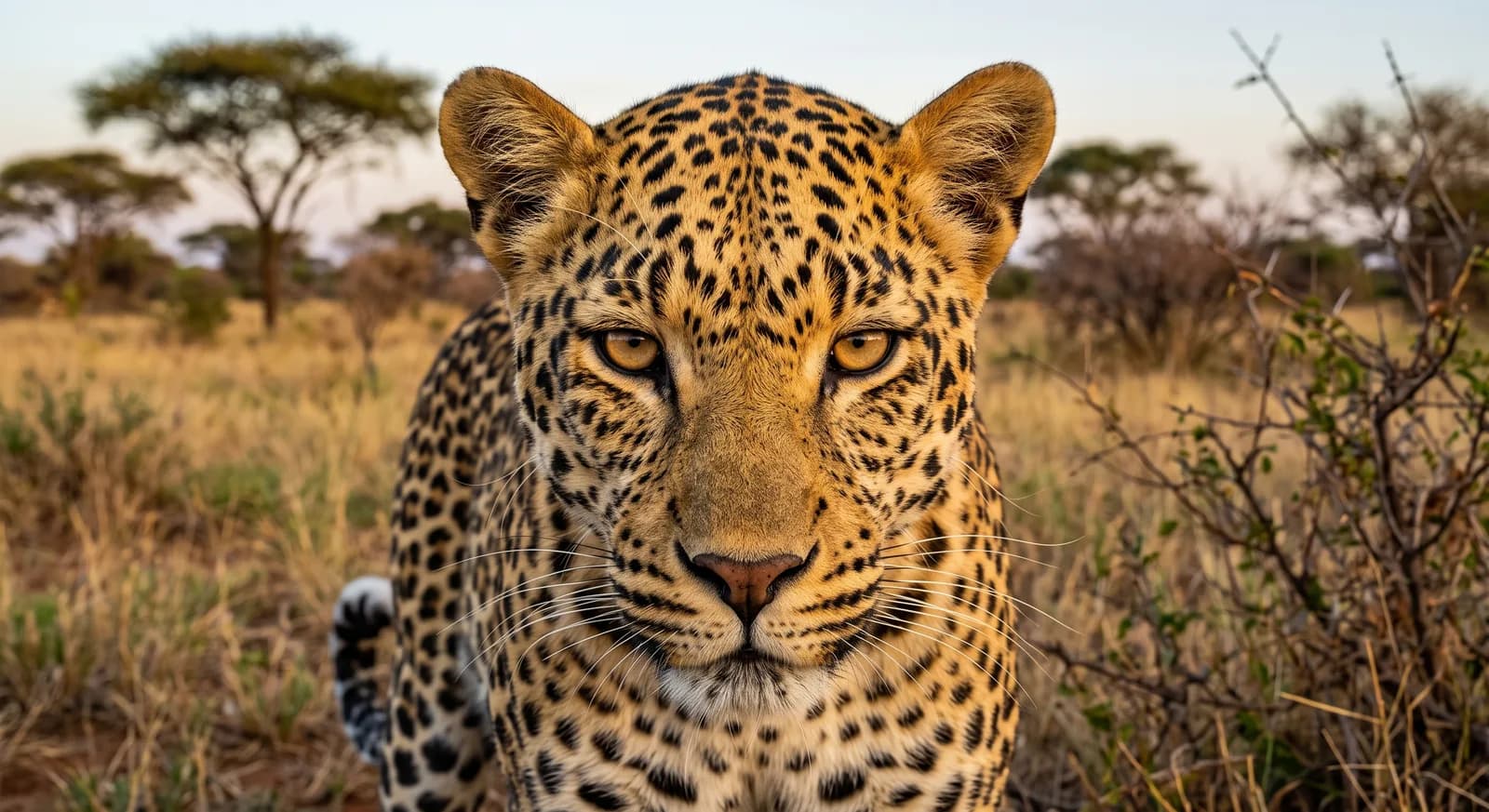
Leopard
Panthera pardus
How to help
The houbara bustard is classified as vulnerable. Organizations such as UICN, WWF y Wildlife Conservation Society work specifically on its conservation and that of its habitat; looking into their programs is a good starting point if you want to get involved.
It's documented in 3 real protected areas — part of why protecting these places matters for its conservation.
Keep exploring
Based on what we already know about houbara bustard.
Comments
Share an experience, a fun fact or a tip for seeing the houbara bustard.
Be the first to comment.