Reptiles · Squamata · Agamidae
Egyptian Spiny-tailed Lizard
Uromastyx aegyptia
It faces a high risk of extinction in the wild over the medium term. See full glossary
Its tail, ringed with hardened spiny scales, works as a defensive weapon it can swing like a club at predators.
Weight
852 g on average
Size
up to 76 cm
Lifespan
15 years
Diet
Herbivore
Feeds mainly on plants.
Activity
Diurnal
Active mainly during the day.
Social structure
Solitary
Lives and hunts alone, joining others only to breed.
Sighting difficulty
Moderate
Fun facts
- It has a small hollow on top of its head that works as a cup for collecting dew to drink.
- It feeds mainly on desert plants, with the occasional insect.
- It digs extensive burrows up to 3 metres long in the arid deserts of North Africa and the Middle East.
Life cycle & biology
- Skeleton type
- Vertebrate - internal bony skeleton (reptile)
- Habitat & environment
- Arid and semi-arid rock and gravel desert of North Africa and the Middle East, with extensive burrows up to 3 metres long
- Birth weight
- No precise figure for hatching weight; 10-15 cm snout-to-vent
- Size at birth
- 10-15 cm snout-to-vent on hatching
- Sexual maturity
- 4-6 years
- Gestation / incubation
- 67-80 days
- Litter / clutch size
- 5 to 41 eggs per clutch (average ~20)
- Lifespan in captivity
- Documented record of up to 30 years in captivity
Sources consulted: Pets on Mom.com; AnAge (genomics.senescence.info); The Animal Facts; Animalia.bio; Grokipedia (Uromastyx aegyptia); Utica Zoo; A-Z Animals; Aridsonly Care Guide; Wikipedia (Uromastyx aegyptia)
Where to find it
See its range on the interactive mapBest time: From March to June, in mid-morning, when it comes out to bask at the mouth of its burrow in the stony deserts of the Middle East.
Where to watch it
Parks and dive sites where this species has been documented.
Related species
Other species in the catalogue with the most in common with Egyptian Spiny-tailed Lizard — same habitat, park, country, tags or family.
Common Tortoise
Testudo graeca
 Vulnerable
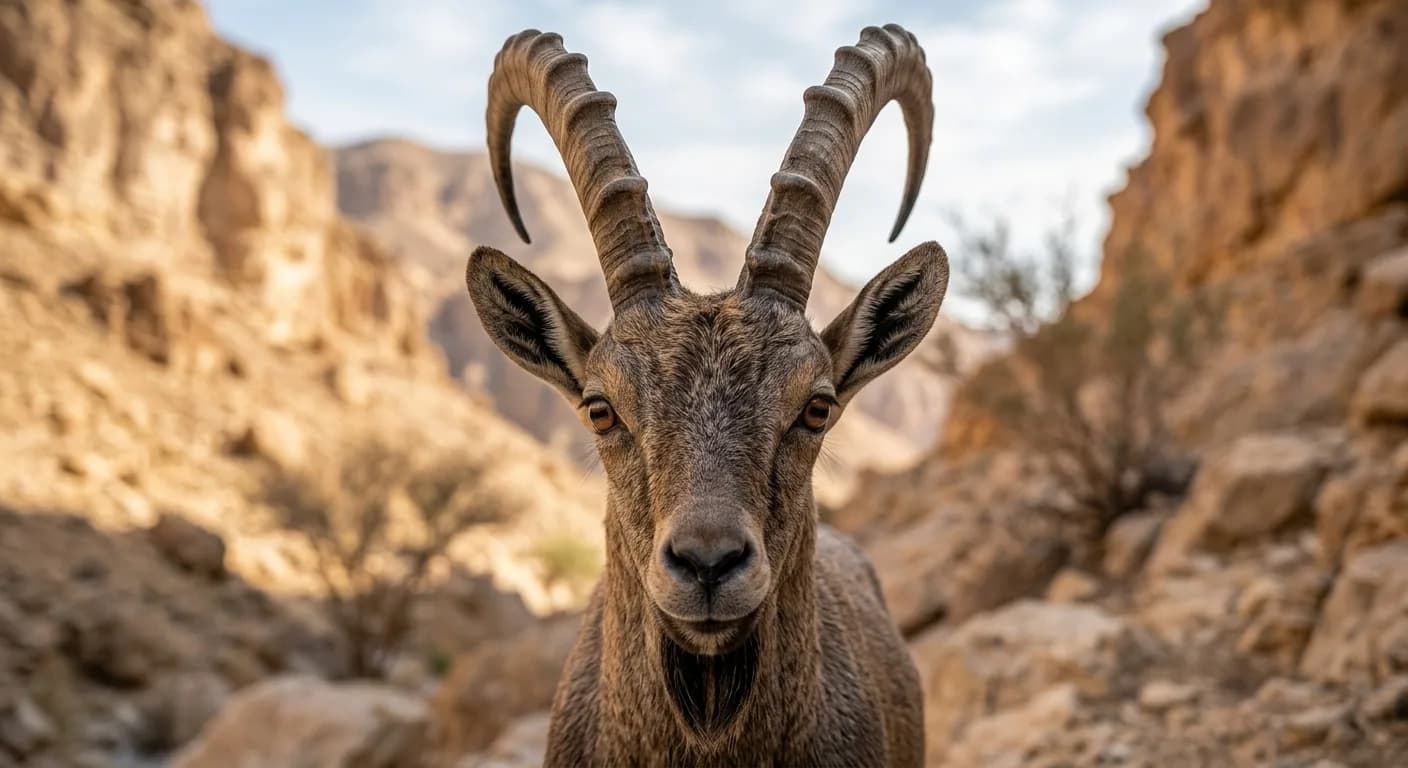
Nubian Ibex
Capra nubiana
Striped Sand Snake
Psammophis sibilans
Orange-tailed Skink
Eumeces schneideri
Socotra Cormorant
Phalacrocorax nigrogularis
Arabian Sand Gazelle
Gazella marica
How to help
The egyptian spiny-tailed lizard is classified as vulnerable. Organizations such as UICN, WWF y Wildlife Conservation Society work specifically on its conservation and that of its habitat; looking into their programs is a good starting point if you want to get involved.
It's documented in 2 real protected areas — part of why protecting these places matters for its conservation.
Keep exploring
Based on what we already know about egyptian spiny-tailed lizard.
Comments
Share an experience, a fun fact or a tip for seeing the egyptian spiny-tailed lizard.
Be the first to comment.