Species group · Birds
Spoonbills
WAnimals has 3 species of spoonbill, all in the family Threskiornithidae.
- 3 species
- 1 family
- 110 countries
- 99 parks
- Weight
- 1.1 kg – 2 kg
- Length
- 70 cm – 95 cm
- Lifespan
- 15 – 16 years
Ranges calculated from the entries that record the figure, not from all 3.
All 3 species of spoonbills on WAnimals
Each one has its own full entry. This group does not replace them: it brings them together.
Conservation status
No species documented in this group is genuinely at risk according to the IUCN, with the data available today.
See the global conservation statusWhere they live
Recorded in 110 countries. The ones with the most species in the group:
Where to see them
Did you know…
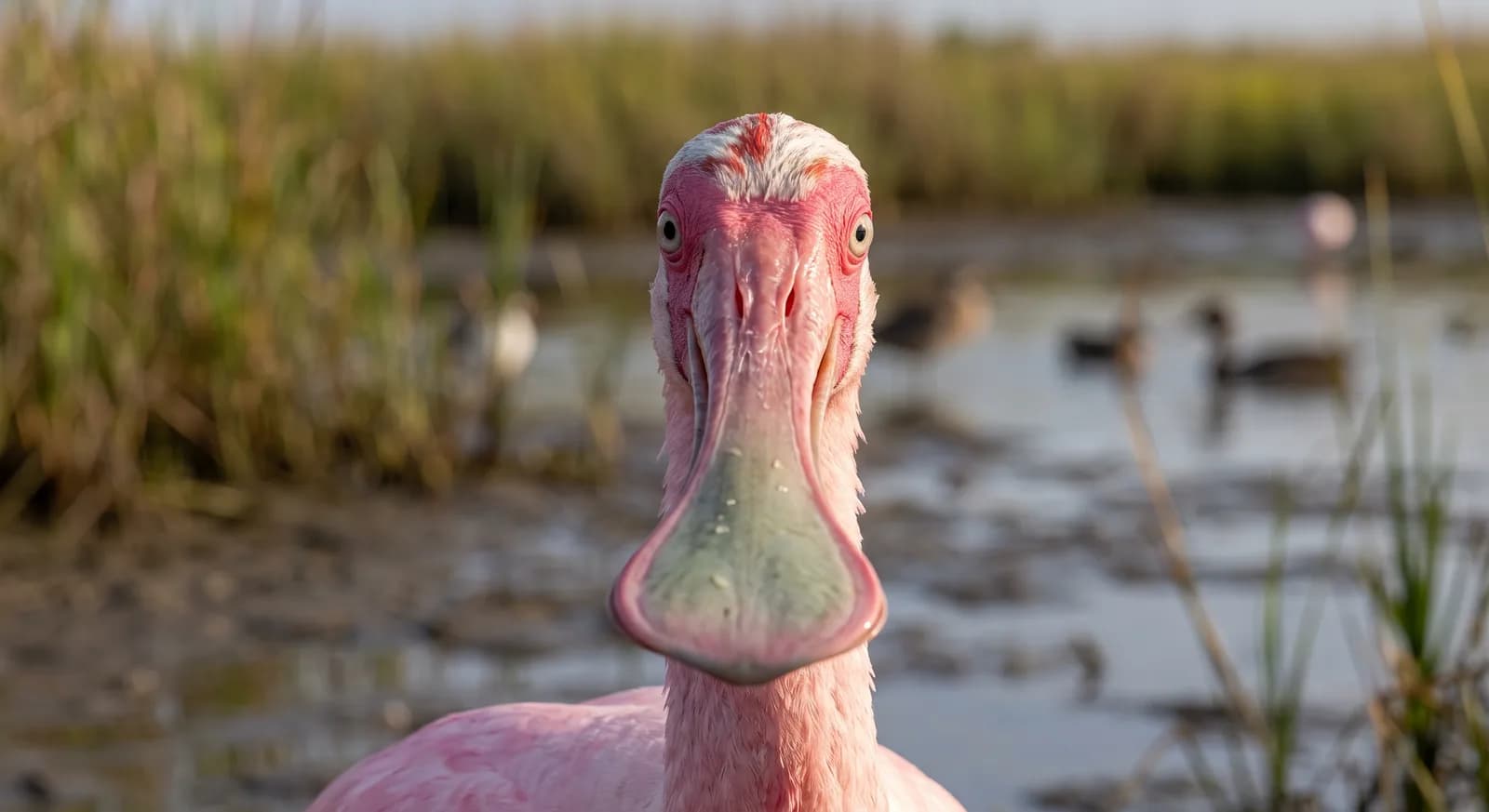
Its pink comes from the crustaceans it strains out, sweeping its bill through the water.
From Roseate Spoonbill
Its distinctive pink, much like a flamingo's, comes from carotenoid pigments in the crustaceans it eats.
From Roseate Spoonbill
It is pink because of what it eats: the carotenoids in the crustaceans it feeds on are laid down in the plumage, just as in flamingos, and a poorly fed bird in captivity loses the colour.
From Roseate Spoonbill
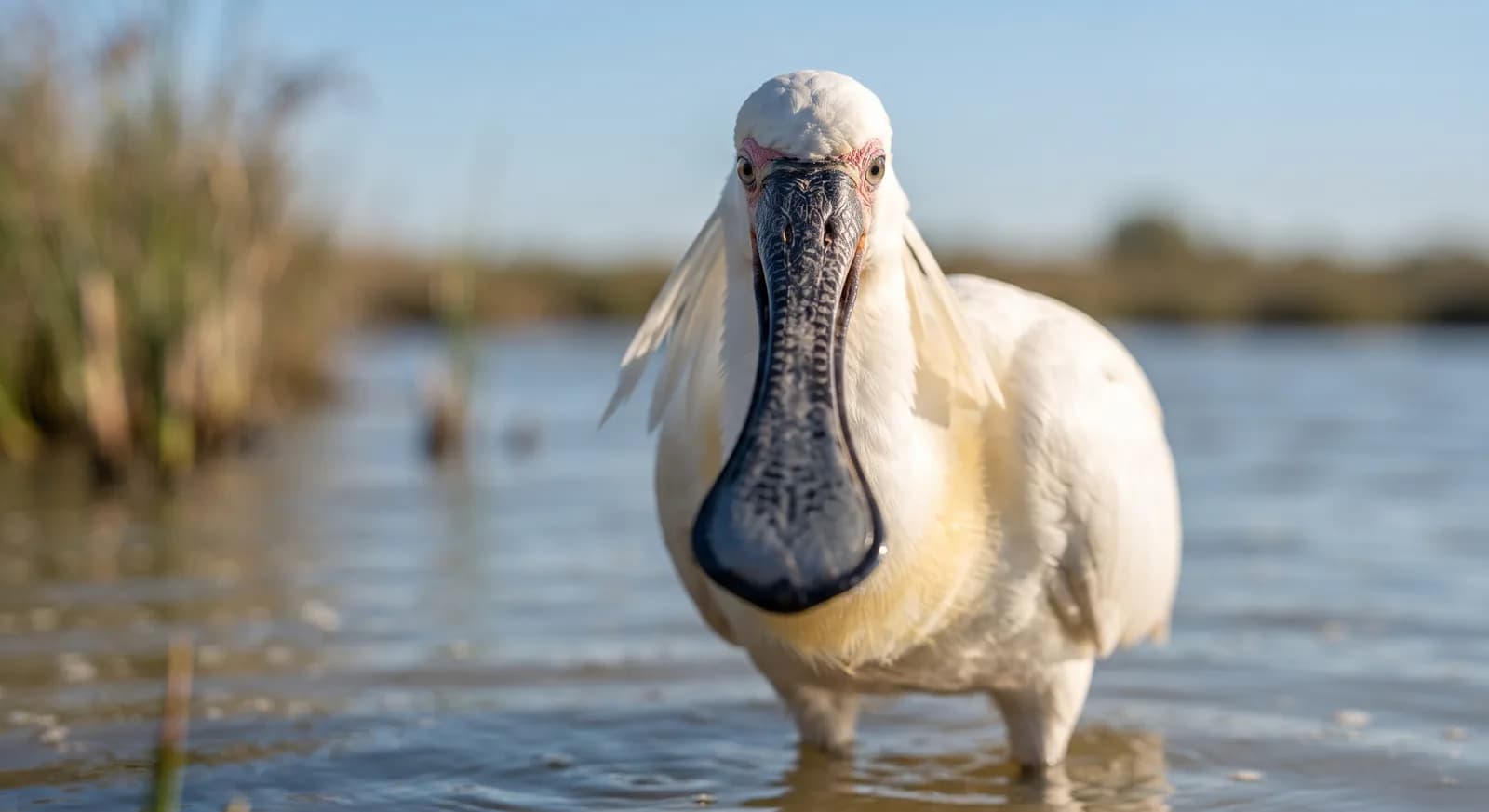
It feeds by holding its bill half open in the water and sweeping it from side to side, finding prey by touch without needing to see it.
From Eurasian Spoonbill
It feeds by touch, not by sight: it walks along sweeping the water with its bill half open and snaps it shut the moment it brushes against prey.
From African Spoonbill
It is covered by the AEWA Agreement on the Conservation of African-Eurasian Migratory Waterbirds.
From African Spoonbill
Its colonies are usually single-species, unlike those of most colonial African wading birds.
From African Spoonbill