Species group · Mammals
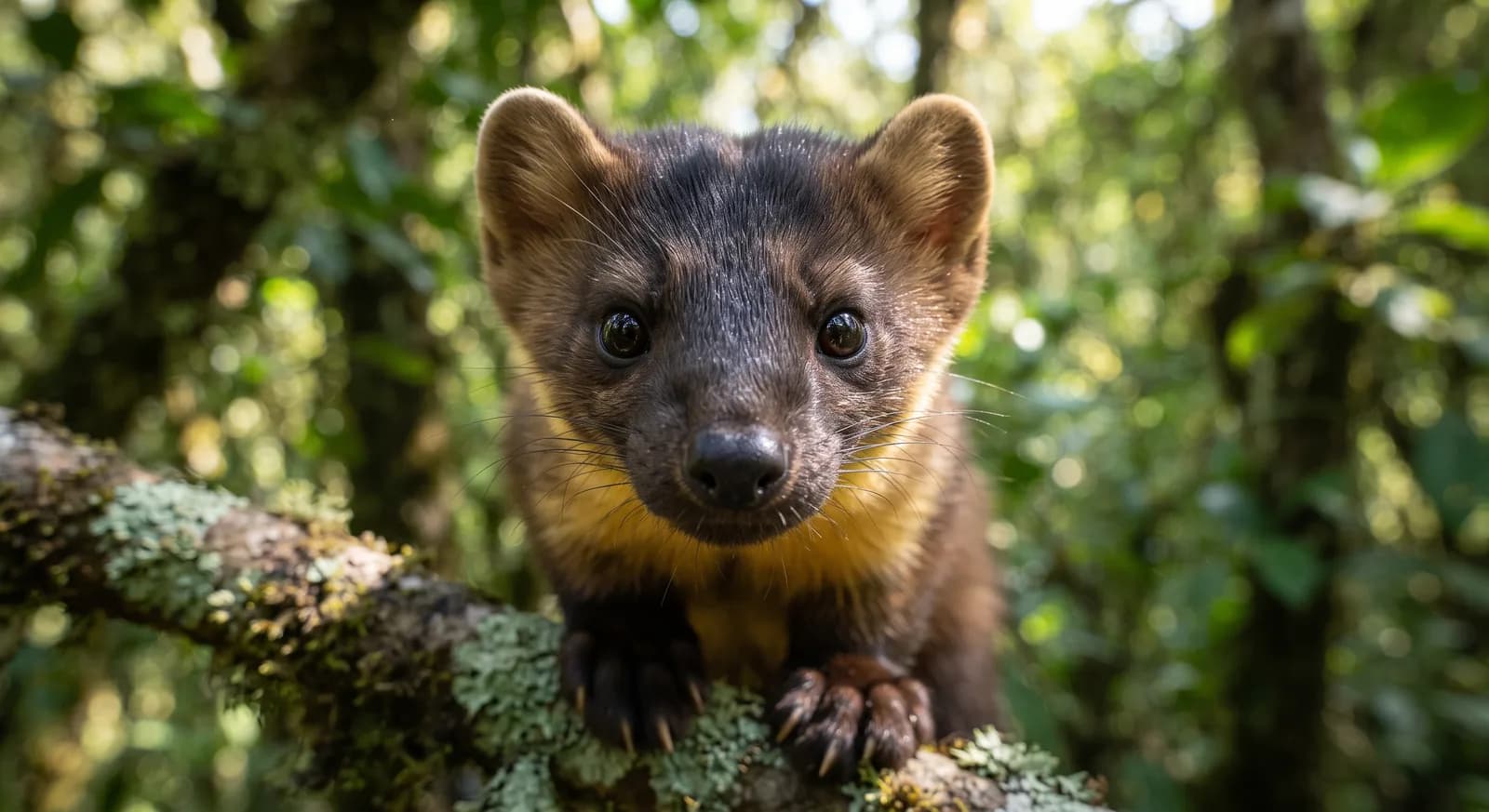
Martens
WAnimals has 4 species of marten, all in the family Mustelidae.
- 4 species
- 1 family
- 66 countries
- 274 parks
- Weight
- 700 g – 6 kg
- Length
- 35 cm – 1.2 m
- Lifespan
- 3 – 15 years
Ranges calculated from the entries that record the figure, not from all 4.
All 4 species of martens on WAnimals
Each one has its own full entry. This group does not replace them: it brings them together.

Conservation status
No species documented in this group is genuinely at risk according to the IUCN, with the data available today.
See the global conservation statusWhere they live
Recorded in 66 countries. The ones with the most species in the group:
Where to see them
- Abisko1 species
- Abruzzo, Lazio y Molise1 species
- Acadia1 species
- Aiako Harria1 species
- Aiguestortes i Estany de Sant Maurici1 species
- Aizkorri-Aratz1 species
- Alta Costa / Archipiélago de Kvarken1 species
- Alta Murgia1 species
- Alto Veluwe (Hoge Veluwe)1 species
- Annapurna1 species
- Aralar1 species
- Archipiélago (Saaristomeri)1 species
Did you know…
It hunts in pairs and can bring down deer calves far larger than itself.
It hunts in groups, which is unheard of in a mustelid: coordinated pairs or threes can bring down prey as large as a fawn or a young musk deer.
It has a sweet tooth: in Asia it is known for raiding beehives and eating nectar and ripe fruit, and its name in several local languages refers directly to honey.
Its fur was for centuries one of the most valuable goods in Siberia.
From Sable
Its fur was a currency in medieval Russia and one of the economic drivers of the conquest of Siberia: the sable trade pushed Russian expansion eastwards for centuries.
From Sable
It practises delayed implantation: the embryo is held in suspension for eight months and only develops in the final weeks, so that the young are born in spring even though mating took place in summer.
From Sable
It is one of the few mustelids with semi-retractile claws, ideal for climbing trees.
From Pine Marten
Its actual gestation lasts only a month, but delayed implantation stretches the process to eight.
From Pine Marten