Cartilaginous fish · Rajiformes · Arhynchobatidae
Spinetail Ray
Bathyraja spinicauda
It could become endangered in the near future if current threats go unchecked. See full glossary
The thorny skate, one of the largest skates of the North Atlantic, with a rhomboid disc and a row of stout thorns along the tail. It lives on deep, cold bottoms, where it feeds on fish, crustaceans and cephalopods.
Size
1 m – 1.7 m
Diet
Carnivore
Feeds mainly on other animals.
Social structure
Solitary
Lives and hunts alone, joining others only to breed.
Sighting difficulty
Moderate
Fun facts
- It lays horny, rectangular egg cases with a horn at each corner, which lie on the bottom for months; these are the mermaid's purses that sometimes wash up on beaches.
- It grows very slowly and matures late, which makes it especially vulnerable to the deep-sea trawling that takes it as bycatch.
- Like all skates, it breathes through its spiracles, two openings behind the eyes that let it draw in clean water while resting on the mud.
- It is one of the largest skates in the North Atlantic, reaching 182 cm in total length.
- The disc lacks thorns except near the edge of the pectoral fins in males, but the tail bears a dorsal row of large thorns, which is what gives the species its name.
- Like all true skates, it is oviparous: it lays horny capsules that rest on the seabed, a very slow mode of reproduction that makes it vulnerable to trawling.
- Trawl surveys by the Russian institute PINRO in the Barents Sea have recorded it alongside five other skate species, and it is among the least abundant.
Life cycle & biology
- Skeleton type
- Vertebrate - cartilaginous skeleton (chondrichthyan)
- Habitat & environment
- North Atlantic slope bottoms, between 140 and 1,500 m
Sources consulted: https://es.wikipedia.org/wiki/Bathyraja_spinicauda
Where to find it
See its range on the interactive mapWhere to watch it
Parks and dive sites where this species has been documented.
Related species
Other species in the catalogue with the most in common with Spinetail Ray — same habitat, park, country, tags or family.
Swordfish
Xiphias gladius
 Vulnerable
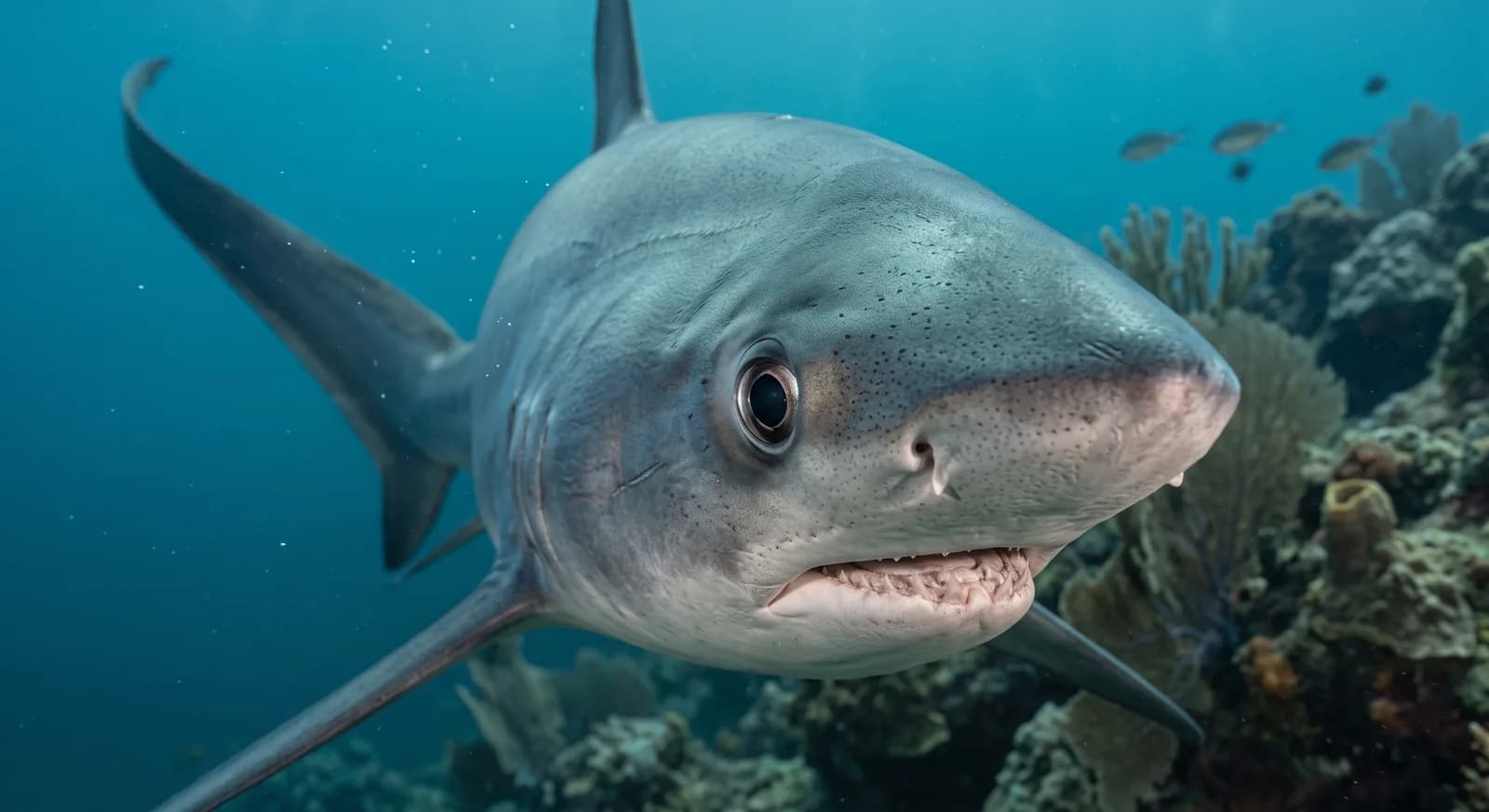
Grayfish
Alopias vulpinus
Man-of-war Fish
Nomeus gronovii
Largehead Hairtail
Trichiurus lepturus
Greater Argonaut
Argonauta argo
Pygmy Sperm Whale
Kogia breviceps
Keep exploring
Based on what we already know about spinetail ray.
Comments
Share an experience, a fun fact or a tip for seeing the spinetail ray.
Be the first to comment.