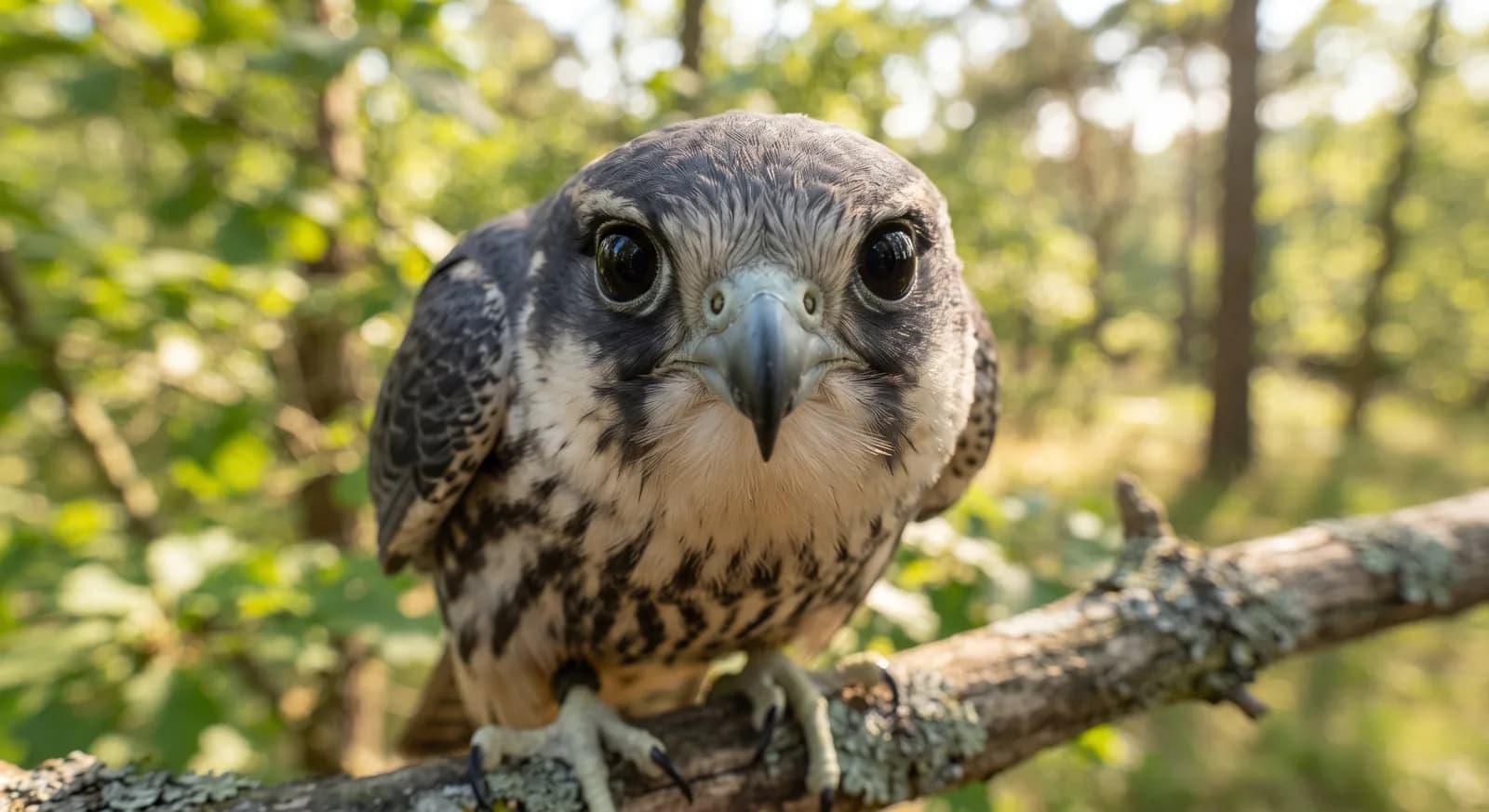
 Least Concern
Eurasian Hobby
Falco subbuteo
Poland's smallest national park: a Jurassic limestone canyon with rock spires, caves and castles.
Area
21 km²
Designated in
1956
Region
Central Europe
The Prądnik karst valley with limestone spires and caves
Ojców National Park was created in 1956 some twenty kilometres north-west of Kraków and is, at little more than 21 km², the smallest of the Polish national parks. It protects the upper reach of the valley of the River Prądnik, cut into the Jurassic limestones of the Kraków-Częstochowa Upland.
The result is a concentrated karst landscape: a narrow valley of vertical white walls, studded with spires and isolated monoliths that erosion has gradually singled out, among them the famous Maczuga Herkulesa, or Hercules' Club, a limestone column some twenty-five metres high. The subsoil is riddled with more than four hundred caves and shafts, some open to visitors, such as King Łokietek's Cave or the Dark Cave, which have also yielded important Palaeolithic finds.
Those cavities hold colonies of bats of several species, which are one of the park's main faunal assets and its symbol. The combination of contrasting aspects in a narrow valley generates great botanical diversity in a small space, with thermophilous vegetation on the sunny slopes and shade communities on the cold ones; the Ojców birch, a rare taxon described in this valley, is one of its emblems. The built heritage completes the picture: the park contains the ruins of Ojców castle and, on a crag, the Renaissance castle of Pieskowa Skała, both part of the system of fortresses known as the Eagles' Nests.
1 dive site within 300 km is also shown.
Threatened:
Ecosystems found in Poland, where Ojcowski lies.
Where can I dive near here?
169 km away
Which other parks are like this one?
Same country: Poland
Same country: Poland
Same country: Poland
Same country: Poland
Based on what we already know about this park.
Climate
Temperate, Mountain
 Poland