Vulnerable
Wattled Crane
Bugeranus carunculatus
One of the 11 cranes on WAnimals
Birds · Gruiformes · Gruidae
Balearica pavonina
At high risk of extinction in the wild over the medium term.
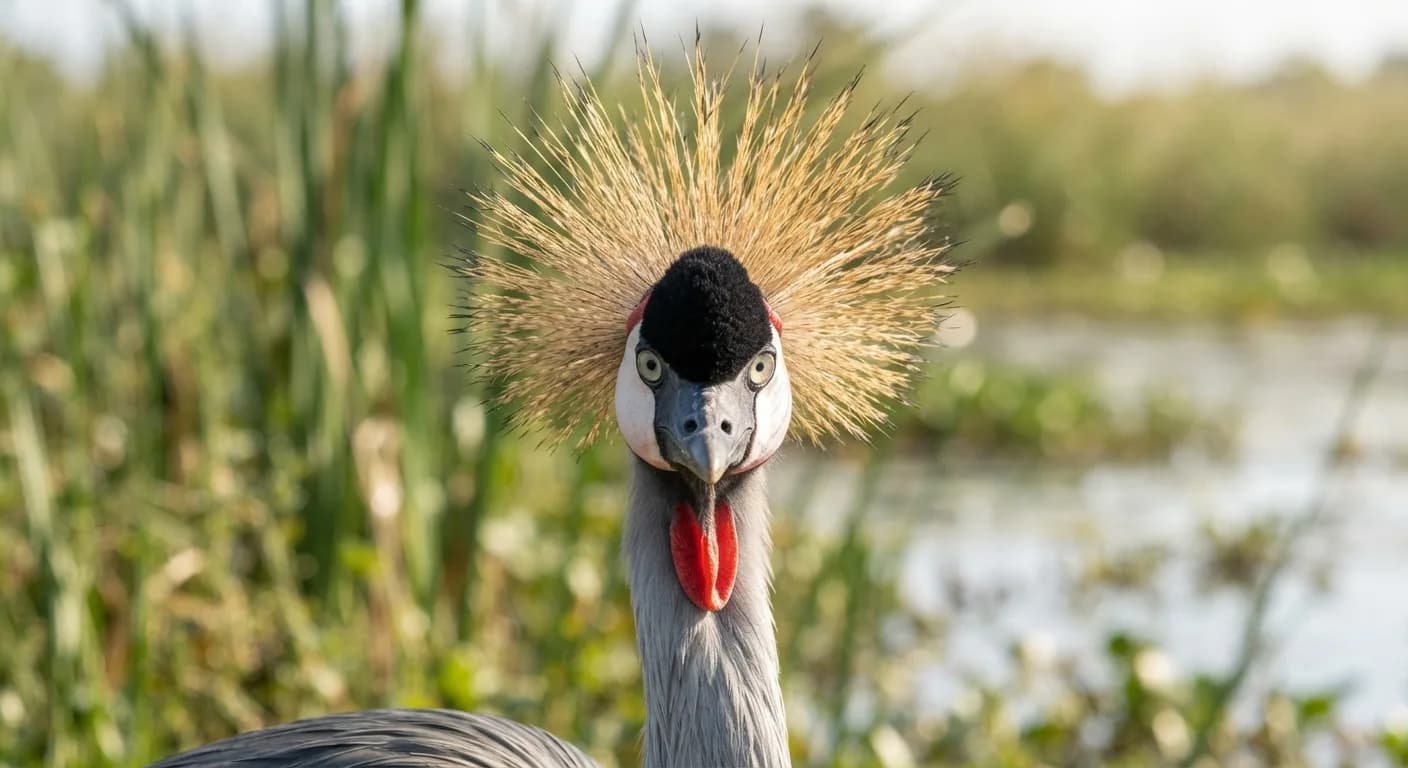
The black crowned crane is one of the two African crowned cranes, with a spectacular crown of stiff golden feathers on its head and red-and-white wattles on the cheeks. Together with its eastern relative, it is the only crane in the world that perches in trees, thanks to a long hind toe that the others lost. It has disappeared from much of the Sahel through the drying out of wetlands and capture for the trade.
Weight
3 kg – 4 kg
Size
1 m – 1.1 m
Life expectancy
25 years
Diet
Omnivore
Combines animal and plant food depending on availability.
Activity
Diurnal
Active mainly during the day.
Social structure
In pairs
Usually lives in pairs, sometimes for life.
Sources consulted: Wikipedia (es): Balearica pavonina
Best time: All year round in the Sahel, by day, on wetlands and floodplains; in the dry season it gathers at the few wetlands that hold out.
The pins mark the parks where its presence is documented.
Parks and dive sites where this species has been documented.
Other species in the catalogue with the most in common with Black Crowned Crane — same habitat, park, country, tags or family.
The black crowned crane is classified as vulnerable. Organisations such as the IUCN, WWF and the Wildlife Conservation Society work specifically on its conservation and that of its habitat; looking into their programmes is a good starting point if you want to get involved.
It's documented in 6 protected areas — one reason why protecting these places matters for its conservation.
Based on what we already know about black crowned crane.