Species group · Birds
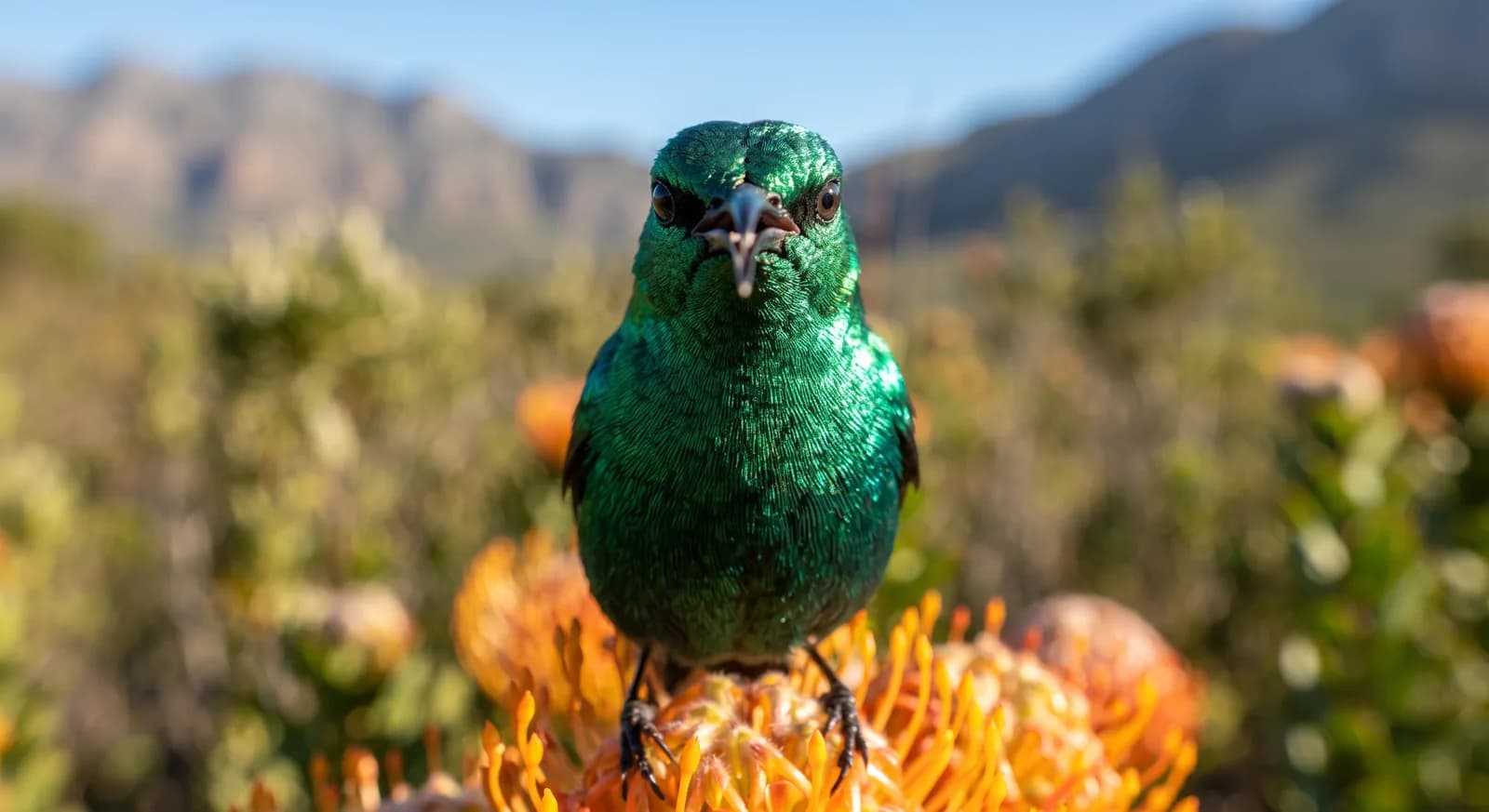
Sunbirds
WAnimals has 5 species of sunbird, in the family Nectariniidae.
- 5 species
- 1 family
- 77 countries
- 63 parks
- Weight
- 5 g – 23 g
- Length
- 8 cm – 25 cm
- Lifespan
- 7 – 8 years
Ranges calculated from the profiles that record the figure, not from all 5.
All 5 species of sunbirds on WAnimals
Each one has its own full profile. This group does not replace them: it brings them together.
 Least Concern
Malachite Sunbird
Nectarinia famosa
43 countries23 parks
 Least Concern
Palestine Sunbird
Cinnyris osea
19 countries13 parks
Least Concern
Crimson Sunbird
Aethopyga siparaja
13 countries17 parks
Least Concern
Little Spiderhunter
Arachnothera longirostra
12 countries24 parks
Least Concern
Purple Sunbird
Cinnyris asiaticus
12 countries
Conservation status
5 Least Concern
No species documented in this group is genuinely at risk according to the IUCN, with the data available today.
Where they live
Recorded in 77 countries. The ones with the most species in the group:
Where to see them
Did you know…?
Sunbirds are the African equivalent of hummingbirds: the same size, the same nectar diet and the same iridescence, with no close relationship. The great difference is that they almost never hover: they perch on the flower to drink.
From Malachite Sunbird
The male loses his metallic green entirely outside the breeding season and moults to an olive brown indistinguishable from the female's.
From Malachite Sunbird
It is the main pollinator of the giant lobelias of the East African mountains, plants several metres tall that grow only above 3,000 metres.
From Malachite Sunbird
It is the northernmost-living sunbird in the world: its family is essentially tropical, and this species has reached the eastern Mediterranean by following the oases and, more recently, irrigated gardens.
From Palestine Sunbird
Its recent spread north and west is directly tied to ornamental gardening: exotic plants with tubular flowers have opened up areas where it previously could not live.
From Palestine Sunbird
It is the unofficial national bird of the Palestinian Territories and appears on stamps and in the emblems of several institutions in the region.
From Palestine Sunbird
Its nest is a hanging pouch of plant fibre and cobweb with a small eave over the entrance that works as a visor against the monsoon rain.
From Crimson Sunbird
It pierces the base of flowers too long for its bill and drinks the nectar without pollinating the plant, a shortcut several American hummingbirds also use.
From Crimson Sunbird