Mammals · Carnivora · Canidae
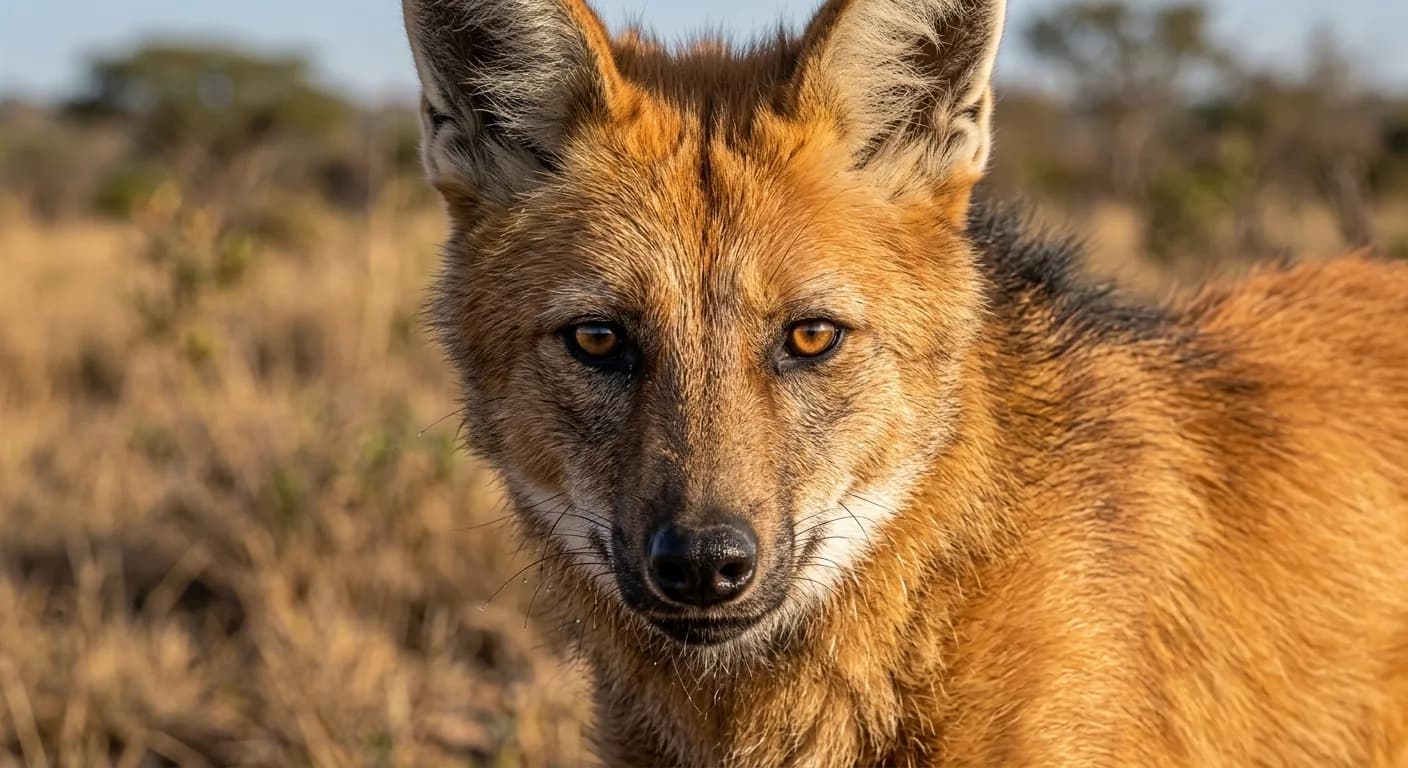
Maned Wolf
Chrysocyon brachyurus
It could become endangered in the near future if current threats go unchecked. See full glossary
Its extraordinarily long legs, which give it the look of an animal on stilts, are an adaptation for seeing over the tall vegetation of the Brazilian Cerrado. It is not closely related to any other living canid, and is the only species in its genus.
Weight
20 kg – 30 kg
Size
1 m – 1.3 m
Lifespan
8 years
Diet
Omnivore
Combines animal and plant food depending on availability.
Activity
Nocturnal
Active mainly at night.
Social structure
In pairs
Usually lives in pairs, sometimes for life.
Sighting difficulty
Moderate
Fun facts
- taxonomíaDespite its name it is neither wolf nor fox, but the only surviving member of its own genus, with disproportionately long legs adapted to the tall grassland where it lives.
Life cycle & biology
- Skeleton type
- Vertebrate - internal bony skeleton (mammal)
- Habitat & environment
- Cerrado savanna, tall grassland and scrub of central South America
- Birth weight
- 340 - 430 grams
- Size at birth
- Black at birth, with a white tail tip from the start
- Sexual maturity
- 2 years
- Gestation / incubation
- 60-65 days
- Litter / clutch size
- 1 to 5 young per litter (most commonly 2-3)
- Lifespan in captivity
- Documented record of up to 16.8 years in captivity
Sources consulted: AnAge; World Species; Animal Diversity Web; A-Z Animals; Animalia.bio; PMC; Animal Spot
Where to find it
See its range on the interactive mapWhere to watch it
Parks and dive sites where this species has been documented.
Related species
Other species in the catalogue with the most in common with Maned Wolf — same habitat, park, country, tags or family.
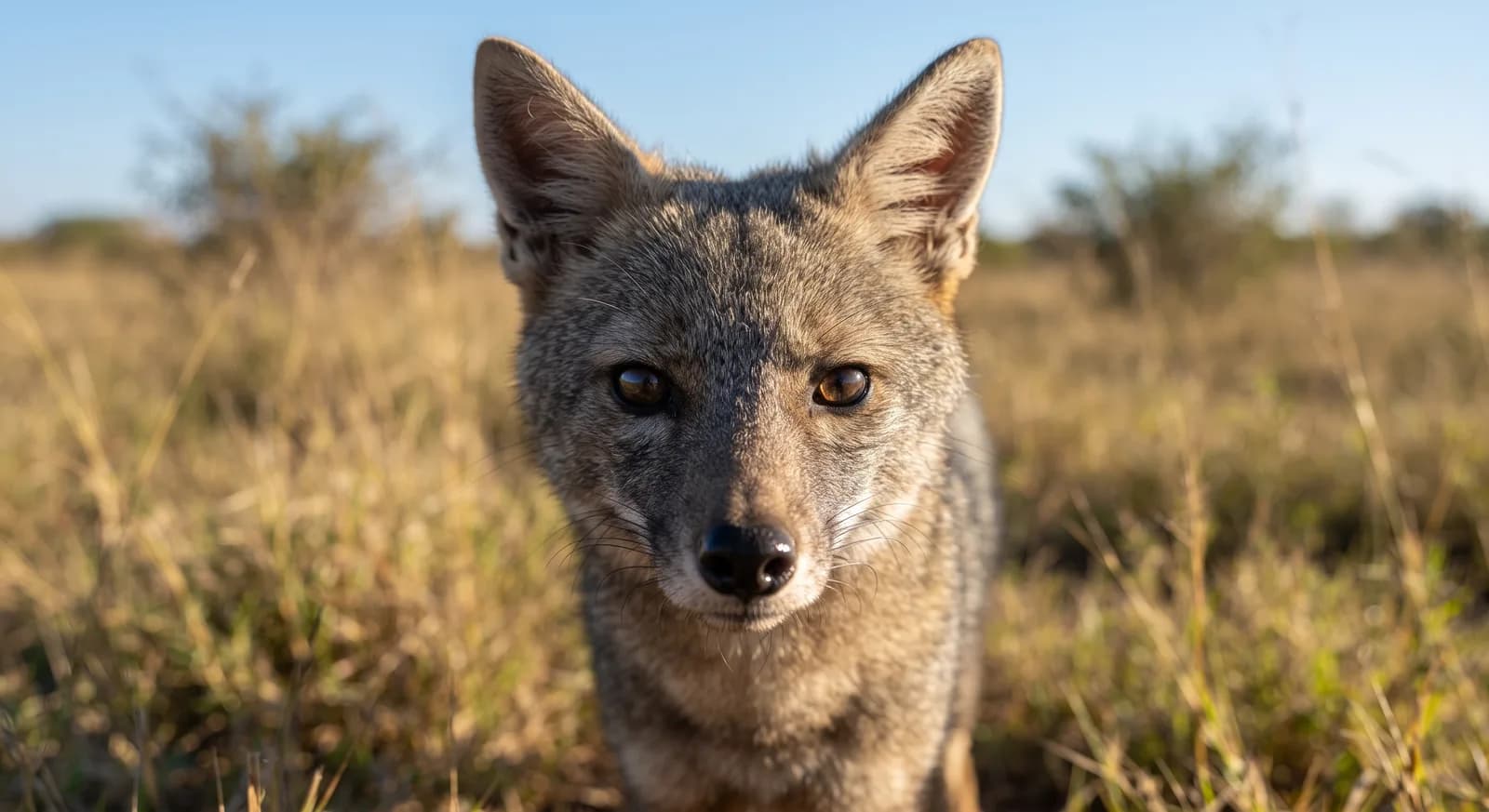
Pampas Fox
Lycalopex gymnocercus
 Least Concern
Crab-eating Fox
Cerdocyon thous
Bush Dog
Speothos venaticus
Turquoise-fronted Amazon
Amazona aestiva
Pampas Deer
Ozotoceros bezoarticus
Keep exploring
Based on what we already know about maned wolf.
Comments
Share an experience, a fun fact or a tip for seeing the maned wolf.
Be the first to comment.