Birds · Passeriformes · Tyrannidae
Great Kiskadee
Pitangus sulphuratus
The species is abundant and widely distributed; it faces no significant short-term risk. See full glossary
The great kiskadee is a species of passerine bird belonging to the family Tyrannidae, the only one in the monotypic genus Pitangus. It measures between 21 and 26 cm in length. The head is large, the wings long and the legs short. The bill is as long as the head and ends in a hook. The back and tail are greenish-brown. The head is black with two white stripes forming eyebrows; the throat is white. The breast and belly are bright yellow, and it has a hidden crown of the same colour. It is native to tropical America (the Neotropics), where it is widely distributed from the southern United States to central Argentina. It is very common in a variety of semi-open and open environments, rural and urban; it is less frequent in wooded regions, where it is more or less confined to the edges of lakes and rivers. It lives up to an altitude of 1,500 m above sea level. The International Union for Conservation of Nature considers the species to be of least concern.
Weight
52 g – 68 g
Size
21 cm – 27 cm
Lifespan
12 years
Diet
Omnivore
Combines animal and plant food depending on availability.
Activity
Diurnal
Active mainly during the day.
Social structure
In pairs
Usually lives in pairs, sometimes for life.
Sighting difficulty
Easy
Fun facts
- GeneralIts three-note call gives it its name in nearly every country it lives in, English included.
- Its name changes from country to country but always imitates its call: benteveo or bicho feo in Argentina, cristofué in Venezuela, bem-te-vi in Brazil, luis in Mexico, all of them transcriptions of the same three-syllable cry.
- It fishes like a kingfisher: it dives into the water from a perch to catch fry and tadpoles, something remarkable in a tyrant flycatcher.
- Its yellow crown is normally invisible: it only fans it out in territorial confrontations, and the rest of the time it stays hidden beneath the black feathers of the head.
Life cycle & biology
- Skeleton type
- Vertebrate - internal bony skeleton (bird)
- Habitat & environment
- Practically any open or semi-open habitat in tropical America, cities included
- Sexual maturity
- 12 months
- Gestation / incubation
- 16 days of incubation
- Litter / clutch size
- 3 eggs
Sources consulted: https://es.wikipedia.org/wiki/Pitangus_sulphuratus
Where to find it
See its range on the interactive mapWhere to watch it
Parques y spots de buceo donde se ha documentado esta especie — se muestran 10 de 71 documentados.
Related species
Other species in the catalogue with the most in common with Great Kiskadee — same habitat, park, country, tags or family.
Eastern Kingbird
Tyrannus tyrannus
Eastern Phoebe
Sayornis phoebe
 Least Concern
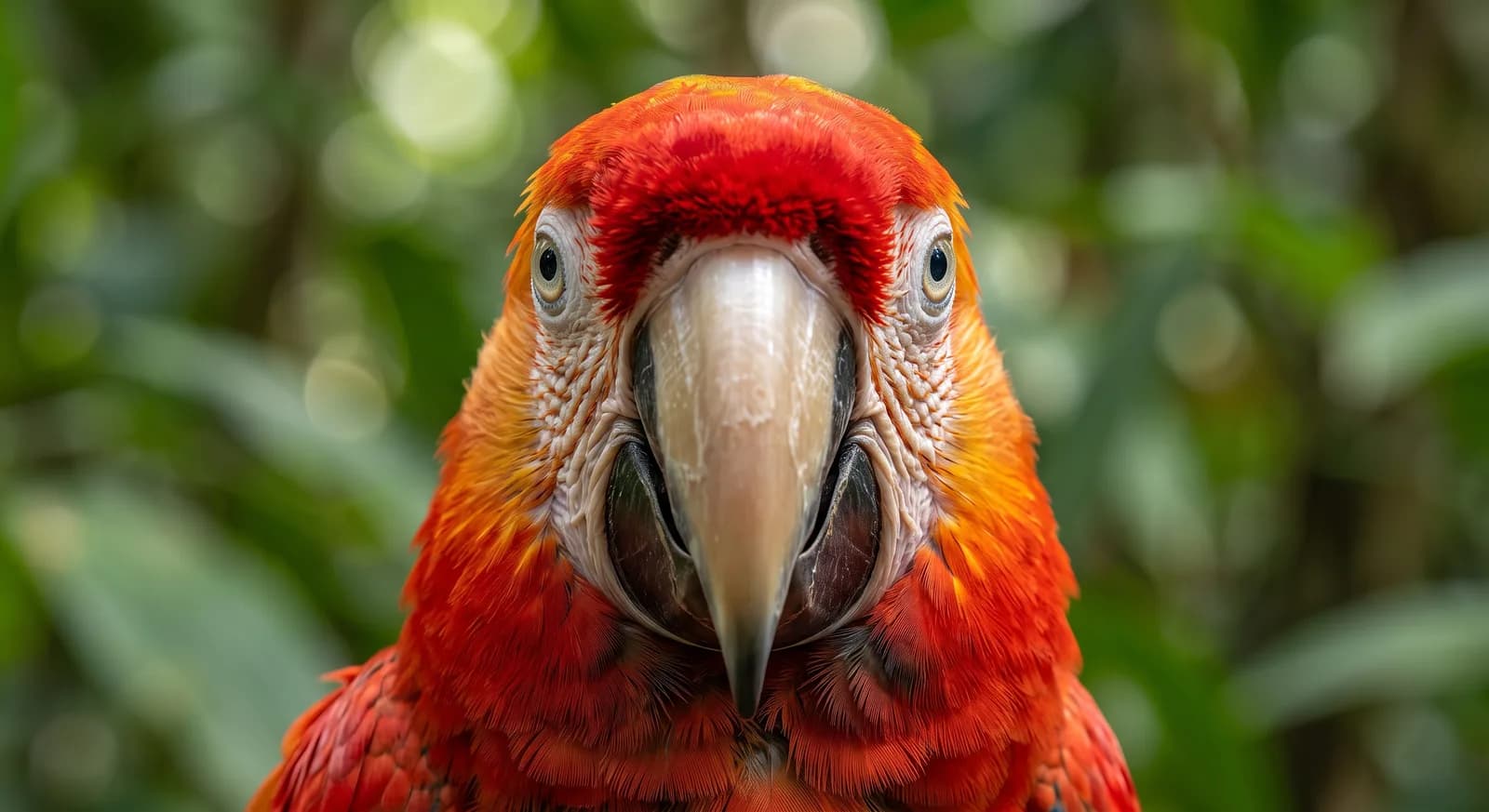
Scarlet Macaw
Ara macao
Red-winged Tinamou
Rhynchotus rufescens
Southern Screamer
Chauna torquata
Smooth-billed Ani
Crotophaga ani
Keep exploring
Based on what we already know about great kiskadee.
Comments
Share an experience, a fun fact or a tip for seeing the great kiskadee.
Be the first to comment.