Species group · Birds
Jays
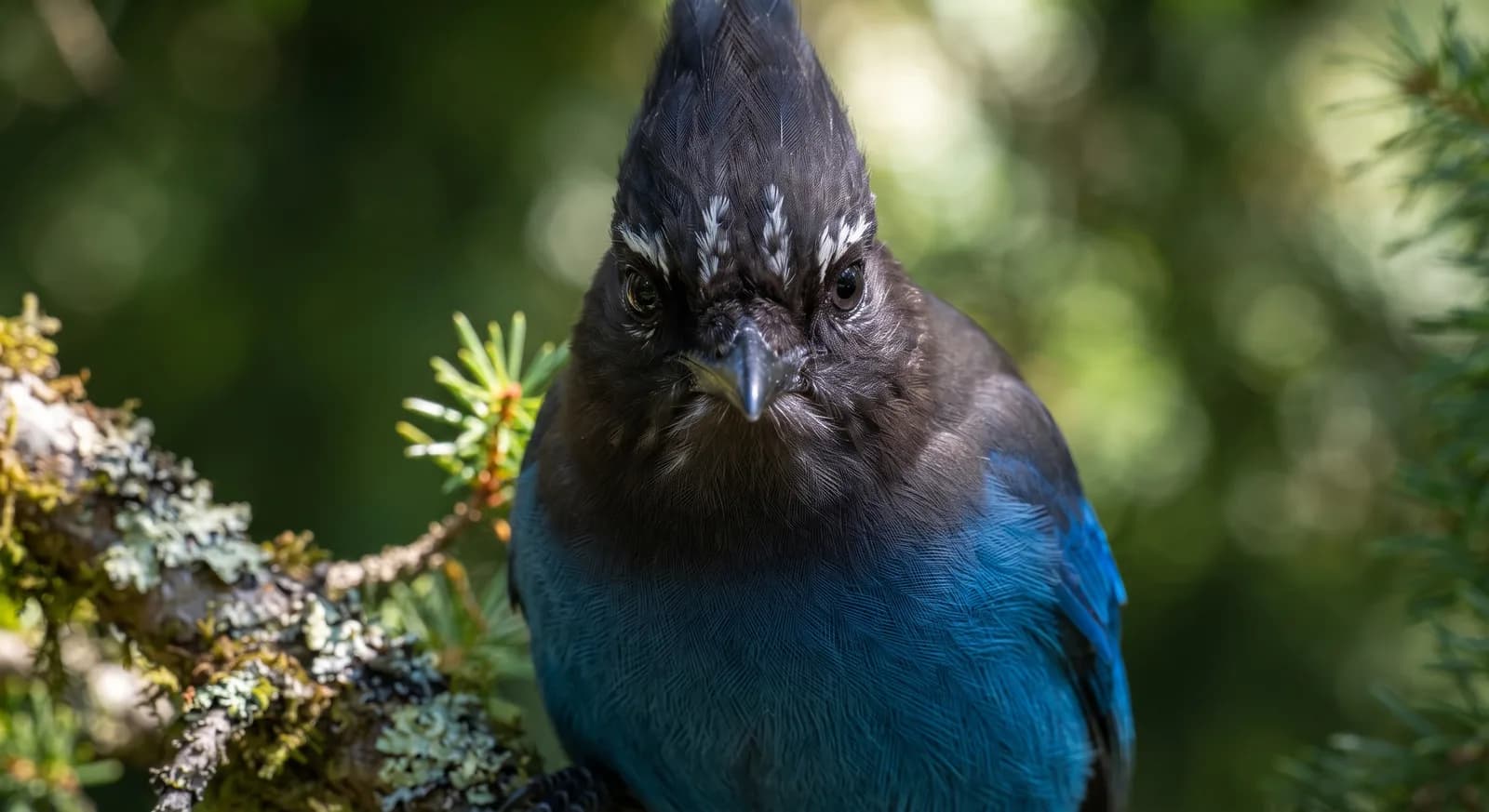
WAnimals has 3 species of jay, all in the family Corvidae.
- 3 species
- 1 family
- 52 countries
- 303 parks
- Weight
- 70 g – 190 g
- Length
- 22 cm – 35 cm
- Lifespan
- 5 – 17 years
Ranges calculated from the entries that record the figure, not from all 3.
All 3 species of jays on WAnimals
Each one has its own full entry. This group does not replace them: it brings them together.
Conservation status
No species documented in this group is genuinely at risk according to the IUCN, with the data available today.
See the global conservation statusWhere they live
Recorded in 52 countries. The ones with the most species in the group:
Where to see them
Did you know…
It can store seeds and acorns in hundreds of separate caches across its territory and remember roughly where they are months later.
From Steller's Jay
It imitates the call of the red-tailed hawk to clear the feeders: on hearing it the other birds flee and the jay is left alone with the food.
From Steller's Jay
It was described by Georg Wilhelm Steller in 1741, on the same Bering expedition on which he documented the sea cow and the sea lion that bear his name: the jay was one of the first proofs that the expedition had reached America.
From Steller's Jay
Many of the acorns it buries are never recovered, and end up germinating.
From Eurasian Jay
It can mimic the calls of other birds, including raptors such as the buzzard.
From Eurasian Jay
It eats acorns and other nuts, insects, and the eggs and chicks of other birds.
From Eurasian Jay
It mimics the calls of raptors such as the red-tailed hawk with great accuracy, possibly to scare other birds off a food source.
From Blue Jay
Its blue does not exist as a pigment: the feathers contain brown melanin, and the colour comes from light scattering in internal microstructures. A crushed feather stops being blue and turns grey.
From Blue Jay