Species group · Reptiles
Lizards
WAnimals has 15 species of lizard, spread across 9 families (Agamidae, Cordylidae, Crotaphytidae, Lacertidae, Liolaemidae, Phrynosomatidae, Shinisauridae, Teiidae, Xantusiidae).
- 15 species
- 9 families
- 67 countries
- 175 parks
- Weight
- 1 g – 9 kg
- Length
- 4 cm – 1.2 m
- Lifespan
- 5 – 20 years
Ranges calculated from the entries that record the figure, not from all 15.
All 15 species of lizards on WAnimals
Each one has its own full entry. This group does not replace them: it brings them together.
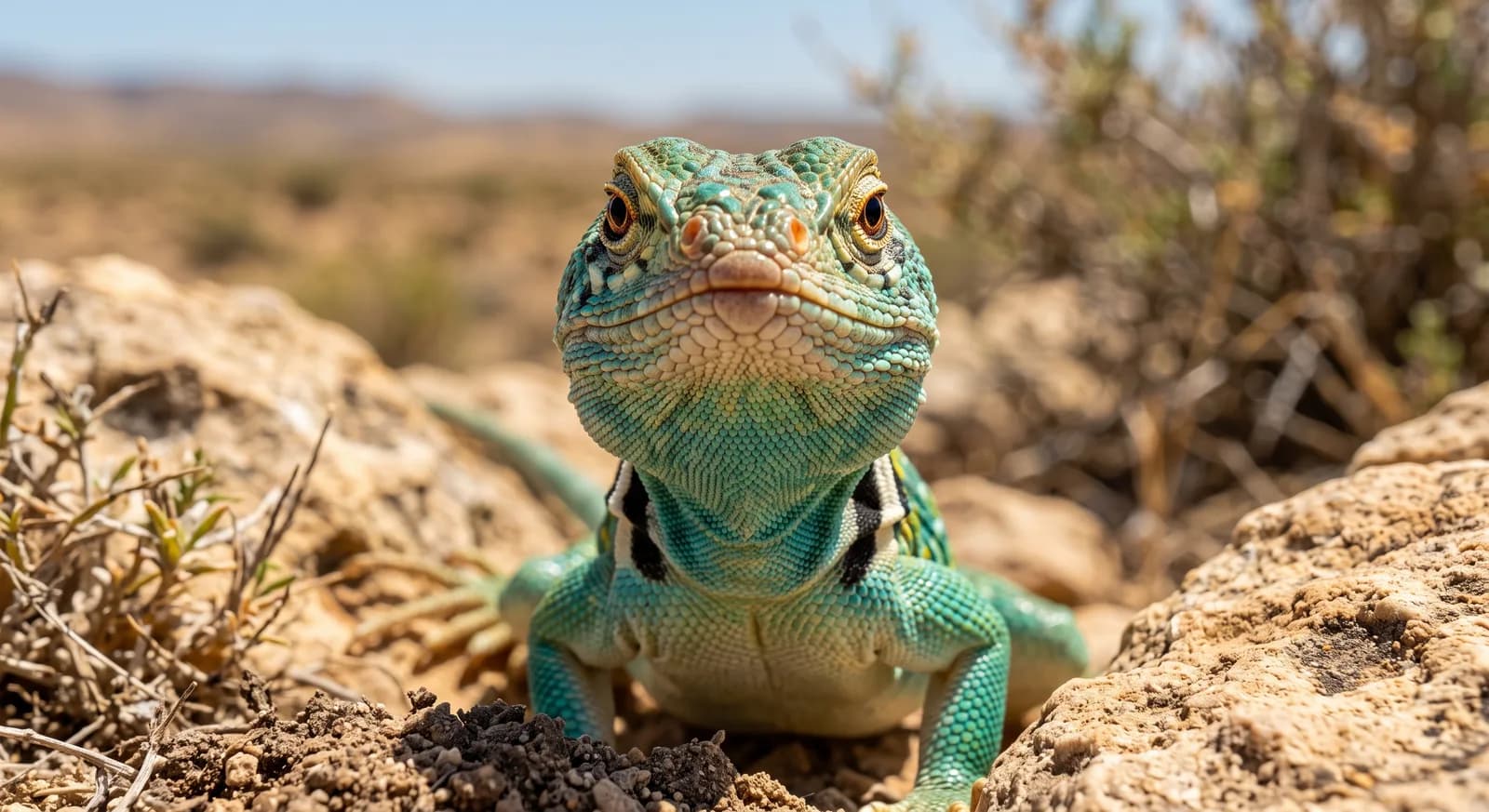 Least Concern
Collared Lizard
Crotaphytus collaris
Northern Caiman Lizard
Dracaena guianensis
Western Green Lizard
Lacerta bilineata
Green Lizard
Lacerta viridis
Black Tegu
Tupinambis teguixin
Ocellated Lizard
Timon lepidus
Frilled Lizard
Chlamydosaurus kingii
Iberian Emerald Lizard
Lacerta schreiberi
Texas Horned Lizard
Phrynosoma cornutum
Desert Night Lizard
Xantusia vigilis
Tenerife Lizard
Gallotia galloti
Atlantic Lizard
Gallotia atlantica
Patagonia Mountain Lizard
Phymaturus patagonicus
Chinese Crocodile Lizard
Shinisaurus crocodilurus
Giant Dragon Lizard
Smaug giganteus
Conservation status
2 especies in this group están en alguna categoría de riesgo real según la UICN.
See the global conservation statusWhere they live
Recorded in 67 countries. The ones with the most species in the group:
Where to see them
Did you know…
It runs upright on its hind legs, like a dinosaur in miniature.
From Collared Lizard
It runs on two legs: when chasing prey or fleeing it lifts its trunk and runs upright on its hind legs with its tail as a counterweight, reaching notable speeds over rock.
From Collared Lizard
That gait has been studied in biomechanics as a model for the first bipedal dinosaurs, and high-speed footage of it appears in textbooks of vertebrate locomotion.
From Collared Lizard
Its molar-like teeth are specialised for crushing water snails.
It eats almost nothing but snails: it has broad, flattened molars and enormous jaw muscles for crushing the shells, and then spits out the fragments and swallows only the flesh.
Its specialisation is so extreme that its skull resembles that of a durophagous mammal more than that of a lizard, and it is a classic case study in the functional anatomy of reptiles.
The males develop a deep blue throat in the breeding season, a visual signal of genetic quality to the females.
From Western Green Lizard
In the breeding season the male's throat turns an intense turquoise blue, and in some populations the female's does too, a feature that has been linked to signalling physical condition.
From Western Green Lizard