Species group · Mammals
Bats
WAnimals has 29 species of bat, spread across 11 families (Craseonycteridae, Emballonuridae, Megadermatidae, Miniopteridae, Molossidae, Mormoopidae, Noctilionidae, Phyllostomidae, Pteropodidae, Rhinolophidae, Vespertilionidae).
- 29 species
- 11 families
- 156 countries
- 470 parks
- Weight
- 2 g – 170 g
- Length
- 2.9 cm – 17 cm
- Lifespan
- 4 – 22 years
Ranges calculated from the entries that record the figure, not from all 29.
All 29 species of bats on WAnimals
Each one has its own full entry. This group does not replace them: it brings them together.
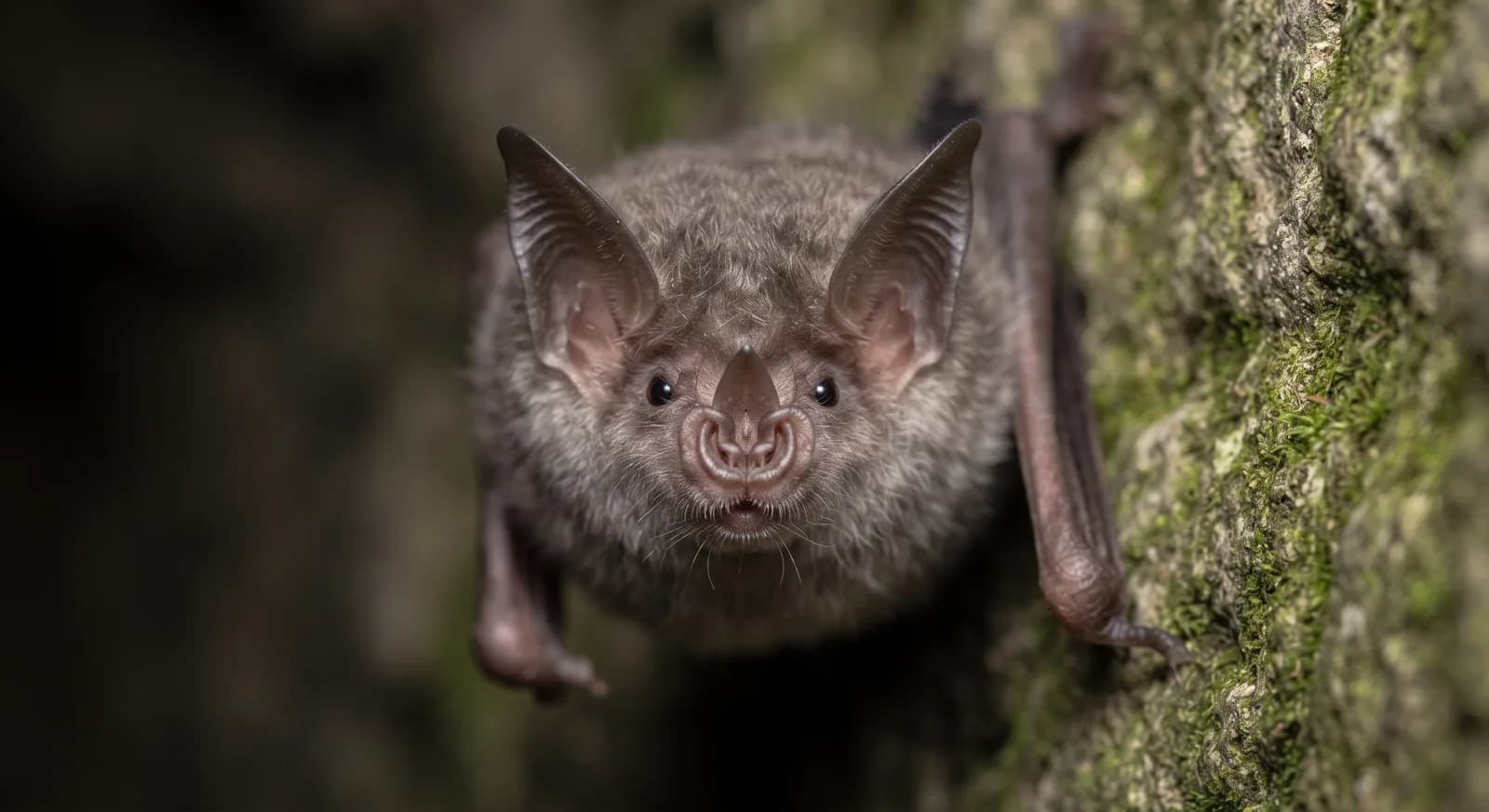 Least Concern
Greater Horseshoe Bat
Rhinolophus ferrumequinum
Grey Long-Eared Bat
Plecotus austriacus
Schreiber's Bent-winged Bat
Miniopterus schreibersii
Greater Bulldog Bat
Noctilio leporinus
Greater Mouse-eared Bat
Myotis myotis
Serotine
Eptesicus serotinus
Common Pipistrelle
Pipistrellus pipistrellus
Lesser Horseshoe Bat
Rhinolophus hipposideros
Natterer's Bat
Myotis nattereri
Greater False Vampire
Megaderma lyra
Pallas's Mastiff Bat
Molossus molossus
Pallas's Long-Tongued Bat
Glossophaga soricina
Jamaican Fruit-eating Bat
Artibeus jamaicensis
Bechstein's Bat
Myotis bechsteinii
North American Hoary Bat
Lasiurus cinereus
Greater Sac-Winged Bat
Saccopteryx bilineata
Seba's Short-tailed Bat
Carollia perspicillata
Mexican Free-tailed Bat
Tadarida brasiliensis
Big Brown Bat
Eptesicus fuscus
Little Brown Bat
Myotis lucifugus
Egyptian Rousette
Rousettus aegyptiacus
Lesser Long-nosed Bat
Leptonycteris yerbabuenae
Madeira Pipistrelle
Pipistrellus maderensis
Indiana Bat
Myotis sodalis
European Free-Tailed Bat
Tadarida teniotis
Ghost-Faced Bat
Mormoops megalophylla
Greater Shortnosed Fruit Bat
Cynopterus sphinx
Brown Long-eared Bat
Plecotus auritus
Hog-nosed Bat
Craseonycteris thonglongyai
Conservation status
3 especies in this group están en alguna categoría de riesgo real según la UICN.
See the global conservation statusWhere they live
Recorded in 156 countries. The ones with the most species in the group:
Where to see them
Did you know…
It is the largest horseshoe bat in Europe.
It emits ultrasound through its nose rather than its mouth, unlike most bats.
It hibernates wrapped in its own wings, hanging in tight clusters from October to April.
Its ears are nearly half the length of its body, and it folds them away at rest.
From Grey Long-Eared Bat
It creates genuine graveyards of prey: it carries each moth back to its perch to eat and the discarded wings pile up underneath.
From Grey Long-Eared Bat
Its echolocation is so faint that it barely reaches five metres, which lets it hunt without being detected by moths with ultrasonic receptors.
From Grey Long-Eared Bat
Its extraordinarily long wing fingers fold back at rest, which is where its genus name comes from.
Genetic studies revealed that it is in fact a complex of distinct cryptic species.