One of the 29 bats on WAnimals
Mammals · Chiroptera · Rhinolophidae
Lesser Horseshoe Bat
Rhinolophus hipposideros
The species is abundant and widely distributed; it faces no significant short-term risk. See full glossary
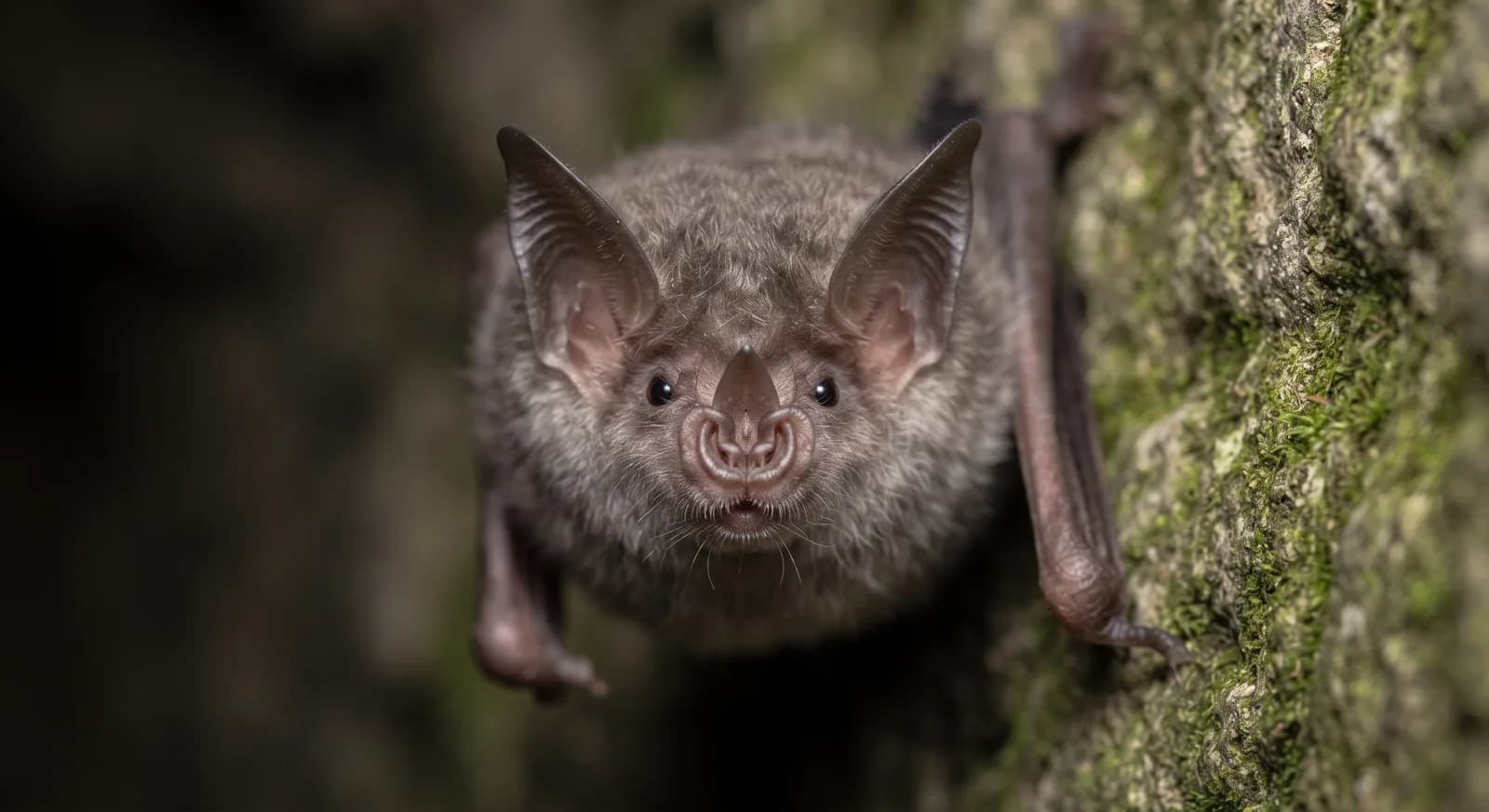
The smallest horseshoe bat of the Palaearctic, with large ears lacking a tragus and a horseshoe-shaped nose leaf that it uses to direct its echolocation. At rest it wraps itself completely in its wing membrane, hanging like a small sack.
Weight
4 g – 9 g
Size
3.6 cm – 4.5 cm
Lifespan
4 years
Diet
Insectivore
Feeds mainly on insects and other invertebrates.
Activity
Nocturnal
Active mainly at night.
Social structure
Colony
Lives in large concentrations, often for breeding reasons.
Sighting difficulty
Easy
Estimated population
No global numerical estimate. In Andalusia it has been found in 96 of the roosts occupied by bats, 39.3% of the total
Fun facts
- Unlike almost every other bat, it does not share its roost with other species in the breeding season: it is the least gregarious of the horseshoe bats.
- It echolocates at a very high frequency, between 105 and 116 kHz, far above human hearing.
- It hangs very exposed from the roofs of its roosts, which makes it particularly vulnerable to vandalism and to unintentional disturbance.
Life cycle & biology
- Skeleton type
- Vertebrate - internal bony skeleton (mammal)
- Habitat & environment
- Natural and artificial caves, mines and buildings, almost always near water and associated with scrub and small patches of woodland. From sea level up to about 2,000 m
- Sexual maturity
- Females are fertile from their second year
- Litter / clutch size
- A single young a year, at around the month of June
- Lifespan in captivity
- A Polish individual was recaptured 21 years and 3 months after it was ringed
Sources consulted: IUCN Red List (e.T19518A21972794); SECEM - Atlas de los mamíferos terrestres de España; MITECO - Inventario Español de Especies Terrestres; Ratpenats.org; Red Natura 2000 Cantabria (ficha 1303)
Where to find it
See its range on the interactive mapBest time: From spring to autumn; it leaves its roosts very early, shortly after sunset
Where to watch it
Parques y spots de buceo donde se ha documentado esta especie — se muestran 10 de 111 documentados.
Related species
Other species in the catalogue with the most in common with Lesser Horseshoe Bat — same habitat, park, country, tags or family.
 Least Concern
Greater Horseshoe Bat
Rhinolophus ferrumequinum
Common Pipistrelle
Pipistrellus pipistrellus
Common Noctule
Nyctalus noctula
Greater Mouse-eared Bat
Myotis myotis
Serotine
Eptesicus serotinus
Natterer's Bat
Myotis nattereri
Keep exploring
Based on what we already know about lesser horseshoe bat.
Comments
Share an experience, a fun fact or a tip for seeing the lesser horseshoe bat.
Be the first to comment.