One of the 29 bats on WAnimals
Mammals · Chiroptera · Rhinolophidae
Greater Horseshoe Bat
Rhinolophus ferrumequinum
The species is abundant and widely distributed; it faces no significant short-term risk. See full glossary
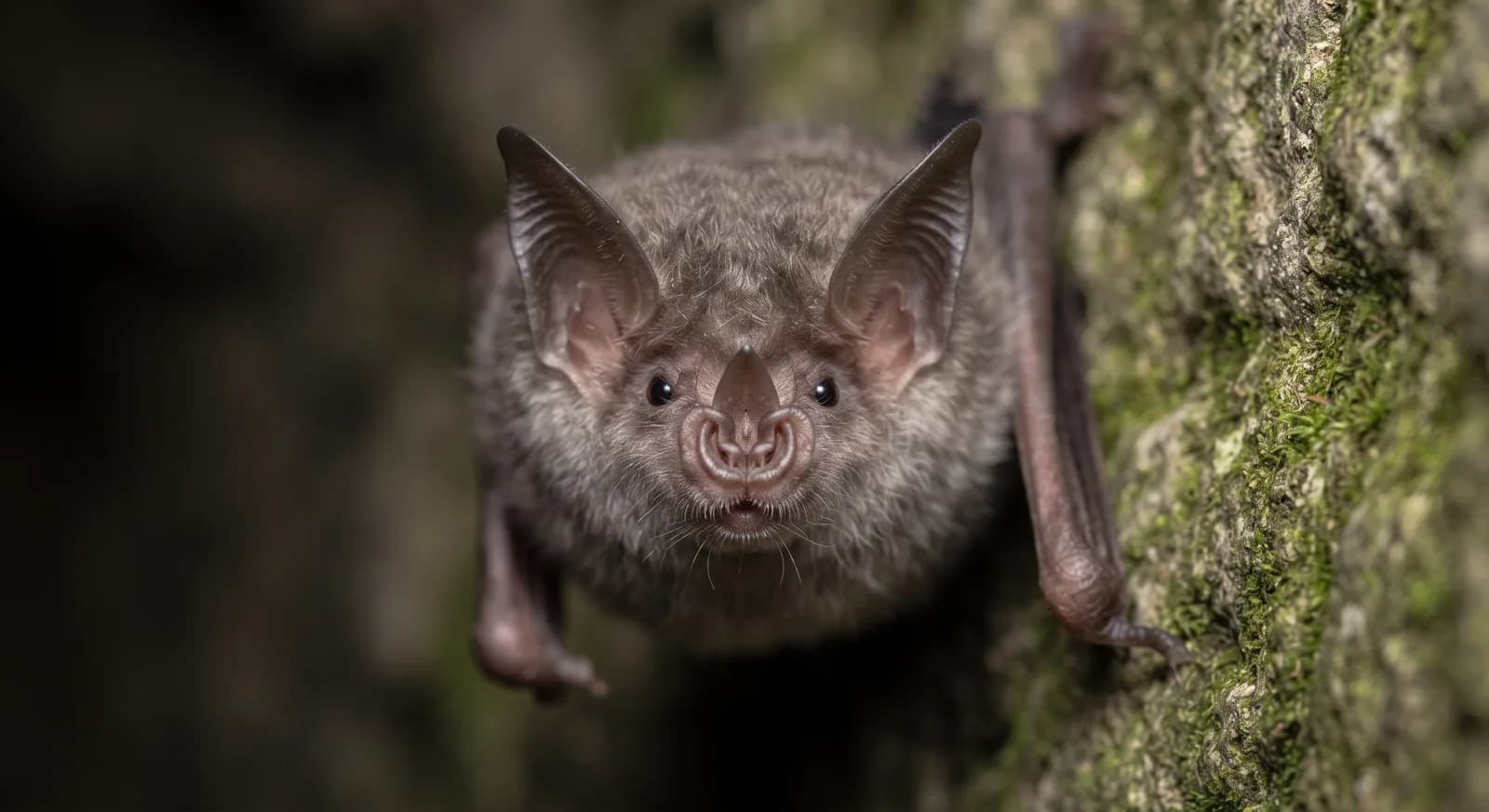
It is the largest horseshoe bat in Europe, told apart by the horseshoe-shaped nose-leaf it uses to focus the ultrasound it emits through its nostrils. It hibernates wrapped in its own wing membranes.
Weight
17 g – 34 g
Size
5.7 cm – 7.1 cm
Lifespan
15 years
Diet
Insectivore
Feeds mainly on insects and other invertebrates.
Activity
Nocturnal
Active mainly at night.
Social structure
Colony
Lives in large concentrations, often for breeding reasons.
Sighting difficulty
Easy
Fun facts
- It is the largest horseshoe bat in Europe.
- It emits ultrasound through its nose rather than its mouth, unlike most bats.
- It hibernates wrapped in its own wings, hanging in tight clusters from October to April.
Life cycle & biology
- Skeleton type
- Vertebrate - internal bony skeleton (mammal)
- Habitat & environment
- Karst caves, grassland and temperate deciduous woodland of Europe, North Africa, and Central and East Asia
- Birth weight
- 5.8 grams
- Size at birth
- The young naked at birth, clinging to its mother for the first few weeks
- Sexual maturity
- 2 years
- Gestation / incubation
- 80 days
- Litter / clutch size
- 1 young per litter
Sources consulted: AnAge (genomics.senescence.info); The Wildlife Trusts; Dimensions.com; Animal Diversity Web; Britannica; Animalia.bio; PMC (hibernation telomere dynamics study); PMC (reproductive success determinants study)
Where to find it
See its range on the interactive mapWhere to watch it
Parques y spots de buceo donde se ha documentado esta especie — se muestran 10 de 98 documentados.
Related species
Other species in the catalogue with the most in common with Greater Horseshoe Bat — same habitat, park, country, tags or family.
Lesser Horseshoe Bat
Rhinolophus hipposideros
Common Pipistrelle
Pipistrellus pipistrellus
Common Noctule
Nyctalus noctula
Beech Marten
Martes foina
Common House Gecko
Tarentola mauritanica
Greater Mouse-eared Bat
Myotis myotis
Keep exploring
Based on what we already know about greater horseshoe bat.
Comments
Share an experience, a fun fact or a tip for seeing the greater horseshoe bat.
Be the first to comment.