One of the 29 bats on WAnimals
Mammals · Chiroptera · Mormoopidae
Ghost-Faced Bat
Mormoops megalophylla
The species is abundant and widely distributed; it faces no significant short-term risk. See full glossary
The ghost-faced bat — also called in Spanish murciélago barbudo or murciélago de espalda desnuda — has one of the strangest faces of any mammal: fleshy folds around the mouth, a sort of funnel below the lower lip and ears joined above the forehead. It lives in colonies that can number tens of thousands of animals in warm, humid caves, from southern Texas to Peru and Venezuela. It hunts moths and other insects in agile flight close to the vegetation.
Weight
12 g – 19 g
Size
5 cm – 7 cm
Lifespan
8 years
Diet
Insectivore
Feeds mainly on insects and other invertebrates.
Activity
Nocturnal
Active mainly at night.
Social structure
Colony
Lives in large concentrations, often for breeding reasons.
Sighting difficulty
Easy
Fun facts
- Its wings meet over the back, so that the fur along the spine is hidden and it appears to have none: hence its other Spanish name, murciélago de espalda desnuda, the naked-backed bat.
- Its cave colonies reach tens of thousands of animals, and the air temperature inside can rise several degrees from the animals' body heat alone.
Life cycle & biology
- Skeleton type
- Vertebrate - internal bony skeleton (mammal)
- Habitat & environment
- Warm, humid caves and mine tunnels, in dry forest and semi-arid country
- Litter / clutch size
- 1
Sources consulted: https://es.wikipedia.org/wiki/Mormoops_megalophylla
Where to find it
See its range on the interactive mapRelated species
Other species in the catalogue with the most in common with Ghost-Faced Bat — same habitat, park, country, tags or family.
Mexican Mouse Opossum
Marmosa mexicana
 Least Concern
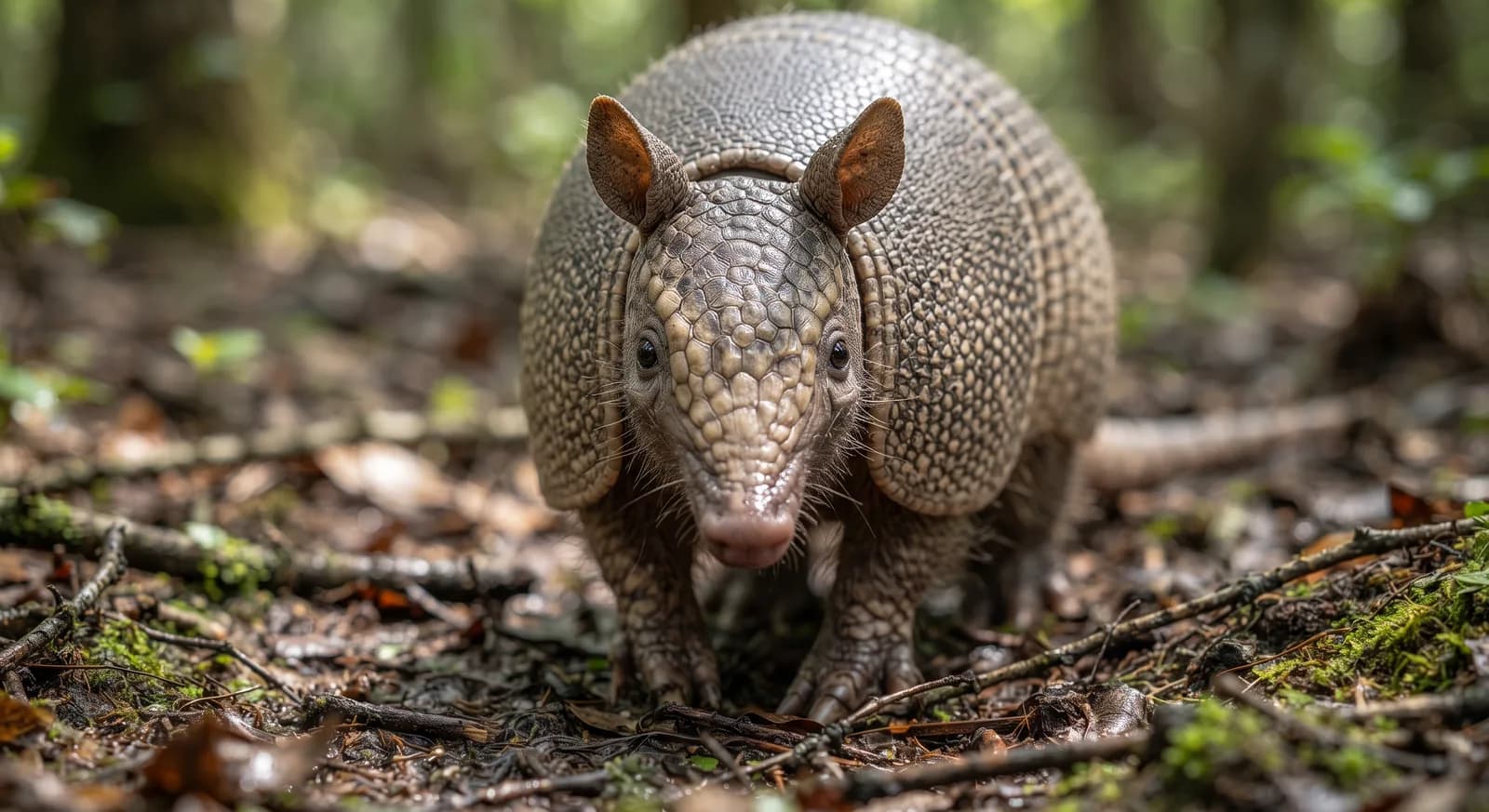
Nine-banded Armadillo
Dasypus novemcinctus
Greater Long-Nosed Armadillo
Dasypus kappleri
Northern Tamandua
Tamandua mexicana
Southern Tamandua
Tamandua tetradactyla
Keep exploring
Based on what we already know about ghost-faced bat.
Comments
Share an experience, a fun fact or a tip for seeing the ghost-faced bat.
Be the first to comment.