Species group · Birds
Partridges
WAnimals has 5 species of partridge, spread across 2 families (Phasianidae, Tinamidae).
- 5 species
- 2 families
- 80 countries
- 105 parks
- Weight
- 200 g – 886 g
- Length
- 28 cm – 41 cm
- Lifespan
- 3 – 10 years
Ranges calculated from the entries that record the figure, not from all 5.
All 5 species of partridges on WAnimals
Each one has its own full entry. This group does not replace them: it brings them together.
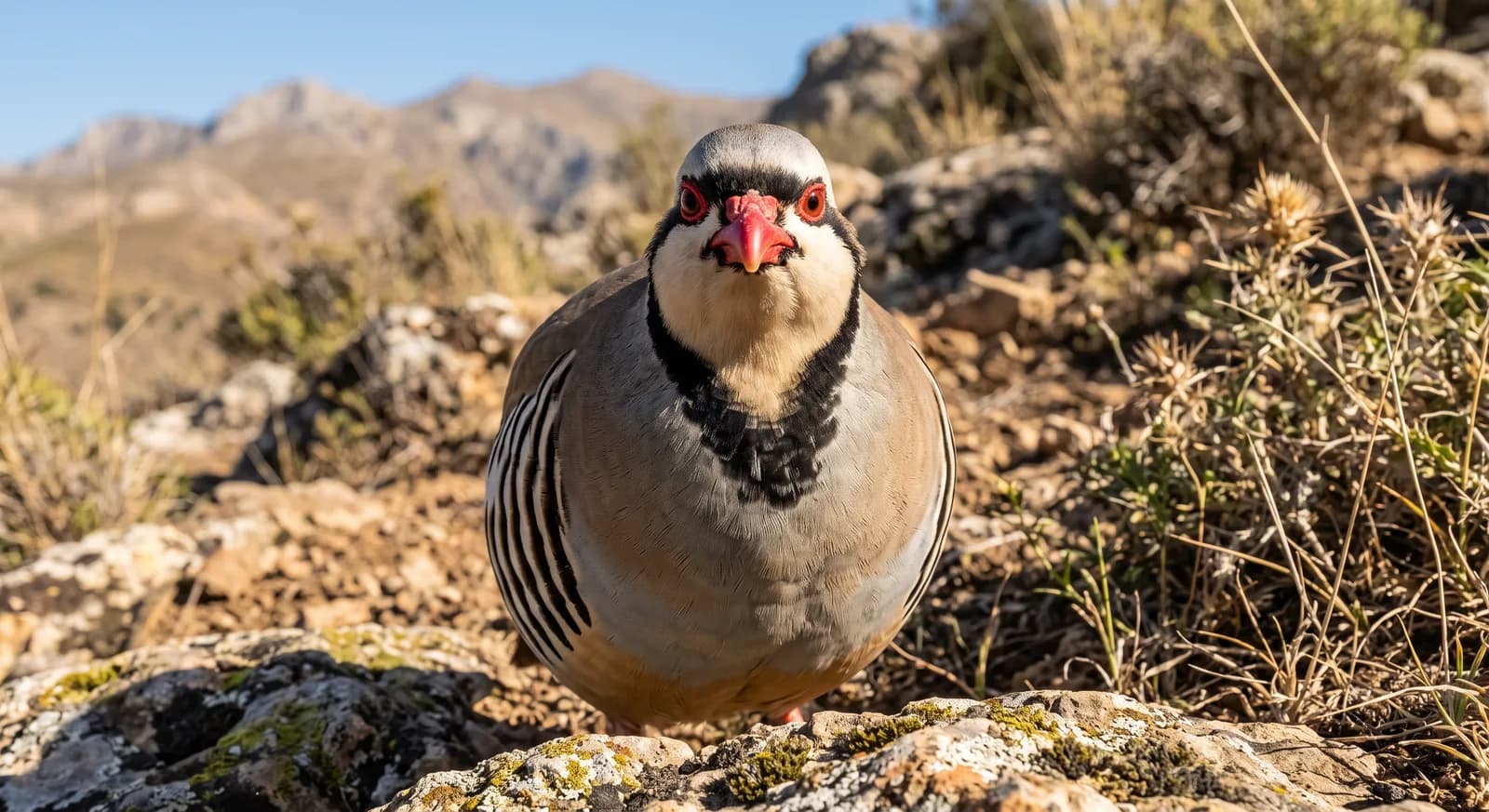 Least Concern
Chukar
Alectoris chukar
Grey Partridge
Perdix perdix
Red-legged Partridge
Alectoris rufa
Red-winged Tinamou
Rhynchotus rufescens
Udzungwa Forest-partridge
Xenoperdix udzungwensis
Conservation status
2 especies in this group están en alguna categoría de riesgo real según la UICN.
See the global conservation statusWhere they live
Recorded in 80 countries. The ones with the most species in the group:
Where to see them
Did you know…
In Spain its release for shooting has genetically contaminated the red-legged partridge: the hybrids are fertile and many Iberian populations already carry chukar genes, a textbook case of genetic pollution through game restocking.
From Chukar
Chicks only a few days old climb slopes of more than forty degrees by beating their wings as they run, a movement called wing-assisted incline running that has been proposed as a model for how flight may have originated in dinosaurs.
From Chukar
Its name is onomatopoeic in several Asian languages, after the chuk-chuk-chukar it repeats from the hillsides.
From Chukar
In Iberia it survives only high in the mountains, cut off from the rest of Europe.
From Grey Partridge
Its decline is the classic case study of the impact of intensive farming on wildlife: the chicks need insects for their first two weeks, and the herbicides that removed the weeds removed with them the insects they depended on.
From Grey Partridge
It lays one of the largest clutches of any bird: up to twenty eggs in a single laying, a strategy suited to extremely high juvenile mortality.
From Grey Partridge
It eats seeds, grain and plants, supplemented with small invertebrates.
From Red-legged Partridge
It lives on open, sunny, dry lowland farmland in western Europe.
From Red-legged Partridge