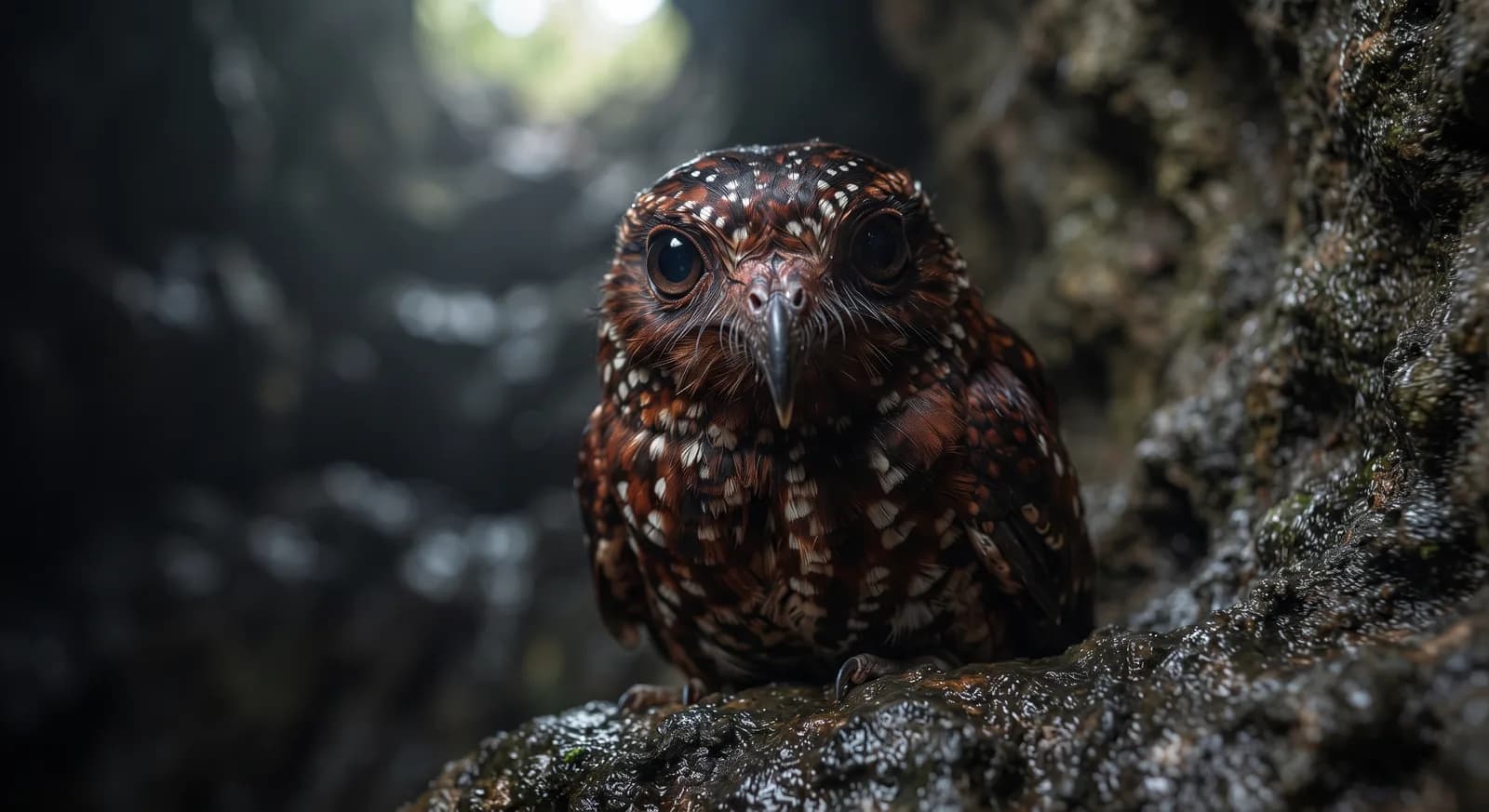
Birds · Steatornithiformes · Steatornithidae
Oilbird
Steatornis caripensis
The species is abundant and widely distributed; it faces no significant short-term risk. See full glossary
The oilbird is a nocturnal bird unique in the world: it is the only fruit-eating bird that flies by night and the only one that nests in colonies deep inside caves, in complete darkness. It navigates by echolocation, like bats, though with clicks audible to the human ear. It emerges at dusk to look for the fruit of palms and laurels, which it locates by smell and swallows whole, and it can cover more than a hundred kilometres in a night.
Weight
350 g – 475 g
Size
40 cm – 49 cm
Lifespan
25 years
Diet
Herbivore
Feeds mainly on plants.
Activity
Nocturnal
Active mainly at night.
Social structure
Colony
Lives in large concentrations, often for breeding reasons.
Sighting difficulty
Easy
Fun facts
- sentidosIt is one of the few birds known to echolocate in pitch-dark caves, using clicks audible to the human ear, much as bats do.
- It is one of the very few birds in the world that echolocates: it gives series of clicks audible to people and uses them to navigate inside caves in total darkness.
- The chicks put on so much fat that they come to weigh twice as much as an adult, and for centuries they were harvested in Venezuela and boiled down for cooking oil, a practice that gave the Cueva del Guácharo its name.
Life cycle & biology
- Skeleton type
- Vertebrate - internal bony skeleton (bird)
- Habitat & environment
- Deep caves for nesting; it feeds in the rainforests and montane forests of South America and Trinidad
- Sexual maturity
- 2 years
- Gestation / incubation
- 33 days of incubation
- Litter / clutch size
- 3 eggs
Sources consulted: https://www.iucnredlist.org/ | https://animaldiversity.org/ | https://es.wikipedia.org/
Where to find it
See its range on the interactive mapWhere to watch it
Parks and dive sites where this species has been documented.
Related species
Other species in the catalogue with the most in common with Oilbird — same habitat, park, country, tags or family.
Seba's Short-tailed Bat
Carollia perspicillata
Crested Guan
Penelope purpurascens
 Least Concern
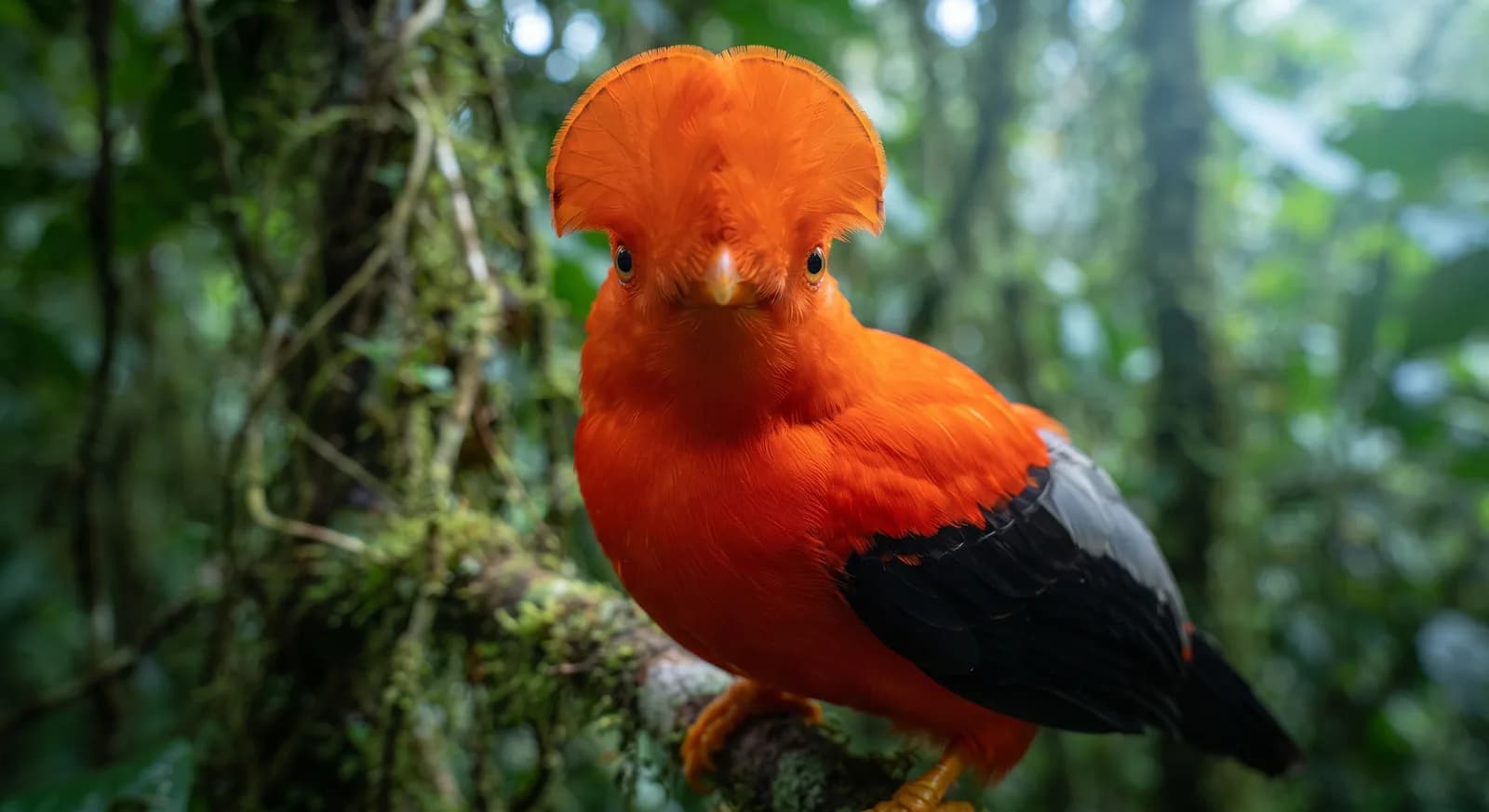
Andean Cock-of-the-rock
Rupicola peruvianus
Pacarana
Dinomys branickii
Dusky-legged Guan
Penelope obscura
Brown-throated Sloth
Bradypus variegatus
Keep exploring
Based on what we already know about oilbird.
Comments
Share an experience, a fun fact or a tip for seeing the oilbird.
Be the first to comment.