One of the 3 kingfishers on WAnimals
Birds · Coraciiformes · Alcedinidae
Ringed Kingfisher
Megaceryle torquata
The species is abundant and widely distributed; it faces no significant short-term risk. See full glossary
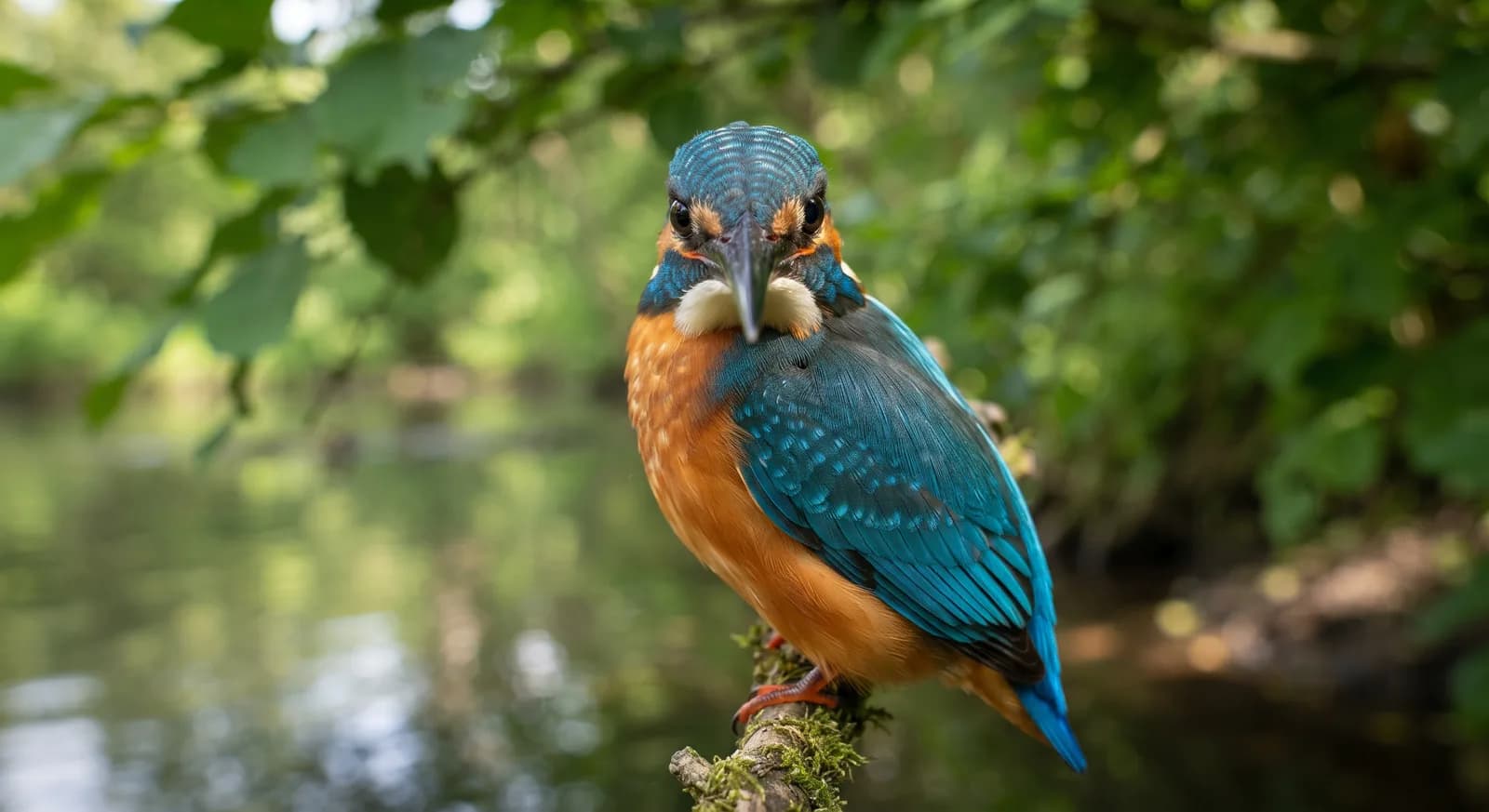
The ringed kingfisher is the largest kingfisher in the Americas, with a slate-blue back, a white collar and a chestnut belly. It watches from a perch over the water and dives to catch fish, which it beats against the branch before swallowing them head first. It digs its nest into earth banks, a horizontal tunnel that can be more than two metres long and ends in a chamber.
Weight
250 g – 350 g
Size
38 cm – 42 cm
Lifespan
15 years
Diet
Carnivore
Feeds mainly on other animals.
Activity
Diurnal
Active mainly during the day.
Social structure
Solitary
Lives and hunts alone, joining others only to breed.
Sighting difficulty
Easy
Fun facts
- With its bill and feet it digs a tunnel of up to two and a half metres into an earth bank, ending in a chamber where it lays its eggs straight onto the ground, with no nest.
- It beats fish against its perch before swallowing them, always head first, so that the scales and fins do not catch in its throat on the way down.
Life cycle & biology
- Skeleton type
- Vertebrate - internal bony skeleton (bird)
- Habitat & environment
- Rivers, lagoons, mangroves and coasts of tropical America, from the southern United States to Argentina
- Sexual maturity
- 12 months
- Gestation / incubation
- 22 days of incubation
- Litter / clutch size
- 4 eggs
Sources consulted: https://es.wikipedia.org/wiki/Megaceryle_torquata
Where to find it
See its range on the interactive mapRelated species
Other species in the catalogue with the most in common with Ringed Kingfisher — same habitat, park, country, tags or family.
Belted Kingfisher
Megaceryle alcyon
 Least Concern
Common Kingfisher
Alcedo atthis
Laughing Kookaburra
Dacelo novaeguineae
Blue-winged Kookaburra
Dacelo leachii
Water Opossum
Chironectes minimus
Greater Bulldog Bat
Noctilio leporinus
Keep exploring
Based on what we already know about ringed kingfisher.
Comments
Share an experience, a fun fact or a tip for seeing the ringed kingfisher.
Be the first to comment.