One of the 4 nudibranchs on WAnimals
Gastropods · Nudibranchia · Discodorididae
Bohol Discodoris
Discodoris boholiensis
It has not yet been assessed against the IUCN criteria. See full glossary
A large nudibranch with a flattened mantle, brown with dark blotches and a rough texture that camouflages it against the substrate. It feeds on sponges and is active mainly at night.
Size
6 cm – 12 cm
Diet
Carnivore
Feeds mainly on other animals.
Activity
Nocturnal
Active mainly at night.
Social structure
Solitary
Lives and hunts alone, joining others only to breed.
Sighting difficulty
Unknown
Fun facts
- It can deliberately shed fragments of the edge of its mantle to distract a predator, a form of autotomy uncommon among nudibranchs.
- It self-mutilates to escape: when attacked it sheds pieces of its mantle margin, which writhe and distract the predator while it flees. The margin regenerates afterwards.
- That shed tissue is loaded with irritant compounds derived from the sponges it eats.
- Its mottled brown colouring camouflages it against the reef substrate.
- Like other dorid nudibranchs, it breathes through a plume of feathery gills at the rear of its back, which it withdraws at the slightest alarm.
Life cycle & biology
- Habitat & environment
- Reefs and rocky bottoms of the Indo-Pacific, from 0 to 30 m
Sources consulted: Bergh (1877); Rudman, Sea Slug Forum; estudios de autotomía en Discodoris
Where to find it
See its range on the interactive mapWhere to watch it
Parques y spots de buceo donde se ha documentado esta especie — se muestran 10 de 70 documentados.
Related species
Other species in the catalogue with the most in common with Bohol Discodoris — same habitat, park, country, tags or family.
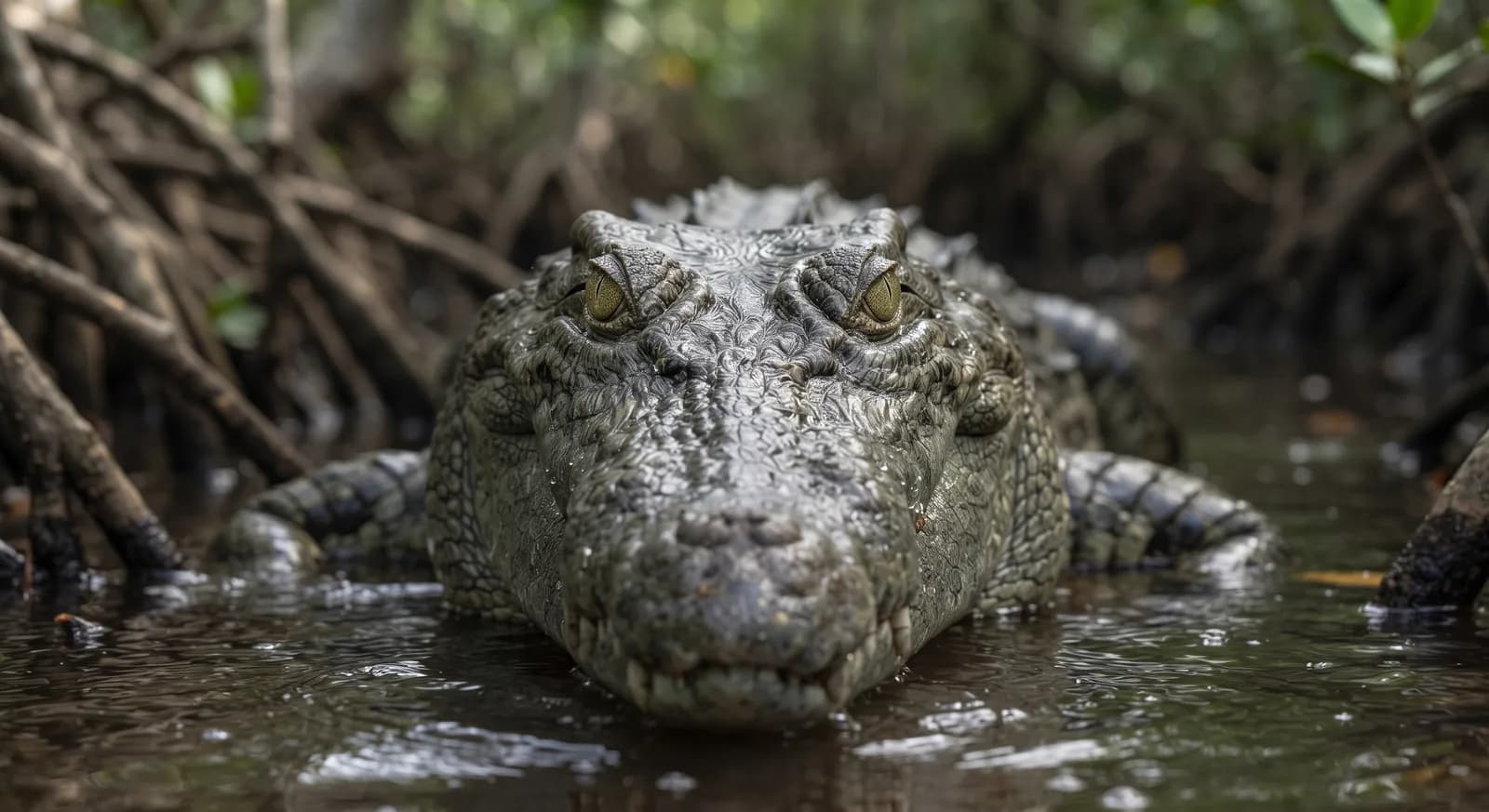 Least Concern
Saltwater Crocodile
Crocodylus porosus
Yellow-bellied Sea Snake
Hydrophis platurus
Red Lionfish
Pterois volitans
Spot-fin Porcupinefish
Diodon hystrix
Geography Cone
Conus geographus
Anna's Chromodoris
Chromodoris annae
Keep exploring
Based on what we already know about bohol discodoris.
Comments
Share an experience, a fun fact or a tip for seeing the bohol discodoris.
Be the first to comment.