 UNESCO
National Park
Virunga
Democratic Republic of the Congo
 Democratic Republic of the Congo
Mountain gorilla · chimpanzee
See parkThe Ituri forest, home of the okapi and of the Mbuti, on the List of World Heritage in Danger since 1997.
Area
13,726 km²
Designated in
1996
Region
Central Africa
The Ituri forest with a wild okapi population
The Okapi Wildlife Reserve was established in 1992 in the north-east of the Democratic Republic of the Congo, in the Ituri forest, and protects some 13,726 km², around a fifth of that forest block. UNESCO inscribed it on the World Heritage List in 1996.
Its emblematic species is the okapi, a relative of the giraffe with a short neck and striped legs, endemic to the forests of north-eastern Congo and unknown to Western science until 1901, when its description caused a sensation because it was thought improbable that any large mammal remained undescribed. The reserve holds a significant part of the world population of the species.
The territory is inhabited by the Mbuti and the Efe, hunter-gatherer peoples whose way of life in the forest is recognised as part of the property's values, alongside Bantu farmers. The reserve was placed on the List of World Heritage in Danger in 1997 and remains there: the successive armed conflicts in the region, artisanal gold and coltan mining within its boundaries, hunting for bushmeat and attacks by armed groups — including the 2012 raid on the Epulu station, with deaths and the slaughter of the okapis at the breeding centre — have shaped its management entirely.
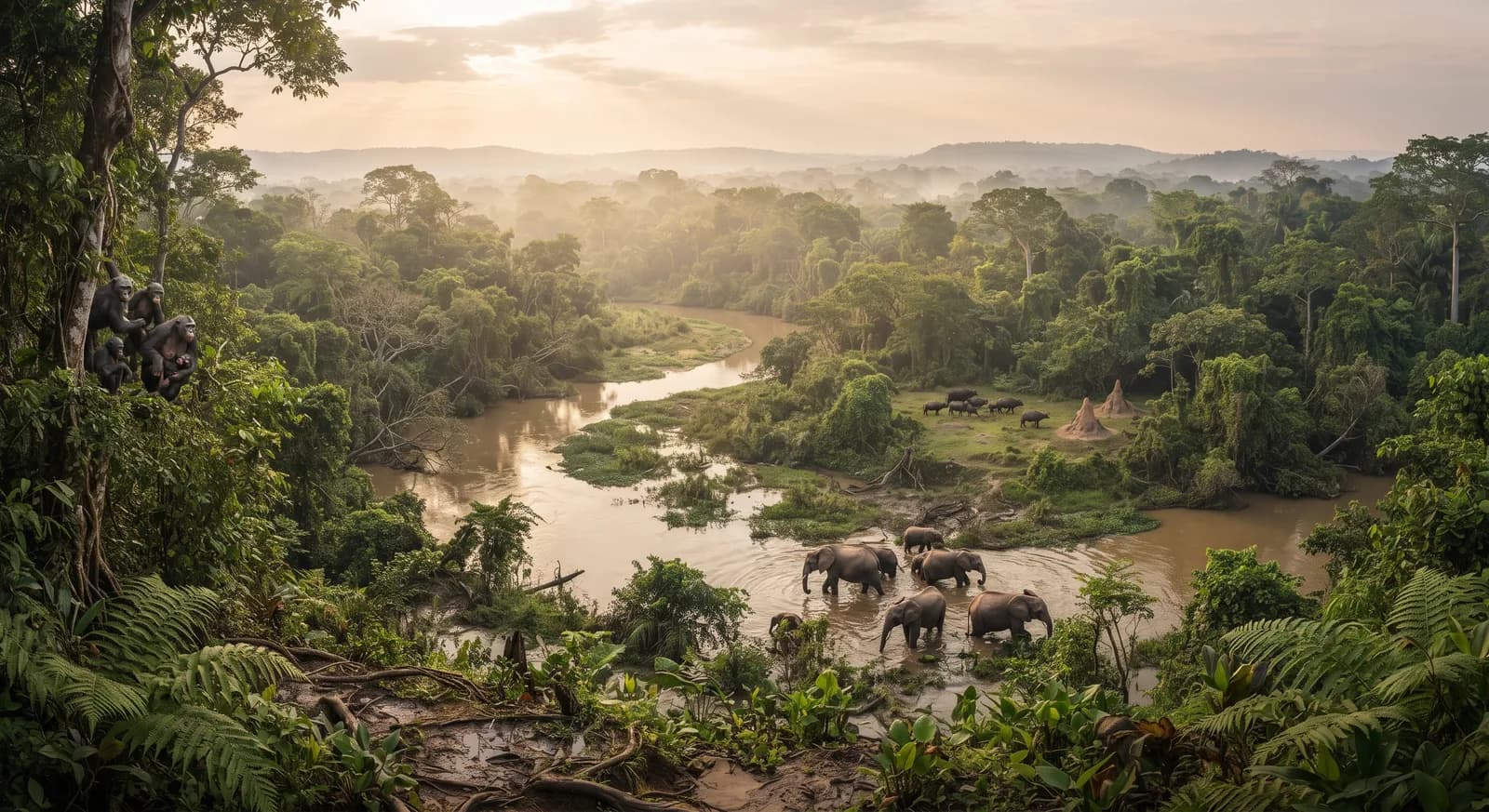
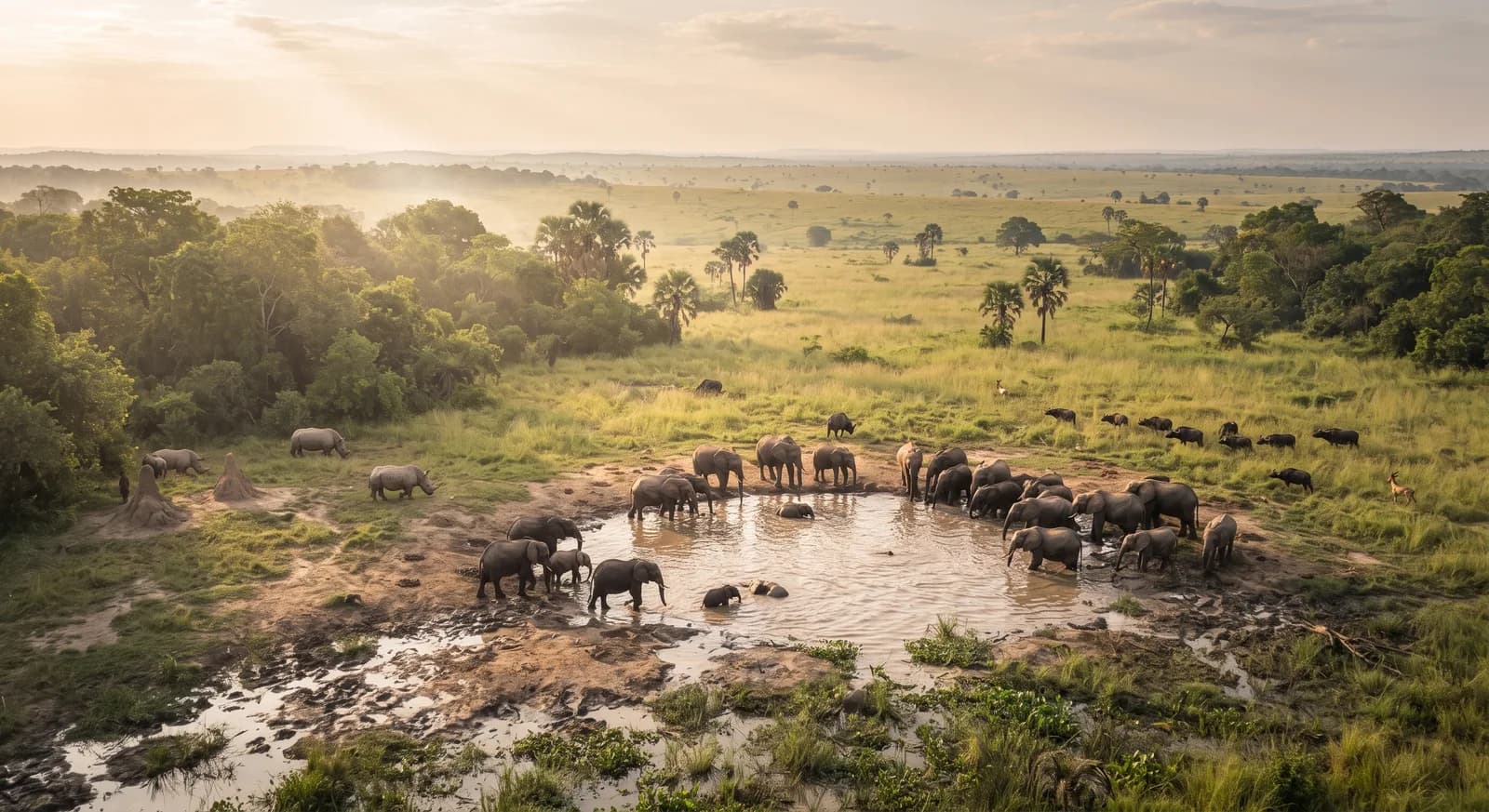
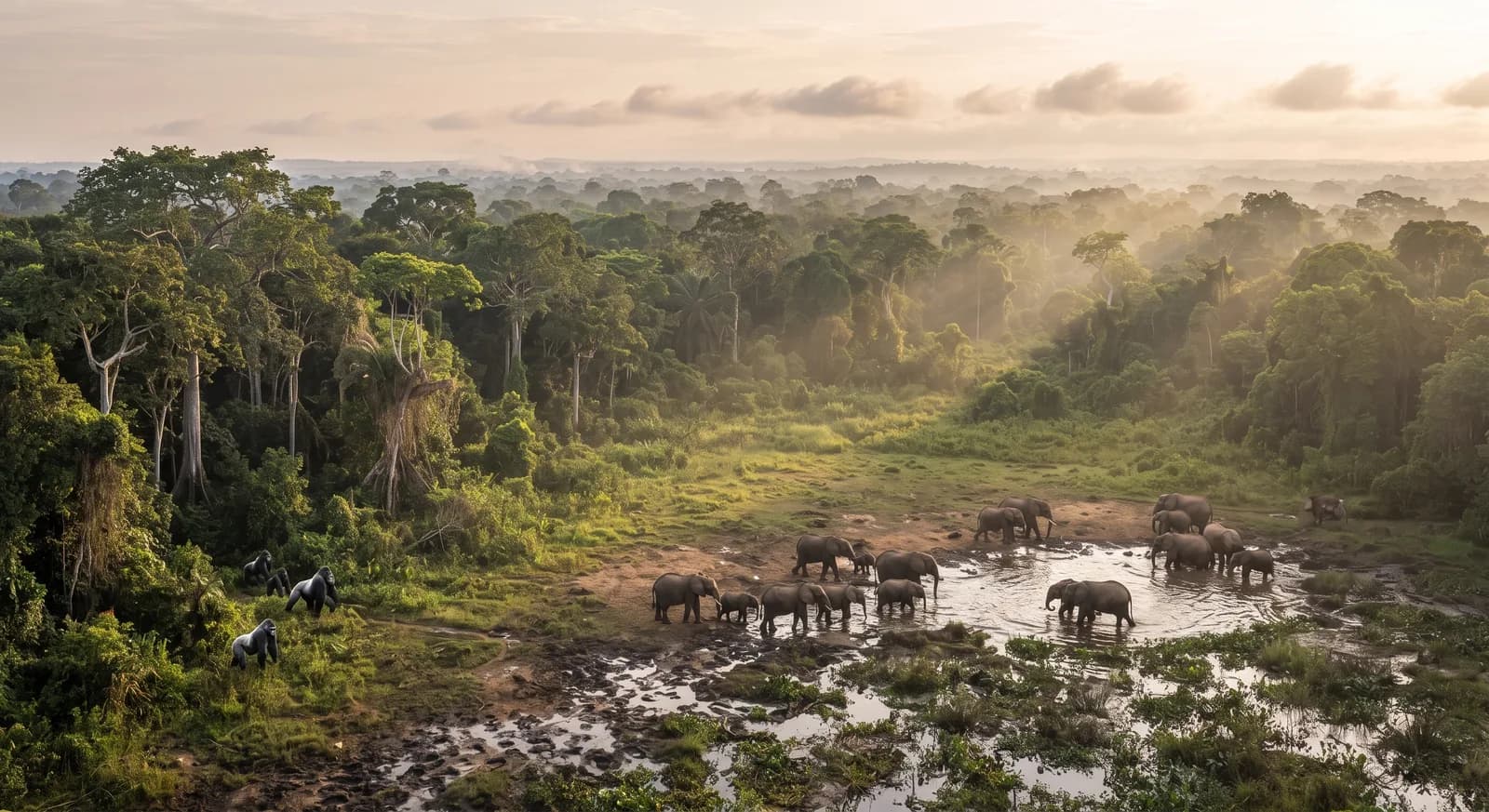
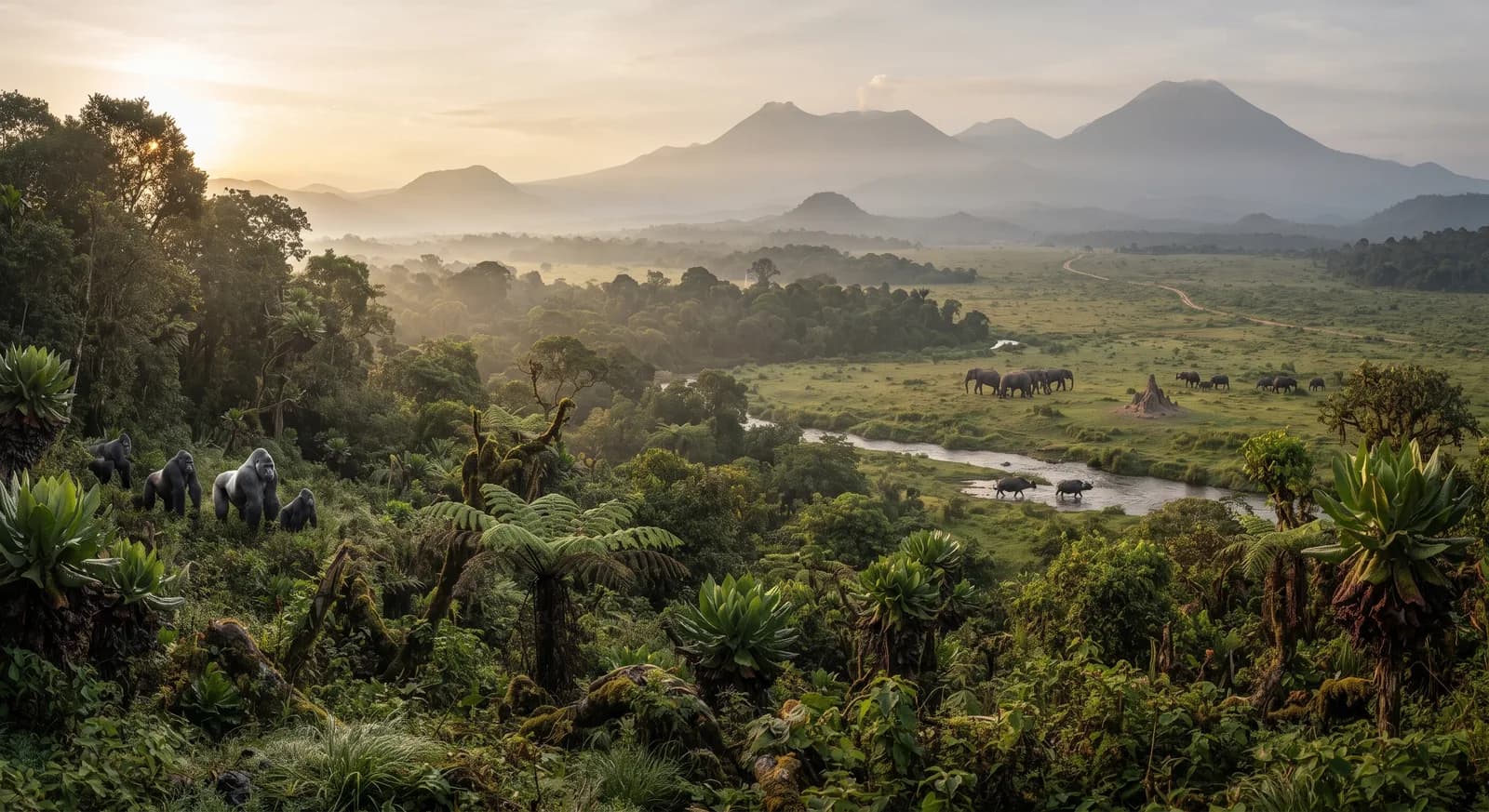
Ecosystems found in the Democratic Republic of the Congo, where Okapi Wildlife Reserve lies.
Which other parks are like this one?
Same country: Democratic Republic of the Congo
Same country: Democratic Republic of the Congo
Same country: Democratic Republic of the Congo
Based on what we already know about this park.
Climate
Tropical, Mountain
Threatened:,,,,,,,
Endemic species of the Democratic Republic of the Congo:,
Same country: Democratic Republic of the Congo